Written By | Torch Media Africa
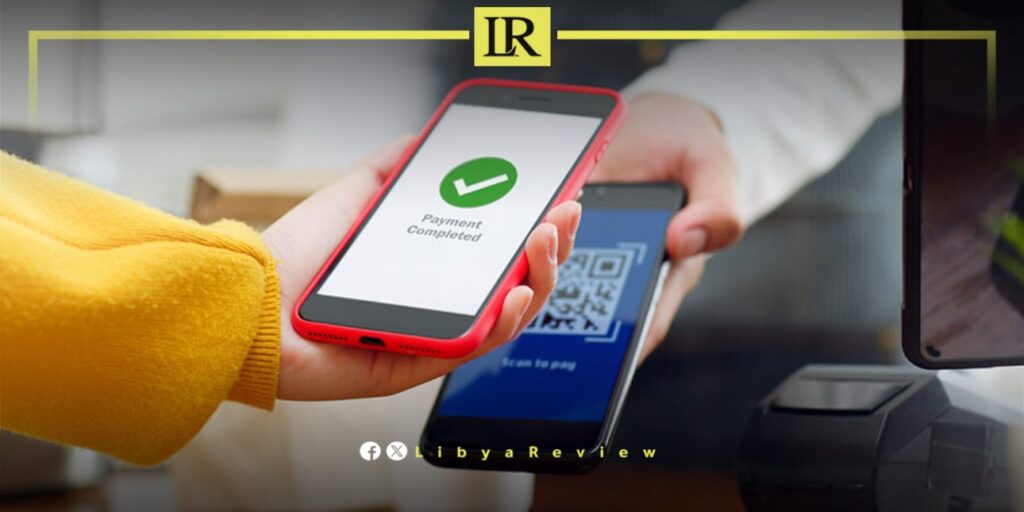
The Central Bank of Libya's own statistics show electronic payments growing at a pace that few economies in the region can match
A Fintech Boom Without a Settled State
Libya is an unlikely place for one of North Africa's fastest-moving payments transitions. The country has been politically divided since 2014, with rival administrations in Tripoli and the east, two competing central bank structures for years, an oil economy dependent on a single export, and a banking system plagued by cash shortages. Yet the Central Bank of Libya's own statistics show electronic payments growing at a pace that few economies in the region can match. Between 1 January and 31 August 2026, e-payment transactions processed reached LD 764.9 billion, a figure reported by the Libya Herald on 3 September 2026 after a meeting chaired by Governor Naji Issa.
The explanation is not enthusiasm for technology alone. It is necessity. When bank branches cannot supply enough banknotes, customers and merchants turn to cards, point-of-sale machines, mobile banking and instant transfers because they are the only reliable way to move money. Libya's digital leap is therefore a story about how a liquidity crisis can drive adoption faster than any policy campaign, and about how fragile that adoption remains.
What the Central Bank Data Show
The most complete recent snapshot was published on 24 February 2026 through the Government of National Unity's Hakomitna platform and reported by Libyan Express. For 2025 through 15 February 2026, the central bank recorded digital payments totalling 313.6 billion dinars across 200.7 million operations. The infrastructure behind those numbers is broad. There were 165,313 point-of-sale terminals, up from 150,205 in 2024, an increase of 15,108. POS transactions numbered 288.6 million with a value of 37.8 billion dinars. Some 5.5 million bank cards were active, and mobile banking had 4.29 million active subscribers.
The standout rail is instant transfer. The LYPAY ONEPAY platform processed 18.3 million transactions worth 108.7 billion dinars, about a third of the total value, reflecting how bank-to-bank transfers have become the default for larger payments. ATMs remain important, with 23.9 million withdrawals worth 12.6 billion dinars, but their limits underline the cash constraint. By contrast, electronic wallets were still tiny: 186,817 active accounts and 92 million dinars in circulation, a negligible share of the system.
Growth has since accelerated. Libya Review reported on 6 August 2026 that the central bank counted LD 643 billion in electronic transactions for January to July 2026, while economist Mukhtar Al-Jadid offered a lower estimate of about LD 500 billion. Both point to a full-year total that could exceed LD 1 trillion, well above the LD 313.6 billion recorded for the 2025 reporting period. Note that the sources measure slightly different periods and scopes, so the headline numbers should be read as direction rather than precision.
The Liquidity Paradox
Cash scarcity is both the engine and the brake. Libya Review cited estimates that more than LD 60 billion in banknotes sits in homes and private safes outside the banking system, and the IFC's study on digital financial services in Libya put the share of currency circulating outside banks at about 30 percent. A World Bank survey cited by the IFC found that only 4 percent of households reported being able to make purchases using cash withdrawn from banks, and more than half of traders accepted cash only. In that environment the central bank has pursued two tracks at once: increasing the cash withdrawal limit to LD 3,000 and expanding banknote supply, while promoting electronic channels to reduce demand for cash.
The debate in Tripoli is whether digital adoption will eventually make cash hoarding less attractive or whether people will continue to hold physical money as a hedge against bank, exchange-rate and political risk. Al-Jadid argues that cash outside banks is gradually losing importance as electronic systems become dominant. Retail behaviour suggests this will be slow, because the trust deficit that created the hoarding has not been resolved.
New Rails: SoftPOS, Visa and Stand-In Processing
The central bank used the second Libya International Electronic Payment Exhibition (EPAIX 2026), held on 17 and 18 June 2026, to announce three new services. The first is acceptance of international Visa cards at local points of sale, aimed at visitors, businesses and the Libyan diaspora. The second is SoftPOS, which lets smartphones act as payment terminals and could bring small merchants into the digital system without costly hardware. The third is a National Stand-In Processing Service, which keeps payments flowing when bank or switch systems fail, a response to the outages that have undermined confidence.
Underneath these services sits Moamalat, the state national payment switch company connecting banks, mobile wallets, card networks and fintech services. Interoperability is the central design principle, and it is the same recommendation the IFC made, which called for full interoperability through a national switch, electronic know-your-customer processes, a fintech regulatory sandbox, agent banking and legal protection for e-commerce.
Telecoms and Wallets: The Missing Link
Libya's low wallet numbers point to a structural gap between banks and telecom operators. Account ownership is already relatively high, at 65.7 percent in the IFC's figures, because state salaries are paid into bank accounts, but online payment adoption was only 21 percent and credit card ownership 10.3 percent. Mobile subscriber penetration was 46.2 percent and the country had 3.19 million internet users, about 75 percent of connections, with broadband making up 82.4 percent of connections.
In March 2026 the central bank and the Libyan Post, Telecommunications and Information Technology Holding Company (LPTIC) agreed to raise transaction limits on electronic wallets, according to Alwasat. LPTIC chairman Ali Bin Gharbia took part, and the agreement set up a joint working group. Stated goals included making digital payments easier, improving banking and telecom coordination, integrating migrant workers into the formal economy and reducing the shadow economy. The reported text did not specify new limit amounts, which is itself revealing: policy intent is ahead of published detail. For wallets to matter, particularly for migrant workers and underserved households, regulators will need to publish limits, agent rules and settlement arrangements.
Risks and Weak Points
Several risks could undermine the gains. Governance fragmentation remains the largest, since competing authorities and uneven regulation increase operational and legal uncertainty. The IFC also pointed to missing legislation on e-commerce, cybercrime and data protection, an unreliable land registry and a limited credit information system. Cybersecurity is a particular concern as card and instant transfer volumes rise, and so is resilience: a payment network is only trusted if it works during power cuts and political tension. Another risk is exclusion. Refugees and migrants are often outside formal financial services, and rural users face weak connectivity.
There is also a macro question. Digital payments move money more efficiently but do not create supply of foreign currency, and the central bank's September 2026 meeting on cash liquidity, foreign currency distribution and e-payment efficiency shows how these problems are intertwined.
Outlook
Libya's payments story shows that digital transformation does not depend on perfect institutions. It depends on a clear problem, a state-run backbone that most banks must use, and consumers with few alternatives. The next stage is harder: moving from bank cards and transfers to a broad ecosystem with merchant acquiring, wallet competition, credit scoring and e-commerce. If the SoftPOS and stand-in services work as announced, and if the wallet limits are made public and credible, Libya could close part of the gap with neighbours such as Egypt and Tunisia. If governance stays divided and cash remains scarce, the system will keep growing but remain a coping mechanism rather than a platform for broader innovation.



