Technological Transformation
Abidjan has long been West Africa's francophone commercial capital, but until recently it was rarely mentioned in the same breath as Lagos, Nairobi or Cairo when investors discussed African technology. That is changing. Côte d'Ivoire now has more than 26 million mobile money accounts, one of the region's most successful fintechs, a government startup programme with a 24-month runway, and a telecom sector that is investing at a fast clip. This article looks at how the country's digital economy is being built, what the latest data show, and where the gaps remain.
A Telecom Market Powered by Mobile Money
The clearest picture of the sector comes from first-quarter 2026 data reported in August 2026 from the national regulator's figures. Total telecom revenue reached 351.2 billion CFA francs in the quarter, of which mobile telephony contributed 279.7 billion CFA francs before tax. Mobile subscriptions stood at 60.16 million, a slight 0.6 percent year-on-year decline that likely reflects SIM consolidation, while mobile internet subscriptions reached 40.91 million and fixed internet access points numbered 816,207. Territorial 4G and 5G coverage was reported at 80 percent.
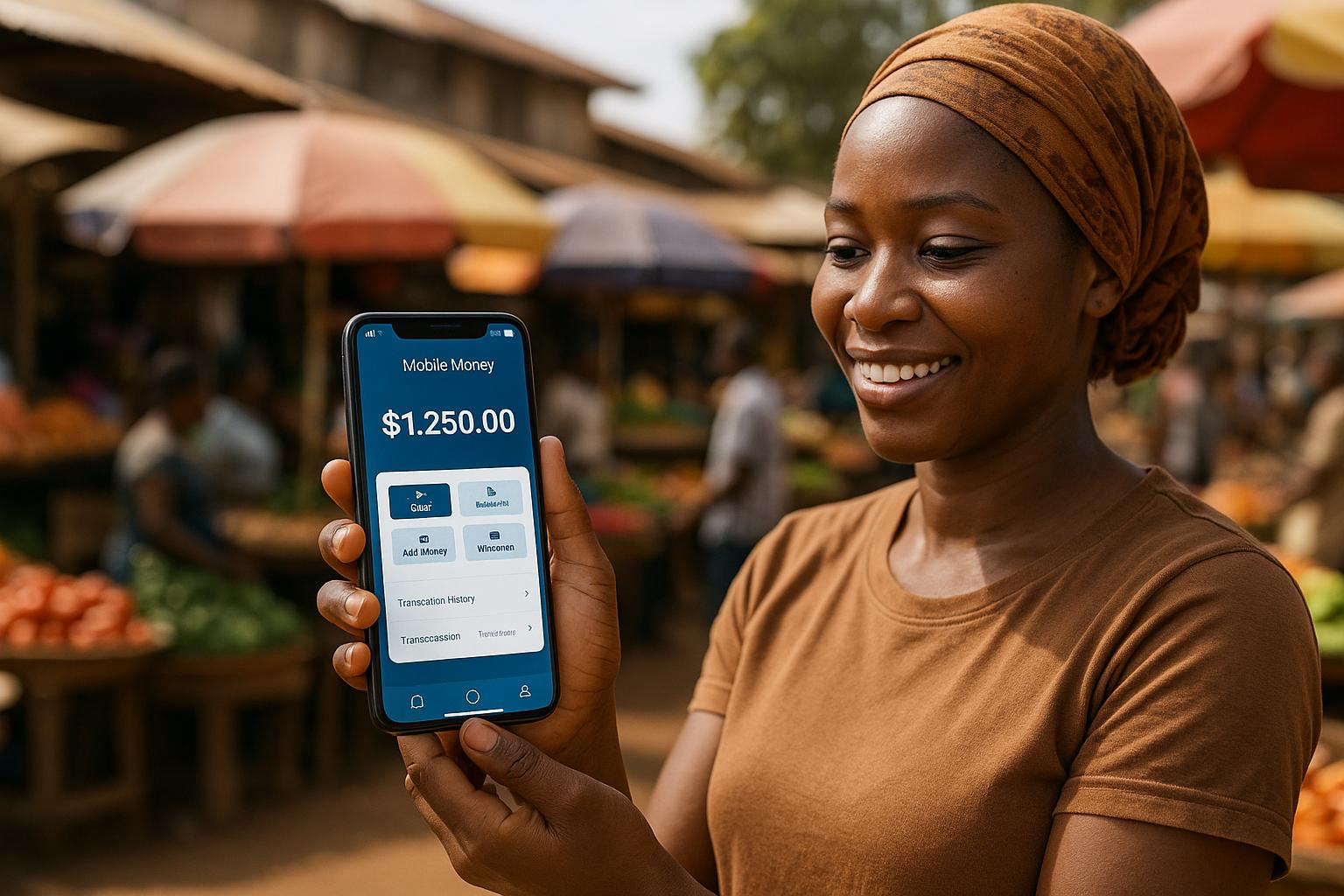
The standout number is mobile money: 26.88 million active subscriptions as of 31 March 2026, meaning the country has, in effect, roughly one wallet for every resident. Operators invested about 97.5 billion CFA francs in the quarter, a 93.7 percent increase year on year, within total sector capital expenditure of about 115.6 billion CFA francs. The network the investment is building is substantial: 38,486 kilometres of deployed fibre and international bandwidth capacity of about 4,887 Gbit/s, of which just 47 percent is used. That headroom matters, because it means the constraint on growth is now demand, affordability and applications rather than raw capacity.
Wave and the Fintech Engine
No company illustrates the mobile money story better than Wave, the Senegalese-founded wallet that entered Côte d'Ivoire in 2019. At an April 2026 press event, chief executive Katier Bamba said Wave had opened 21 million accounts in the country, works with 19,000 agents, and is accepted by 1 million merchants. The company said it employs 1,300 people directly, including 400 at its call centre in Bouaké, a notable example of a fintech creating jobs outside the commercial capital, and that it paid 50 billion CFA francs in taxes over the past year. These are company statements reported by the press and have not been independently audited, but they are consistent with the scale of the regulator's mobile money data.
Wave is not alone. A January 2026 data story by IdeaToola, an analysis outfit whose figures should be treated as estimates, put total fintech funding in Côte d'Ivoire at about $310 million, of which roughly $200 million went to Wave, with smaller amounts for payments firm CinetPay, Julaya and Djamo. It contrasted Abidjan with Lagos, where cumulative funding is about $2.9 billion and the developer pool is about 110,000 compared with about 15,000 in Abidjan. The comparison is instructive: Abidjan's advantage is its gateway position to the roughly 130 million people of the West African Economic and Monetary Union (UEMOA), which share a currency and a regional payments system, and to a cocoa and cashew supply chain valued at over $8 billion a year. Its weakness is thin talent and a smaller venture ecosystem.

The State as Ecosystem Builder
Côte d'Ivoire's government has been unusually active in shaping that ecosystem. The National Digital Development Strategy, adopted in December 2021 with a 2025 horizon, rested on seven pillars: digital infrastructure, digital services, digital financial services, digital skills, the business environment, innovation and cybersecurity, and digital trust. At its launch, ministers spoke of 7,000 kilometres of additional fibre and a national data centre, and projected that the digital economy could be worth $5.5 billion by 2025 and $20 billion by 2050. Actual fibre deployment has since reached the 38,000-kilometre figure cited above, though that count covers all operators and is not directly comparable to the original government target.
The current instrument is the Startup Act programme run by the Ministry of Digital Transition and Technological Innovation. At the end of July 2026 it launched two tracks in Abidjan: Ivoire Tech Next 15, for 15 young startups with at least a year of operating history and a commercial product, and Ivoire Tech Scale Up, for 15 established technology SMEs with revenue. The 30 selected firms receive 24 months of mentorship, capacity building, business development support, market access and investor readiness, with a financing goal reported at 5 to 10 billion CFA francs. That is modest by global venture standards, but it is a structured public commitment rather than a one-off competition.
The programme has an international shop window as well. Ahead of VivaTech 2026 in Paris, Côte d'Ivoire mobilised a national delegation of 20 startups and 10 technology SMEs, with the stated aim of creating conditions for a new generation of high-growth technology companies while attracting global investors, talent and multinationals. The country's own Ivoire Tech Forum serves as the domestic counterpart, connecting founders and capital. Also visible is the Hub Ivoire Tech, which has launched its first cohort of startups, though details of the cohort could not be verified for this article.
Strengths, Gaps and Risks
Three strengths stand out. First, infrastructure headroom: with international capacity only 47 percent used and 80 percent 4G/5G coverage, the network can absorb far more traffic. Second, a proven consumer fintech at scale, which supplies both data and distribution for adjacent services such as merchant payments, savings and agricultural finance. IdeaToola estimates a supply chain finance opportunity above $2 billion linked to more than 800,000 smallholder farmers, an appealing prospect though a projection rather than a measured outcome. Third, policy continuity, since successive strategies and the Startup Act give founders a predictable framework.
The risks are equally clear. Subscriber growth is flat, with mobile subscriptions down slightly, so the next leg of growth must come from higher usage per customer, not more SIM cards. The talent pool is small relative to Nigeria or Kenya, and financing ambitions of 5 to 10 billion CFA francs will not close the gap with markets that raise hundreds of millions of dollars annually. Concentration is another concern: much of the country's digital financial activity runs through a few large platforms, so regulatory, security or outage events could carry system-wide effects. Finally, moving from consumer payments to deeper capabilities such as cloud, artificial intelligence and industrial software will depend on data centres, skills programmes and a more competitive capital market.
Outlook
Côte d'Ivoire's digital story is best read as a platform in the making rather than a finished hub. The raw ingredients are in place: a large mobile money base, extensive fibre, high operator investment and a government that treats startups as an economic priority. The next two years will show whether the Ivoire Tech cohorts produce firms that raise regional capital, whether fibre and data-centre capacity turn into lower prices and new services, and whether Abidjan can attract engineers as well as customers. If they do, the city may secure a lasting place among Africa's leading technology centres; if not, it will remain a very large market for other people's products.
Published By | Tech Wiz