Seattle, Washington
For 21 years, if you wanted a computer to do something a computer couldn't quite manage on its own — sort a blurry photo, transcribe a mumbled voicemail, decide whether a product review sounded fake — there was a decent chance the job secretly got routed to a stranger sitting at a laptop somewhere in the world, working for a few cents a task, through a strange little Amazon platform called Mechanical Turk.
That era officially ends on September 30, 2026. Amazon confirmed this week that it is shutting down Mechanical Turk — often called "MTurk" — after more than two decades of quietly powering some of the biggest advances in artificial intelligence, ironically by supplying the very human labor that trained the machines now capable of replacing it.
The Chess Robot That Wasn't
Mechanical Turk launched in 2005, the brainchild of Amazon founder Jeff Bezos, who reportedly dreamed up the idea after realizing Amazon's own product catalog contained thousands of duplicate listings that computers struggled to identify but humans could spot instantly. His solution: build a marketplace where businesses could post tiny digital chores — officially called "Human Intelligence Tasks," or HITs — and pay ordinary people pennies at a time to do them.
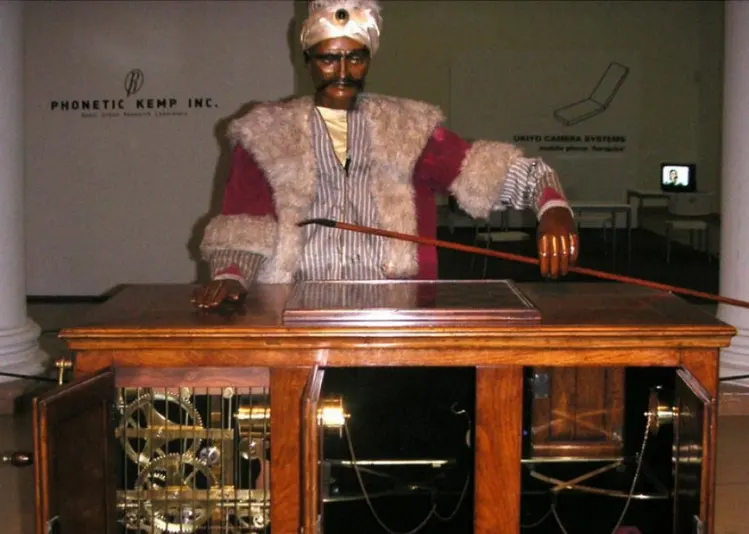
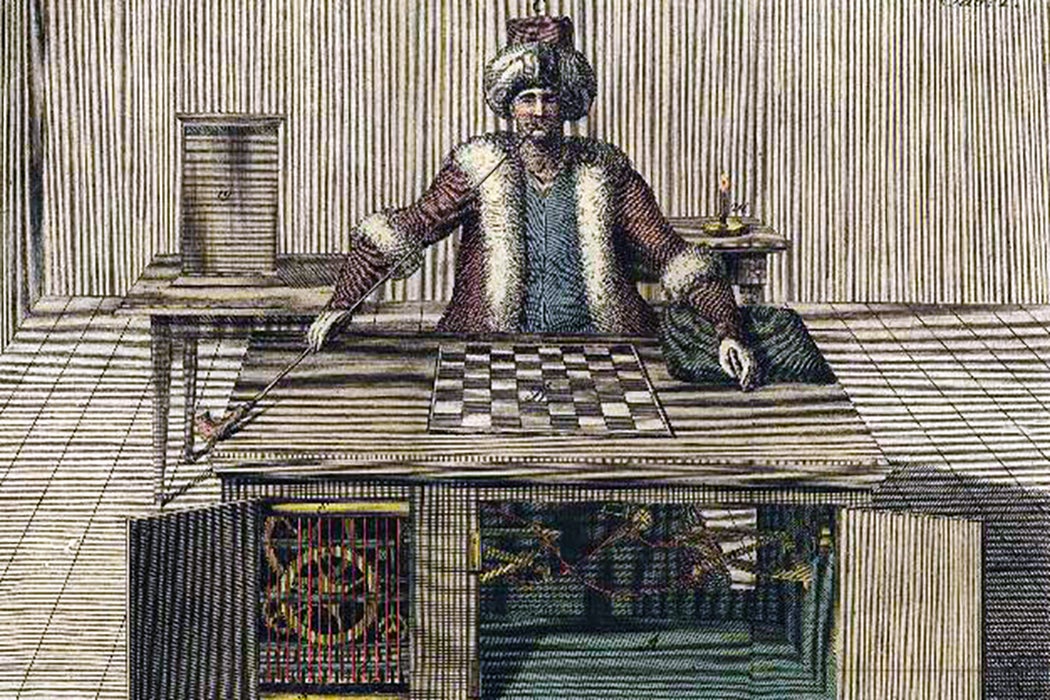
The platform took its cheeky name from an infamous 18th-century "automaton" that appeared to play chess against human opponents entirely on its own, wowing European royalty for decades. In reality, the machine was an elaborate hoax: a skilled human chess player was hidden inside the cabinet the whole time, secretly operating the mechanical arm. Bezos leaned into the joke, describing Mechanical Turk's blend of computer interface and hidden human labor as "artificial artificial intelligence" — a phrase that turned out to be more prophetic than he probably intended.

The Invisible Workforce Behind the AI Boom
At its peak, Mechanical Turk connected more than 500,000 registered workers — known affectionately, and sometimes bitterly, as "Turkers" — with companies and researchers around the world. Early on, in 2007, it already had more than 100,000 workers logging in from over 100 countries. Tasks ranged from mind-numbing (transcribing audio clips, tagging images, filling out surveys) to surprisingly consequential: labeling the datasets that fed directly into the machine-learning boom of the 2010s and 2020s.
That last part is the twist that makes this shutdown sting. Long before "AI training data" was a phrase anyone outside a computer science department used, Mechanical Turk workers were the ones doing it — clicking through thousands of images to teach early computer-vision systems what a stop sign or a cat looked like, or rating chatbot responses to help fine-tune the earliest large language models. Academic researchers have leaned on MTurk for two decades, not just for AI labeling but for behavioral psychology studies, market research and survey work, because it offered a cheap, fast way to reach a large and reasonably diverse pool of human respondents.
In other words, Mechanical Turk didn't just coincidentally exist alongside the AI revolution — in a very real sense, it helped build it, one poorly paid click at a time.
Eaten by the Monster It Helped Raise
So why kill a 21-year-old platform now, right as demand for human-labeled AI training data has never been higher? Because the nature of that demand has changed, and Mechanical Turk was built for a version of the AI industry that no longer exists.
Amazon quietly stopped accepting new Mechanical Turk customers back in early July 2026, a move many longtime Turkers immediately read — correctly, it turned out — as a sign the platform's final closure was coming. The company has now confirmed MTurk will fully shut down on September 30, 2026, and it's taking a related product, SageMaker Ground Truth, down with it.
The AI industry has moved on from Mechanical Turk's anonymous-crowd model toward specialized data-labeling companies like Scale AI, Surge AI, Mercor and Prolific, which recruit and vet workers — often subject-matter experts, not anonymous crowdworkers — to handle the kind of high-value, high-precision labeling that today's frontier AI models require: rating complex chains of reasoning, checking code, and evaluating nuanced safety judgments, rather than simply drawing boxes around cats in photos. Quality control had also become a serious liability for MTurk's crowdsourced model. A widely cited 2023 academic study out of Switzerland found that as many as 46% of Mechanical Turk workers were themselves using AI chatbots to complete the very tasks they were being paid to do "by hand" — an irony that undercut the platform's core value proposition of delivering authentic human judgment.
What Happens to the Turkers
For the Turkers themselves, the shutdown is a far more immediate and personal blow than a footnote in AI industry history. MTurk offered something increasingly rare: fully remote, flexible, pick-your-own-hours digital work that people could do from a laptop or even a smartphone, often to supplement disability income, care for family members, or patch together a living in regions with limited local job opportunities. Worker forums lit up with a mix of resignation and anger when Amazon first announced it would stop taking new customers in July, with many longtime workers saying they'd suspected the end was coming for months as available tasks dwindled and pay rates stagnated.
Unlike a modern gig-economy platform with a large PR apparatus and severance-adjacent goodwill gestures, Mechanical Turk workers have historically operated in a strange legal gray zone — classified as independent contractors performing "tasks" rather than employees doing "jobs," with no minimum wage guarantee, no benefits, and, workers say, minimal recourse when a requester rejected completed work without paying for it. Labor researchers and journalists have documented this dynamic for years, describing MTurk as an early and instructive case study in the precarious "ghost work" that underpins much of the modern digital economy — human effort that consumers never see and rarely think about, hidden behind a polished AI interface.
Expert Perspective
Technology historians and labor researchers have long argued that Mechanical Turk's real legacy isn't the tasks it processed but the template it created. Outlets that have tracked the platform since its early years, including IEEE Spectrum, note that MTurk essentially invented the modern AI-adjacent gig-labor model — the idea that vast, invisible pools of human labor could be summoned on demand, priced by the task, and hidden behind a seamless-looking digital product. Every data-labeling startup that has since raised venture capital by promising to fuel the AI boom, industry observers note, is in some sense running Bezos's original 2005 playbook, just with better pay, tighter quality control, and far more sophisticated tasks.
That's part of why the shutdown is being read across the tech industry less as a random corporate housekeeping decision and more as a symbolic marker of an era ending: the primitive, anonymous-crowdsourcing phase of the AI data supply chain is being replaced by a professionalized, vetted-expert phase — and the platform that pioneered the entire category is being quietly switched off in the process.
What This Means for You
If you've never heard of Mechanical Turk, you've almost certainly benefited from it anyway. Chances are good that some product recommendation you got, some photo-tagging feature on your phone, some chatbot response that felt oddly well-calibrated, or some early version of a voice assistant in your kitchen was shaped, at some point in its development pipeline, by a Turker earning a few cents to judge whether an AI's answer made sense. The shutdown is a reminder that the "artificial intelligence" reshaping daily life has never been purely artificial — it has always rested on a foundation of underpaid, largely invisible human judgment, and the market for that judgment is now consolidating into fewer, more specialized hands.
For the roughly half a million people who have used the platform over the years, many of whom are still active today, the practical advice is simple and urgent: withdraw any earned balances, complete or cash out pending tasks before the September 30 deadline, and look toward the newer wave of data-labeling and "AI trainer" platforms — Scale AI, Prolific, Mercor, Outlier and others — that have absorbed much of the demand MTurk once served, albeit often with steeper vetting requirements and more specialized skill demands than the old click-and-earn model ever asked for.
The Bottom Line
Jeff Bezos built Mechanical Turk as a joke with a serious purpose: a workaround for the gap between what computers could do and what only humans could still manage. Two decades later, that gap has narrowed dramatically — largely because platforms like Mechanical Turk supplied the raw human judgment needed to train the machines that closed it. On September 30, 2026, the platform that quietly helped build the modern AI industry will switch off for good, leaving behind a half-million-strong workforce searching for what comes next, and a tech industry quietly acknowledging that the "artificial artificial intelligence" experiment worked almost too well.
Published By | Tech Wiz