Science and Tech.
For six decades, humanity's hunt for a message from the stars has been aimed, almost obsessively, at one narrow sliver of the radio dial. Scientists called it the "water hole" — a quiet stretch of spectrum between 1.42 and 1.66 gigahertz where hydrogen and hydroxyl radicals, the building blocks of water, naturally hum. The logic was almost poetic: if aliens wanted to send a "hello" that any spacefaring civilization would think to check, this was the obvious dial to leave it on.
But what if the aliens changed the station decades ago — and nobody told us?
That's the unsettling, thrilling possibility raised this week by a 20-something doctoral researcher at the University of Manchester named Louisa Mason, who just pulled off something remarkably clever: instead of booking new time on an enormous telescope, she went digging through data that was already sitting in an archive, collected for entirely different scientific purposes, and repurposed it into the first-ever search for alien technosignatures at frequencies nearly nobody has checked before.
The results, presented at the Royal Astronomical Society's National Astronomy Meeting (NAM 2026) in Birmingham and detailed in the journal Monthly Notices of the Royal Astronomical Society, didn't turn up little green men. But they did something almost as remarkable: they revealed that SETI — the Search for Extraterrestrial Intelligence — has been quietly covering vastly more of the sky than anyone realized, while also exposing a gaping, practically unexplored region of the radio spectrum that could be hiding exactly the kind of signal we've been straining to hear all along.
The Dusty Archive That Became a Telescope Aimed at Aliens
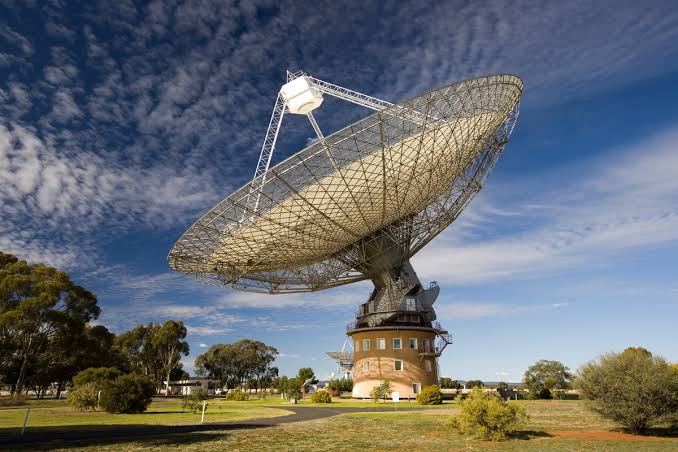
Mason's tool of choice was ALMA — the Atacama Large Millimeter/submillimeter Array, a collection of 66 high-precision antennas spread across the high, dry Chajnantor plateau in northern Chile, 16,570 feet above sea level. ALMA wasn't built to hunt aliens. It was built to study the cold universe — star-forming clouds, distant galaxies, protoplanetary disks — using millimeter and submillimeter wavelengths that most other telescopes can't touch.
That, it turns out, is exactly what makes it such an intriguing SETI instrument. While traditional alien-hunting efforts, like those run by the SETI Institute's Allen Telescope Array or the Breakthrough Listen project, have overwhelmingly focused on the classic water hole band, ALMA's specialty — the millimeter and submillimeter range, in this case zeroing in on frequency windows around 90.6 and 93.2 gigahertz — sits far outside that comfort zone.
Rather than requesting fresh telescope time, which is scarce and competitive, Mason combed through ALMA's public archive: observations that other astronomers had already made and logged away after they'd gotten what they needed from them. Buried inside four of those archival observations, aimed at ordinary target stars for unrelated reasons, was exactly the kind of raw radio data a technosignature hunter needs — she just had to know how to look for something nobody else was looking for.
"Almost completely unexplored for SETI" is how Mason described the millimeter and submillimeter bands in comments released alongside the findings. It's a striking admission for a field that's been actively scanning the skies since Frank Drake first pointed a radio dish at two nearby sun-like stars back in 1960. Sixty-six years in, and there are still enormous stretches of the dial where humanity has essentially never pressed its ear to the wall.
No Aliens Found — But a Far Bigger Discovery Hiding in the Math
Here's where the story gets genuinely startling, and it has nothing to do with little green men.
When Mason ran a more sophisticated galactic modeling technique over an earlier, separate SETI survey — one that had used 1,327 individual telescope pointings — she found that the number of stars effectively covered by that survey wasn't the roughly 288,000 previously logged in the Gaia stellar catalog. It was more than 6.1 million.
Read that again: the same chunk of sky-scanning data secretly captured over twenty-one times more star systems than astronomers had credited it with. The discrepancy comes down to how earlier calculations counted only stars precisely catalogued by Gaia, Europe's stellar-mapping space observatory, while Mason's galactic model accounted for the vastly larger population of stars that exist in those same patches of sky but haven't been individually catalogued yet. It's the difference between counting people you have ID cards for versus estimating everyone actually standing in the room.
The implication rippled through the SETI community almost instantly: decades of past survey data may already contain far more alien-hunting coverage than anyone gave it credit for — the equivalent of discovering that an old net you'd written off as too small had actually been quietly trawling twenty times the volume of ocean.
As for the direct hunt itself: across the archival ALMA observations Mason examined, no candidate technosignatures turned up — no narrowband signals with the tell-tale artificial fingerprint that separates an alien transmitter from the ordinary static of the cosmos. That's not nothing, but it's also not nothing to worry about; a single set of four observations, at two frequency windows, covers only the tiniest fraction of a galaxy that holds an estimated 100 to 400 billion stars.
Why The "Water Hole" Became SETI's Comfort Zone in the First Place
To understand why this matters, it helps to understand just how deep the water hole groove had worn into the SETI project's thinking. Since the early Cold War-era origins of the search, from Project Ozma in 1960 through the SETI Institute's founding in 1984 and into the Breakthrough Listen initiative launched by Yuri Milner and Stephen Hawking in 2015, the overwhelming majority of alien-hunting telescope time has clustered around that same 1.42–1.66 GHz band.
The reasoning was sound as far as it went: hydrogen, the most abundant element in the universe, naturally emits radiation at 1.42 GHz, while hydroxyl radicals emit near 1.66 GHz. Any civilization doing basic radio astronomy, the thinking went, would stumble onto these frequencies early and might reasonably guess other civilizations would recognize them too — a kind of universal, physics-based Rosetta Stone for where to listen, and where to shout.
But that assumption baked in a quiet form of tunnel vision. It assumes alien engineers think the way human radio astronomers did in the 1950s and 60s. It assumes cost and technical constraints that made lower frequencies more practical for mid-20th-century Earth also apply to whatever built the transmitter. Millimeter and submillimeter frequencies, the range ALMA specializes in, offer higher potential data rates and tighter, more efficient beams — arguably a more attractive engineering choice for a civilization advanced enough to be broadcasting across interstellar distances in the first place. Nobody had seriously tested that part of the dial, largely because so few instruments in the world are built to listen there. ALMA is one of a small handful uniquely qualified for the job.

Expert Perspective: A Field Reckoning With Its Own Blind Spots
Scientists close to the project describe the result less as a disappointment and more as a long-overdue correction. Mason herself framed the achievement in terms of opening "a new area of parameter space to search" — technical language for what amounts to admitting the map SETI has been using for six decades had a significant unmarked region on it.
Researchers in the broader technosignature field, including those associated with Breakthrough Listen and the SETI Institute, have increasingly argued in recent years that the water-hole-centric approach reflects an anthropocentric bias baked into the search from its earliest days — essentially assuming aliens would communicate the way 1960s American radio astronomers would have. Expanding into ALMA's archival data offers a low-cost way to test that bias without needing to secure dedicated new observing time, which can take years to schedule on an instrument as oversubscribed as ALMA.
There's also a methodological lesson researchers are excited about: SETI doesn't have to mean pointing a dish specifically for that purpose. Just as astronomers have learned to mine archival Hubble and Kepler data for exoplanets nobody was originally looking for, Mason's approach demonstrates that SETI can effectively piggyback on the enormous, ever-growing pile of data collected for entirely unrelated astrophysics — star formation, galactic chemistry, protoplanetary disks — turning years of "leftover" observations into a free, ready-made survey.
What This Means for You
You don't need a telescope in your backyard for this one to matter. It reshapes one of the oldest questions in human history: are we alone?
For most of modern history, the honest answer from science has been "we don't know, and we've barely looked." This finding sharpens that a little. It tells us that the search has covered more ground than we thought (that 6-million-star recalculation is a genuine, quantifiable expansion of humanity's cosmic search radius), while also confirming that we've been almost entirely deaf to an entire category of frequencies where a civilization might plausibly choose to transmit.
If you've ever wondered why, despite decades of scanning, we haven't heard anything — this is a partial answer. It's not necessarily that nobody's out there transmitting. It may be that we've had our radio dial stuck on one station out of thousands.
It also reflects something optimistic about how science increasingly works in the age of big data: expensive, oversubscribed instruments like ALMA don't have to be booked specifically for a fringe-adjacent question like alien hunting to eventually serve that purpose. The data, once collected, keeps giving — sometimes for questions nobody thought to ask when it was gathered.
The Search Continues
Mason's survey covered only a sliver of ALMA's archive and an even tinier sliver of the sky. Researchers say the logical next step is scaling the same archival-mining technique across ALMA's much larger data vault, and potentially applying similar approaches to other millimeter and submillimeter facilities around the world.
Nobody is claiming a signal is imminent. But for a field that has spent sixty years listening to the same quiet corner of the universe's radio static, discovering an entire unexplored band — and realizing the search was already secretly bigger than believed — counts as one of the more electrifying developments technosignature science has produced in years.
Whether anyone is actually out there transmitting on that dial remains, as it always has, the biggest open question in science. But for the first time in a long time, astronomers have a genuinely new place to point their ears.
Published By | Tech Wiz