Written By | Torch Media Africa
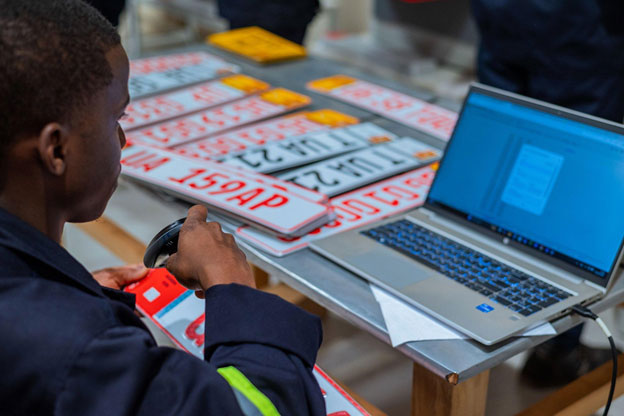
The controversy arrives just as the government promotes a national drive for digital transformation, making it a live test of whether Uganda can deliver technology projects at scale.
SCIENCE AND TECHNOLOGY
A technology rollout under scrutiny
Uganda's digital number plate programme, part of a wider Intelligent Transport Monitoring System (ITMS), has become the country's most talked-about technology story this week. Parliament's Committee on Physical Infrastructure is investigating delays that, according to the Daily Monitor, are costing the country more than Shs4 billion every week. Boda boda unions, motor dealers and traders have lined up to describe the effects, and they are asking Parliament to cut fees and fix the supply problem. The controversy arrives just as the government promotes a national drive for digital transformation, making it a live test of whether Uganda can deliver technology projects at scale.
What the project is
The ITMS is a system that, as described in the Monitor's reporting, combines monitoring, video surveillance, data analytics and control functions. Digital number plates are the most visible part of it for ordinary citizens: vehicles and motorcycles are fitted with new plates tied to the system. The contract is held by a Russian firm, Joint Stock Company Global Security, under a 10-year arrangement, according to the PML Daily report on the unions' submission to Parliament.
The supply crisis
The heart of the problem is production. The Monitor reports that the contracted provider has reduced its daily output from about 350 plates to about 100. With large numbers of vehicles waiting, the backlog has grown, and some riders say they have waited more than a year for plates. The Monitor estimates the resulting loss to the economy at over Shs4 billion a week, while Parliament's committee has said it intends to conclude its probe within three weeks.
Kampala City Traders Association (KACITA) chief executive Abel Mwesigye told the committee that traders had experienced severe material shortages, especially in June and July, and that delays and higher prices had "greatly impacted" the gross sales revenue of industry players. Motor dealers have complained of a "ping pong" between the Ministry of Works, the ITMS operator and the Uganda Revenue Authority, according to Marvin Ayebale, public relations officer of the Associated Motor Dealers in Uganda, who called for accountability audits, including on liability for tracking equipment.
The Works Minister, Fred Byamukama, had earlier given the operator a 30 August deadline to fix production problems, according to the PML Daily report. The fact that the committee is still hearing evidence about shortfalls a month later suggests the deadline did not resolve the problem, although the reporting reviewed here does not say what sanctions, if any, followed.
The cost question
Cost is the second major grievance. The KACITA testimony, as reported by the Monitor, compared the previous plate price of Shs137,000 with the current digital plate price of Shs714,300. PML Daily, reporting on the boda boda unions' submission, cites a previous charge of Shs125,000 and describes the new fee as 470 percent higher. The two outlets give different figures for the old price, but both describe a fivefold or greater increase. Other charges also apply, including a Shs50,000 conversion fee, Shs75,000 for replacement, and Shs49,000 plus Shs7,000 for inspection on a duplicate application.
The boda boda alliance, led by chairman Frank Mawejje, says it represents more than 1.2 million motorcycle taxis as well as 21,000 taxis and 900 buses, with an estimated Shs4.2 trillion invested in vehicles. Mawejje pointed out that riders typically earn Shs20,000 to Shs40,000 a day, making the registration fee "more than a week's earnings." The alliance submitted more than 25 recommendations to the committee, including issuing plates within 7 to 14 days, setting up installation centres in every division and municipality, subsidising plates for low-income riders, allowing instalment payments through savings cooperatives, issuing temporary permits during delays, and waiving penalties when system failures occur.
Transparency and data protection
The unions also raised digital-rights concerns, which are notable in a project that includes video surveillance and data analytics. They asked for published privacy policies and an independent oversight committee that includes union representatives. These demands reflect a global pattern in which vehicle-tracking and surveillance programmes are accepted more readily when citizens know what data is collected, who can access it and how it is protected.
Separately, the Monitor has published an investigation under the headline "Digital plates: No value for money, documents show," and Nilepost has reported whistleblower allegations about a fresh Shs158 billion in procurement connected to the plates. The full details of those reports were not available for this article, so they are mentioned only as additional reporting that the committee and readers may wish to follow; the allegations are unproven.
The wider digital agenda
The timing is awkward for the government's technology narrative. On 8 September, at the 3rd National ICT Summit, officials set out an ambition to use artificial intelligence, digital infrastructure and innovation to build a USD 500 billion economy, from roughly USD 50 billion today, which would require growth of about 15 percent a year, according to TechAfrica News. The summit highlighted six regional ICT hubs, aggregated IT procurement and automated business registration. Then, on 28 September, at the 10th National Conference on Communications (NCC2026) at Makerere University, speakers including Julian Rweju of NITA-U said that "government is no longer just a service provider; it is a marketplace," and called for open APIs so the private sector can build digital solutions.
Against that background, a flagship digital project that struggles to produce physical plates illustrates the gap between strategy and delivery. The plates problem is not about advanced technology such as AI; it is about manufacturing capacity, procurement discipline, pricing and contract management. Those are the same capabilities that larger digital ambitions will need.
Who the main players are
Parliament's Committee on Physical Infrastructure, chaired by Mwine Mpaka, MP for Mbarara City South, is leading the inquiry and has said it will escalate the matter by seeking guidance from the President through the Speaker. The Ministry of Works, under Minister Fred Byamukama, oversees the project. The contractor is Joint Stock Company Global Security. The affected parties include boda boda unions, taxi and bus operators, motor dealers, traders and individual vehicle owners.
Why it matters
The cost to the economy is direct: delayed registration holds up vehicle sales, raises compliance risk for owners and cuts into traders' revenue. For low-income riders, the fee is a barrier to lawful operation. For government, the credibility of ITMS, and of other large digital projects, depends on demonstrating that contracts deliver on time and at a fair price. The project also raises a procurement question, since long single-provider contracts tend to give the operator considerable leverage when performance falls short.
What to watch next
The committee's three-week timeline means findings could emerge in mid to late October. Key questions are whether it recommends a fee cut or instalment payments, whether it finds fault with the contract or the operator, and whether it asks the President to intervene. Watch also for any official response to the whistleblower claims and the Monitor's value-for-money reporting, for changes in daily production numbers, and for whether the government introduces temporary permits or decentralised installation centres as the unions have asked. The outcome will be an early indication of how seriously the state intends to hold technology contractors to account as it pursues a far larger digital agenda.



