Share
Ugandan politics has never lacked drama. But sometimes the drama is not in what is shouted at rallies — it is in what is signed behind closed doors.
When Norbert Mao, long-time president of the Democratic Party (DP), accepted appointment as Minister of Justice and Constitutional Affairs under the government of Yoweri Museveni and the ruling National Resistance Movement (NRM), Uganda witnessed more than a cabinet reshuffle. It witnessed a moment that forced the country to interrogate the meaning of opposition itself.
Was it statesmanship?
Was it strategic engagement?
Or was it a marriage of convenience that hollowed out one of Uganda’s oldest political parties?
The Treaty That Shook the Base
The cooperation agreement between Mao’s DP leadership and the NRM did not only produce ministerial appointments. It also coincided with the eventual elevation of Gerald Siranda, DP Secretary General, to the East African Legislative Assembly (EALA) — an outcome many critics argue was politically facilitated by NRM support.
For a party historically positioned as an opposition force, this collaboration blurred ideological lines. Supporters who questioned the arrangement expected internal debate. Instead, what followed were fierce internal wrangles, court battles, and factional confrontations that left DP looking less like a structured political organisation and more like a contested estate.
The central question remains: Can a party president serve in a government he previously criticised — without relinquishing party leadership — and still claim to embody the opposition?
The Slow Disappearance of DP
The Democratic Party, once a formidable force in Uganda’s political history, now appears institutionally weakened. Structures that once mobilised nationwide energy seem dormant. Grassroots mobilisation has declined. Public trust among traditional supporters has eroded.
What remains, critics argue, resembles a scarecrow in a political field — present in appearance, but ineffective in substance. A pair of jaws without teeth.
Political analyst Dr. Frederick Golooba-Mutebi of Makerere University has previously observed in public commentary that Uganda’s political system has mastered “incorporative control” — absorbing critics into the centre to neutralise dissent rather than confront it ideologically. Whether one agrees entirely or not, the DP episode fits this analytical pattern.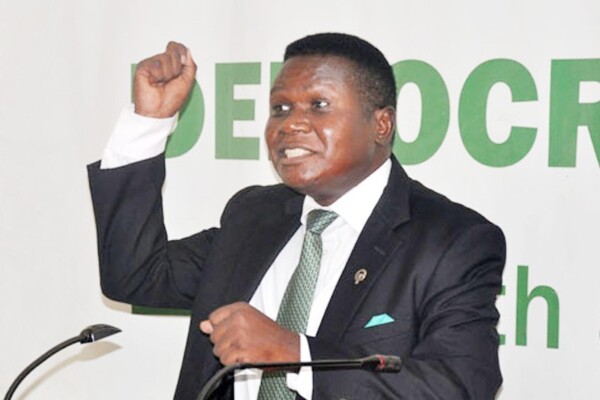
DP's Nobert Mao
Museveni’s Long Game
Years ago, President Museveni was quoted expressing confidence that Uganda would eventually have no meaningful opposition. Many dismissed that as political rhetoric. Today, it reads more like strategy.
The President has consistently demonstrated an ability to fragment opposition ranks — through appointments, selective negotiations, legal pressure, and political incentives. By bringing select opposition figures into government, he simultaneously projects inclusivity while weakening alternative centres of power.
The pattern is not isolated to DP.
Within the Forum for Democratic Change (FDC), internal tensions between leaders such as Patrick Amuriat Oboi, Nathan Nandala-Mafabi, and the historically dominant figure of Kizza Besigye exposed deep fractures. FDC, once organised around Besigye’s disciplined mobilisation style, gradually descended into factional disputes over strategy, funding, and ideological direction.
The subsequent emergence of splinter movements only deepened the fragmentation.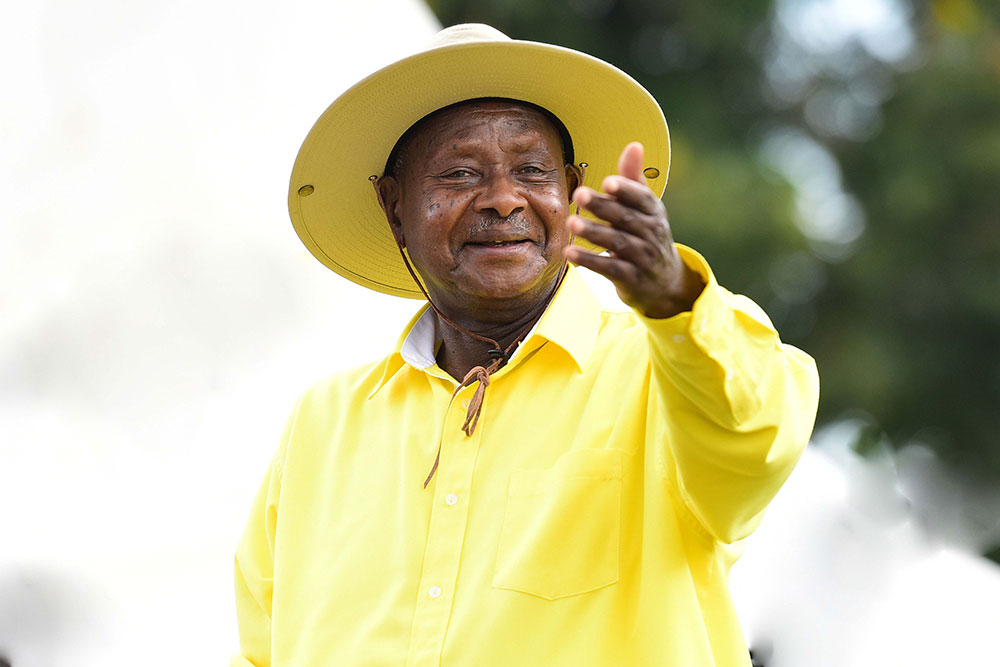
President Yoweri Museveni
When reports emerged of meetings between certain opposition figures and State House — including controversies surrounding figures such as Wasswa Nsibambi alongside other political actors — suspicion intensified. Whether those engagements were legitimate dialogue or quiet accommodation, public perception hardened: opposition unity was porous.
To many ordinary Ugandans, the pattern suggested not ideological evolution but political meal cards — politics as personal survival rather than collective liberation.
Marriage of Convenience or Political Pragmatism?
Supporters of Mao argue that engagement with the ruling government is not betrayal but maturity. They claim that constitutional reform, justice sector improvements, and national dialogue require participation, not perpetual antagonism. They insist that transformation can occur from within.
Yet critics counter that participation without structural reform risks legitimising the very system the opposition once sought to challenge. If cooperation produces no visible democratic gains — no electoral reforms, no expanded civic freedoms, no reduction in state overreach — then what exactly is being negotiated?
Political scholar Prof. Sabiti Makara has long argued in academic discourse that African opposition parties often face a dilemma between survival and principle. When resources are centralised in the ruling establishment, opposition leaders are tempted into alliances that ensure political longevity but erode ideological clarity.
DP’s situation embodies that dilemma.
The Politics of Confusion
One of the most potent strategies in power consolidation is not brute repression, but confusion. When voters cannot distinguish between government and opposition, accountability weakens.
If opposition leaders accept appointments without relinquishing party command, internal democracy suffers. If party structures are used to defend personal arrangements rather than collective principles, trust collapses.
The result is suspicion — among parties, within parties, and between leaders and supporters.
This fragmentation benefits only one centre: the incumbent.
A Nation Without Opposition?
A functioning democracy requires a credible alternative government. Opposition is not an enemy of the state; it is its constitutional necessity. When opposition parties become extensions of the ruling establishment — whether by choice or by pressure — democracy shrinks.
The gradual weakening of DP, the internal implosions within FDC, and the co-option of influential figures collectively move Uganda closer to the prediction once made by President Museveni: a political landscape where opposition exists in name but not in effect.
If that trajectory continues, Uganda risks becoming a de facto one-party dominant state — not by law, but by attrition.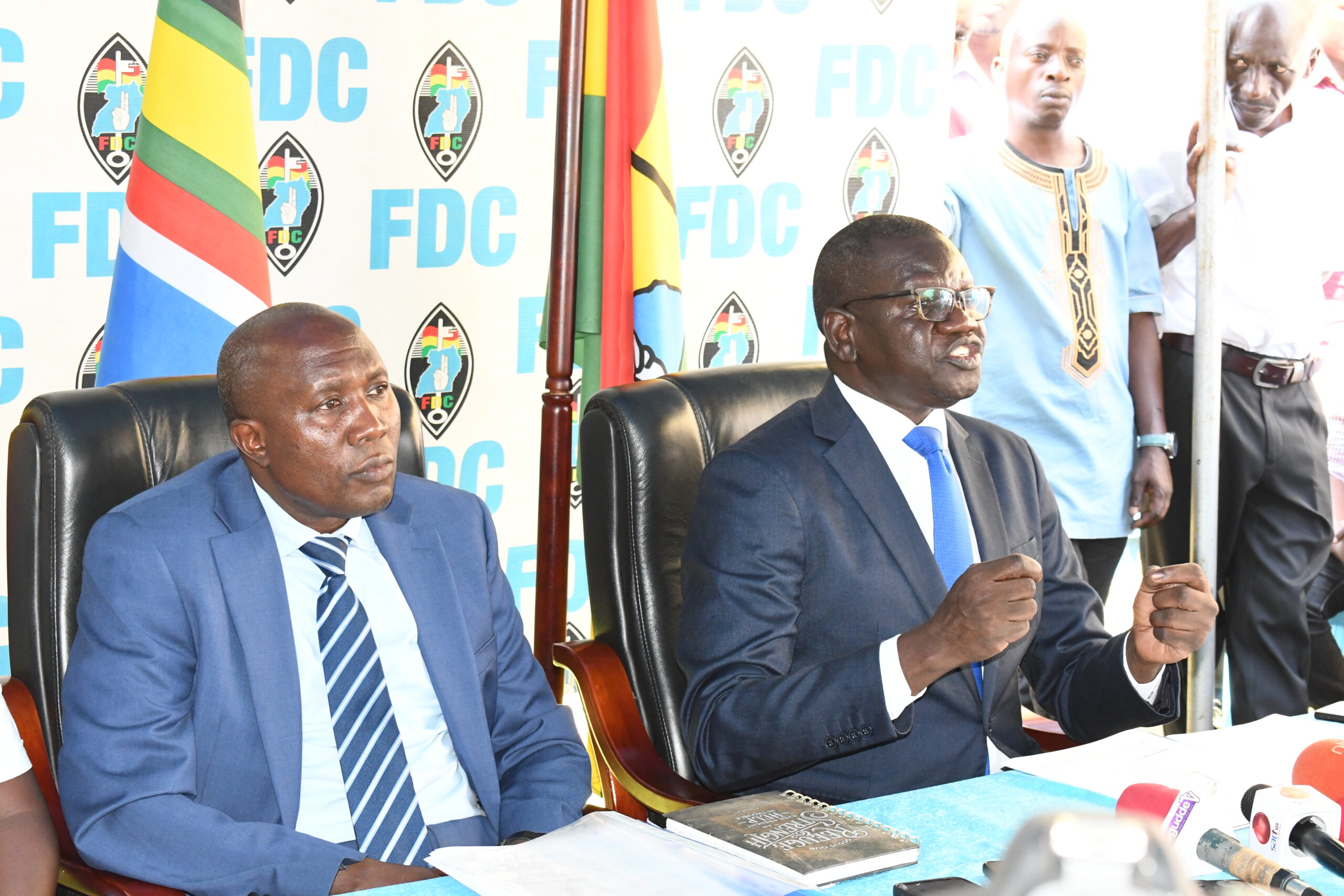
Conclusion: The Price of Political Convenience
History judges political actors not by the titles they hold, but by the institutions strengthened or weakened under their watch.
If cooperation produces genuine reform, it may be vindicated. But if it results only in appointments without transformation, then it will be remembered as accommodation, not statesmanship.
The real casualty in these political marriages is not party branding. It is public trust.
Ugandans deserve an opposition that is organised, principled, internally democratic, and resistant to fragmentation. Without that, elections become ritual, dissent becomes decorative, and democracy becomes performance. The question is no longer whether this is betrayal or pragmatism.
The question is whether Uganda can sustain a republic without a resilient opposition.
Time will answer — but history is already taking notes.
About the Writer
Evan Sande Ndahura is a Ugandan political and legal commentator, columnist, poet, and social justice advocate whose writings focus on governance, constitutionalism, democracy, and the political economy of power in Africa. He is widely published on issues of judicial accountability, electoral justice, human rights, and institutional reform, with a particular emphasis on Uganda’s political and legal systems. Ndahura writes from a Pan-African critical perspective, interrogating the failures of state institutions and the lived realities of ordinary citizens under entrenched systems of power. He believes that the liberation of Africa will occur through a mighty pen, not the gun.



