Written By | Staff Writer
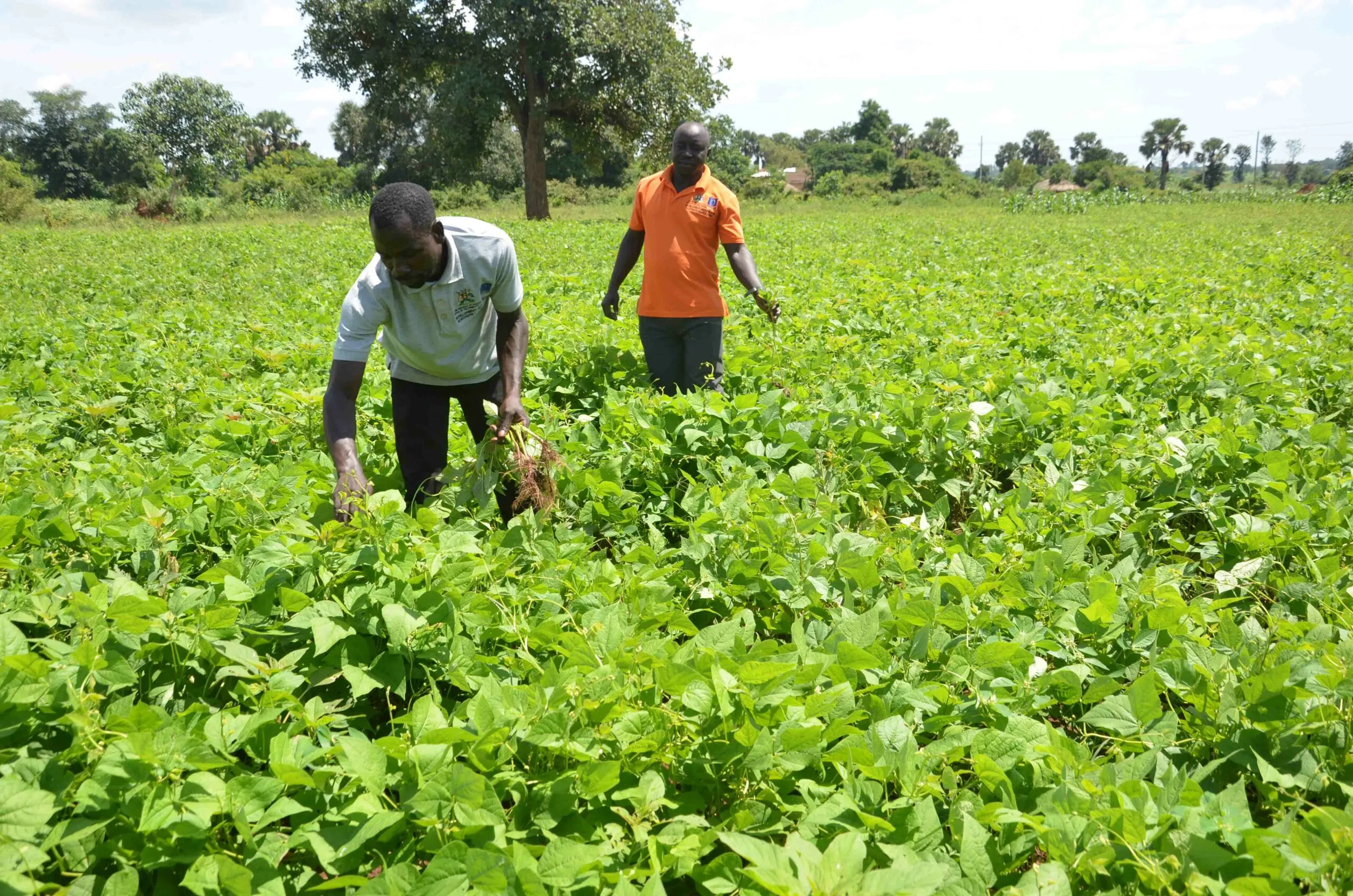
Lango, Teso farmers embrace growing iron-rich beans
Agriculture
On July 25, the Seeds of Gold Farm Clinic pitched its tents in Serere District, the second stop on a five-town national tour aimed at putting climate-smart farming technology and financing within reach of ordinary Ugandan farmers. The timing was hard to ignore. Barely two weeks earlier, Cabinet had been briefed that staple crops across the wider Teso sub-region — cassava and sweet potatoes chief among them — were drying up in the fields after a prolonged dry spell, with the State Minister for Teso Affairs, Dr Kenneth Clement Ongalo Obote, warning that urgent intervention was needed to head off a worsening food security crisis. Former state minister Musa Ecweru went further, describing crop failure as “widespread” across the sub-region and cautioning that thousands of farming households were at risk of food shortages if help did not arrive quickly.
Into that backdrop rolled a very different kind of response: not emergency food aid, but a one-day roadshow of scientists, bankers and agribusiness specialists offering Serere's farmers drought-tolerant seed varieties, irrigation equipment and access to credit.
A 14-year-old platform meets a familiar crisis
Now in its 14th year, the Seeds of Gold Farm Clinic is organised by Nation Media Group Uganda in partnership with the National Agricultural Research Organisation (NARO), with backing from the Bank of Uganda, the Capital Markets Authority, KCB Bank, and solar irrigation firms SunCulture and d.light Uganda. This year's tour, launched at NARO's National Crops Resources Research Institute (NaCRRI) in Namulonge in June under the theme “Climate-smart farming for bumper harvests,” is scheduled to visit Lira, Serere, Kabale, Fort Portal and Masaka through to March 2027, with organisers aiming to reach at least 1,200 farmers at each stop. To date, the programme has run 43 clinics nationwide.
The choice of theme was not incidental. Last year's edition of the clinic could not complete its full tour after the Mbarara leg was cancelled due to a foot-and-mouth disease outbreak — an interruption that organisers say crystallised exactly the kind of shocks, disease, drought and market disruption, the programme exists to help farmers withstand. Speaking at the June launch, NMG-Uganda managing director Susan Nsibirwa said the clinics have shifted from a one-off training event into what she called an “influential agricultural knowledge-sharing platform,” but she also acknowledged that the share of Ugandans engaged in farming has been declining even as the sector remains central to the economy.
What NARO is putting on the table
For a region like Teso, where cassava and sweet potato — two of the crops now failing in the fields — are dietary staples, the technology pipeline NARO is showcasing at these clinics is directly relevant. Dr Titus Alicai, NaCRRI's director of research, told the Namulonge launch that the institute is racing to develop heat- and drought-tolerant wheat varieties suited to lowland conditions, rather than the cooler highland zones where Uganda's existing wheat performs best, alongside a “multiple-harvest” rice variety that regenerates and produces grain repeatedly for up to two years after a single planting, without the need for replanting each season. NaCRRI is also preparing to release a nutrient-dense black rice, and is advancing bio-fortified beans rich in zinc and iron, drought-tolerant legumes, and — most pertinent to Serere's immediate crisis — disease-resistant cassava and sweet potato varieties bred specifically to withstand the kind of prolonged dry spells now hitting Teso.
“Our work only makes sense when the technologies reach farmers,” Alicai said. “That is why platforms such as the Seeds of Gold Farm Clinics are important.” It is a fair point, but also an implicit admission of the central challenge such research programmes face across Uganda: resilient varieties developed in a research station only help farmers if they are multiplied, distributed and adopted fast enough to matter before the next planting season — and a single-day clinic reaching 1,200 farmers in a district of tens of thousands of farming households is, at best, a demonstration effect rather than a mass rollout.
Money as the other half of resilience
The clinic's financial-sector partners frame access to credit as just as critical as access to seed. Bank of Uganda's Director of Administered Funds, Edward Mugerwa, used the June launch to argue that climate-smart agriculture has become “a macroeconomic imperative” rather than a purely farming concern, noting that when drought or pests hit crops, food prices rise and “the entire economy is affected” — a dynamic Uganda has seen play out repeatedly as food-crop inflation has spiked following poor harvests in recent years. KCB Bank's head of SME banking, Wensi Nuwagaba, said the bank's Agriculture Credit Facility offers farmers financing at rates as low as 12 percent and traders at around 15 percent, spanning the value chain from input suppliers to processors and exporters, alongside a dedicated programme for women-led agribusinesses. The Capital Markets Authority, meanwhile, is using the clinics to introduce farmers to financing options beyond traditional bank loans, tying the pitch explicitly to Uganda's ambition of a $500 billion economy by 2040 under its so-called 10-fold growth strategy, in which agro-industrialisation features as a central pillar.
Two responses, two timelines
What makes the Serere stop worth watching is less the clinic itself, which is a well-established annual fixture, than the coincidence of geography and timing. Cabinet's food security report on Teso represents a short-term, relief-oriented response to a crisis already underway: crops in the ground are failing now, and households need support before the next harvest. The farm clinic represents the opposite end of the policy spectrum: a longer-term, structural bet on resilient seed varieties, irrigation technology and formal credit that, even if adopted immediately by every farmer who attended, would not bear fruit until seasons from now.
Both responses are arguably necessary, but neither substitutes for the other, and the gap between them is where farmers in Serere are currently standing. A drought-tolerant cassava variety showcased at a clinic in July offers little to a household whose current cassava crop has already failed and who needs food before the next planting window; conversely, emergency food relief does nothing to prevent the same failure recurring next dry season. Whether Teso's farmers who engaged with NARO's scientists and KCB's loan officers on July 25 can actually access the seed multiplication programmes and credit facilities on offer, in time for the next planting season, will be a more meaningful test of the clinic's impact than the attendance figures on the day.
The wider stakes
For Uganda's policymakers, the Serere leg is also a useful illustration of how the country's climate-adaptation and agricultural-finance agendas are increasingly designed to travel together, rather than being delivered through separate ministries and separate programmes. Coming so soon after similar drought-response measures in Karamoja and Acholi further north, the Teso stop adds to a pattern this year of dry-season crises across Uganda's cattle corridor and eastern grain-growing regions colliding with a parallel, well-resourced push — backed by the central bank, a capital markets regulator and a major commercial lender — to reposition farming as a bankable, technology-driven business rather than a subsistence activity exposed to every failed rainy season. Whether that repositioning reaches households fast enough to matter in places like Serere, where the crisis is not hypothetical but already visible in drying cassava stems, is the question the rest of this year's tour — Kabale in August, Fort Portal in October — will help answer.



