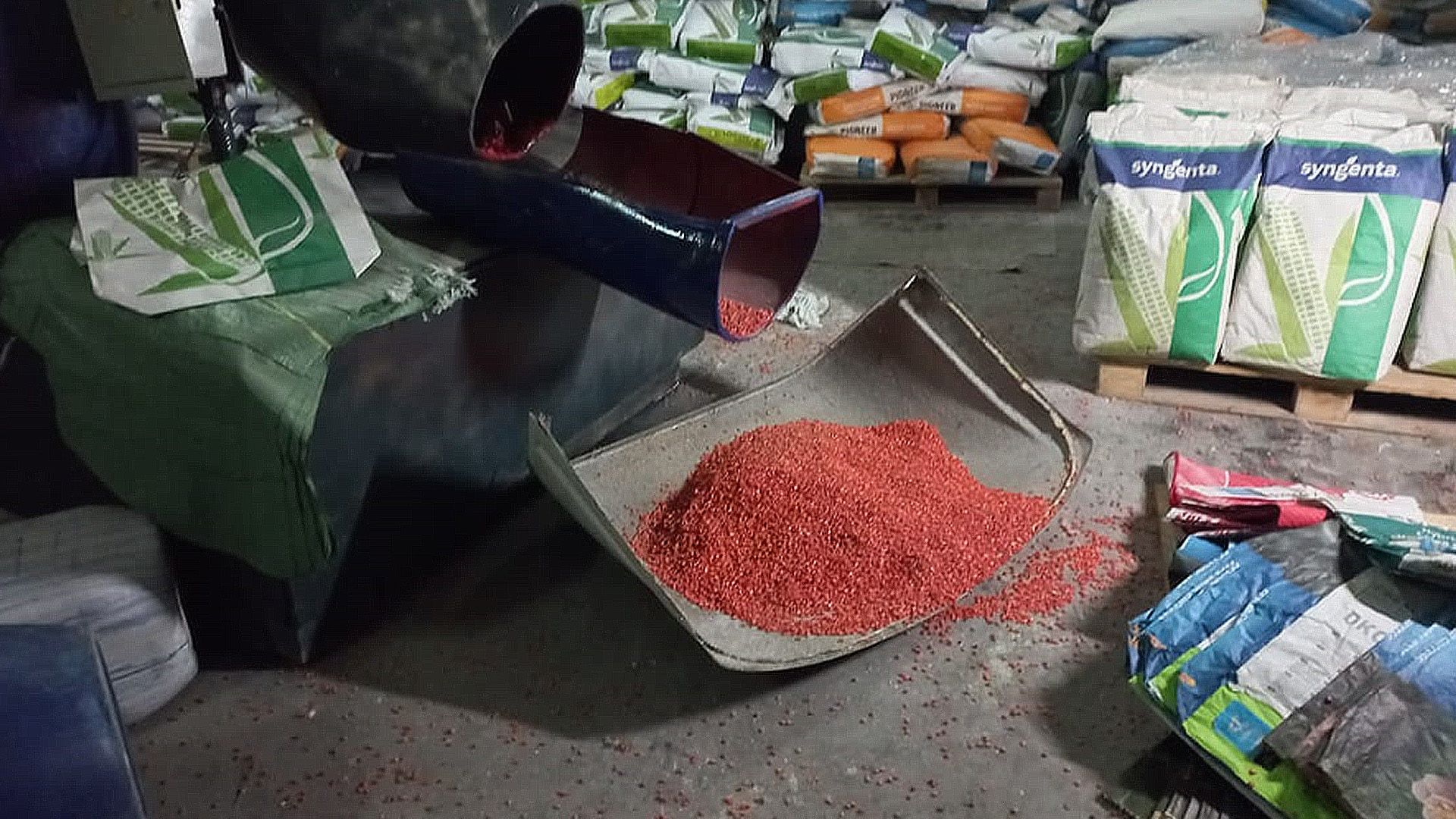
As farmers across Uganda prepare for the second planting season, many will do what they always do: walk to the nearest agro-input shop, hand over cash they have often saved for months, and buy a packet of maize, bean or vegetable seed with a label promising a certain yield, a certain resistance to disease, a certain harvest. For a troubling share of them, that promise is a lie before the seed ever touches soil.
According to Uganda National Bureau of Standards (UNBS) estimates, between 30% and 40% of seed sold in the country is counterfeit — repackaged grain, mislabelled varieties, or expired stock sold as fresh. Some independent surveys paint an even starker picture: a Feed the Future market monitoring study found that more than half of the seed products sampled on the Ugandan market were fake, while a survey by the International Food Policy Research Institute found 40% of Ugandan farmers believe most or all of the hybrid maize seed available to them has been compromised by adulteration or counterfeiting.
The consequences are not abstract. Continent-wide, the African Seed Access Index and allied researchers estimate that counterfeit seed costs African farmers roughly $400 million a year — about Shs1.5 trillion — in lost harvests. Losses from fake agricultural inputs generally can shave up to 30% off a farming household's earnings in a bad season, and the UN Food and Agriculture Organisation has linked fake pesticides specifically to productivity losses of as much as 43%, with counterfeit cassava cuttings triggering production drops of 35% in affected areas. For a country where more than 70% of the population depends on agriculture for its livelihood, a corrupted seed supply chain is not a niche consumer-protection issue — it is a direct threat to food security and rural incomes.
A CRISIS FARMERS CAN'T SEE COMING
Part of what makes counterfeit seed so damaging is that it is nearly undetectable until it is too late. A packet of fake hybrid maize seed looks identical to a genuine one; the difference only becomes apparent weeks later, in a field of stunted plants or a harvest a fraction of what was promised, by which point the farming season — and the household's investment in land preparation, labour and fertiliser — is already lost.
Awareness of the problem varies sharply by region. In the Bugisu sub-region, research has found that 72% of farmers cannot tell the difference between genuine and counterfeit agro-inputs at the point of purchase, leaving them almost entirely dependent on the integrity of whoever is selling to them. Earlier this year, farmers in the Lango sub-region publicly complained about circulating counterfeit and substandard seed even as weather conditions were unusually favourable for planting — a case study in how good rains and good intentions can still be undone by a bad packet of seed.
The problem persists in part because Uganda's seed distribution chain has long depended on trust rather than verification. Seed passes from breeders through multipliers, agro-dealers and roadside vendors, and at almost every link in that chain there is an opportunity to substitute, dilute or relabel product with minimal risk of detection — particularly in rural areas where formal agro-dealer shops compete with informal vendors selling out of open sacks.
A TECHNOLOGICAL FIX, CAUTIOUSLY ROLLED OUT
The Ministry of Agriculture, Animal Industry and Fisheries (MAAIF) is now in the final stages of piloting a response: an online Seed Tracking and Traceability System (STTS), first developed under the Integrated Seed Sector Development programme and later taken over by the Alliance for a Green Revolution in Africa (AGRA). The system is designed to follow seed through the entire production chain — from breeder seed and pre-basic seed through to basic seed and final certification — attaching a digital identity to each batch that farmers can verify before they buy.
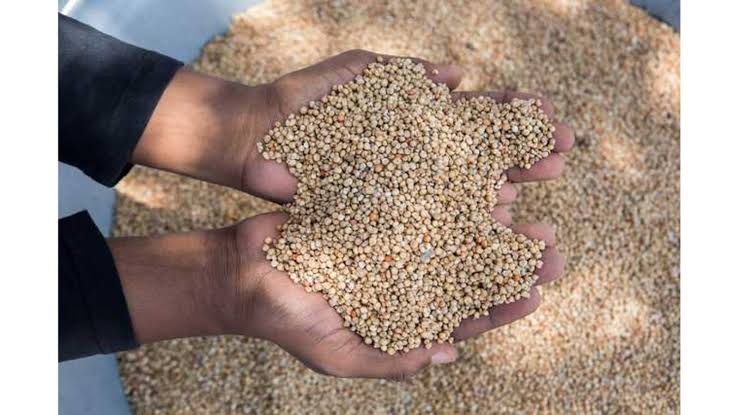
Moses Edward Erongu, senior seed inspector at MAAIF, has been demonstrating the system to industry stakeholders in recent months. It works, he explained, through an inbuilt QR code that farmers with internet-enabled phones can scan to confirm a seed batch's authenticity and origin. For farmers without smartphones — still the majority in many rural areas — the ministry plans to make a USSD code available at full rollout, so verification does not depend on owning expensive hardware.
Just as significant is what the system does on the supply side. It is GPS-enabled, meaning it can track the movements and activity of the 104 para-seed inspectors MAAIF has trained to manage it in the field — a direct response to a problem regulators have quietly struggled with for years: field officers filing inspection reports without ever visiting the farms or seed companies they are meant to be certifying. "As they do the inspection, they will be adding data in the system on-site," Erongu said. "So, you will not sit in an office and complete a report without going to the field; the system will track you." Inspectors who fail to attend to their assigned fields, or who falsify records, will face disciplinary action, he added.
The system is currently being piloted among a limited group of seed companies, running in parallel with the traditional paper-based record-keeping it is meant to eventually replace. That caution is deliberate: MAAIF wants to prove the platform is stable before phasing out paper records entirely, given how central accurate seed certification is to the credibility of the entire formal sector.
GAPS THE TECHNOLOGY CAN'T CLOSE ALONE
The rollout comes alongside the release of the 2025 report on Uganda's formal seed sector, compiled by the African Seed Access Index (TASAI) and presented to stakeholders in Kampala earlier this year. The report found that most Ugandan seed companies still source their breeder seed from the National Agricultural Research Organisation (NARO) through its commercial arm, NARO Holdings — a dependency that concentrates risk at the very top of the supply chain, since any lapse at that level ripples through every seed company that relies on it.
Despite the STTS rollout, the TASAI report was clear that technology alone will not solve Uganda's counterfeit seed problem. Among its key recommendations is the full registration of all seed sellers under Article 8(2) of the Seed and Plant Act — a basic regulatory step that would, for the first time, give authorities a comprehensive list of who is legally permitted to sell seed at all. The report called for that registration drive to be carried out in partnership with the Agro Chemicals Board of Uganda, district local governments and other stakeholders, acknowledging that enforcement in Uganda's sprawling, often informal rural retail networks cannot rely on Kampala-based systems alone.
Dr Asio Mary Teddy, assistant commissioner in charge of Seed Inspection and Certification at MAAIF, told the same stakeholder gathering that data generated through both the TASAI report and the new tracking system would help the ministry identify where gaps in the seed system are most severe and target interventions accordingly — an acknowledgment that the counterfeit seed problem is not uniform across the country and that Kampala's fixes need to be calibrated to conditions on the ground in places like Lango and Bugisu.
WHAT'S AT STAKE FOR THE NEXT HARVEST
For Uganda's smallholder farmers, the timing of this effort matters. The government has staked significant political capital on lifting agricultural productivity and export earnings, pointing to a 6.7% growth rate in the sector over the last financial year as evidence its wealth-creation programmes are working. But that growth story rests on an assumption that inputs — seed above all — actually deliver the yields they promise. A counterfeit seed problem operating at the scale UNBS and independent researchers describe undercuts that foundation quietly, season after season, in ways that rarely generate headlines the way a single dramatic crop failure would.
Whether the Seed Tracking and Traceability System can meaningfully dent a black market this entrenched will depend on how quickly it moves beyond pilot seed companies to the roadside vendors and informal markets where much of the real damage happens — and on whether the registration and enforcement measures the TASAI report calls for are actually funded and carried out. For now, farmers preparing for the next planting season are left with the same calculation they have faced for years: trust the label, or risk a season's income on a packet that looks exactly like the real thing.
Published By | Features Editor