Written By | Staff Writer

Fresh-produce exports have grown 152 percent in a decade while border interceptions have fallen sharply. The gains are real, but so is the risk of taking them for granted
Feature
While the headlines about Uganda's export economy are dominated by gold and coffee, a quieter success story has been building at Entebbe airport and on the smallholder plots that feed it. According to figures reported by the Daily Monitor on 17 September 2026, Uganda's horticultural exports climbed from US$32.1 million (about Shs115 billion) in 2015 to US$80.9 million (about Shs291 billion) in 2024, a rise of roughly 152 percent over the decade. Growth has averaged between 10 and 15 percent a year, the paper reported.
A few days later, on 28 September, a Monitor commentary by guest writer Rowland Bon Nkahebwa added a second data point that helps explain the trend: Uganda recorded 105 international interceptions of fresh horticultural exports in 2022, but only 33 in the first half of 2026. An interception, in the trade's language, is a consignment flagged by an importing country's inspectors, typically for documentation errors, pest infestation, excessive pesticide residues or weak traceability. Each one can mean a rejected shipment, a lost buyer and, in the worst case, tighter scrutiny of every exporter in the country.
Taken together, the two numbers tell a story that is easy to miss in a week dominated by drought and price news: exports are growing while the failure rate is falling. This analysis looks at what lies behind that combination, why it matters for farmers well beyond the airport, and where the vulnerabilities remain.
What Uganda is actually selling
The Monitor's reporting identifies hot peppers, passion fruit, pineapples, avocados and dried fruits as the leading horticultural exports, with the European Union and the United Kingdom as the main destinations. These are high-value, labour-intensive crops that can be grown on small plots, which is what makes the sector so relevant to a country where the typical landholding is small and getting smaller. A hectare of passion fruit or chillies can, in principle, support a household in a way that a hectare of maize rarely can.
The flower trade sits alongside the fresh-produce trade. A Monitor feature from August 2025 described how one Ugandan flower group grew from a two-hectare farm in 1992 to 15 farms covering 300 hectares, with investments exceeding US$150 million, concentrated around the Lake Victoria basin in Mpigi, Wakiso and Mukono, with additional farms in Ntungamo and Kapchorwa. Cuttings, not just cut roses, have become an increasingly important line of business.
Scale matters for perspective. At US$80.9 million, horticulture is a small fraction of a national export bill that the Bank of Uganda's figures, reported by the Monitor on 28 September, show being dominated by gold and coffee, which together account for around 70 percent of merchandise exports. But horticulture's importance is not measured by its share of the total. It is measured by how many households it reaches, how much foreign exchange it earns per hectare, and how much it diversifies a trade structure that is currently very exposed to two commodities.
The rejection problem
The reason interceptions matter so much is that the European market, Uganda's main outlet, has little tolerance for error. A Monitor report from the earlier part of this decade, quoting the Hortifresh executive director, described interceptions of Ugandan fruit and vegetables in Europe falling from 27 to zero over four years, following the collaborative "Farming for Exports" initiative among government, the European Union and the private sector. The same report noted that the EU had audited Uganda's horticultural sector in 2016 and 2019 and warned that the country risked a commodity ban unless production practices improved. A Ministry of Agriculture official was quoted saying farmers "did not know how to manage pests" before training began.
Different sources count interceptions differently, and readers should be careful comparing them. The 2026 commentary puts the 2022 figure at 105; a Monitor report from 2023 said interceptions rose above 100 that year because of chemical residues and live pests; and a 2024 Ecofin report cited more than 200 pest-related interceptions in 2022, a figure that may include a broader set of destination markets or categories. What all the sources agree on is the direction: 2022 was a bad year, and the situation has improved since.
Digital traceability as the turning point
A likely driver of the improvement is RUSH, short for the Re-engineering of Uganda's Sanitary and Phytosanitary Inspection of Horticulture Exports. Developed by the Government of Uganda with Swisscontact, the platform was announced in September 2024, with implementation starting on 30 September that year, according to Ecofin Agency. It lets exporters upload compliance documents online and lets inspectors verify consignments digitally, tracking fresh produce from the farm to Entebbe International Airport. Dr Caroline Nankinga was quoted describing the aim as enhancing the efficiency of inspections.
The logic is simple. Many rejections in the past came not from an inherently unsafe product but from a paper trail that could not prove where the produce had been grown, what had been sprayed on it and when. A system that records the answers at each step lets a problem be caught, and corrected, before a consignment leaves the country, and lets exporters isolate a bad supplier rather than lose a whole shipment. It also gives regulators the data to target enforcement. This is an inference from how the system is described rather than a finding from a published evaluation; no independent assessment of RUSH's effect on the 2026 numbers was located in this research.
What it means for farmers
For smallholders who supply exporters, traceability is a double-edged sword. On one hand, exporters who can demonstrate compliance keep their European contracts, and that is what sustains farm-gate demand. On the other, being traceable means keeping spray records, following pre-harvest intervals and buying inputs that are legitimate. A farmer who cannot do so risks being dropped from the supply chain.
That connects horticulture directly to the agrochemical problem that Uganda's government is now confronting at home. Excess residues are one of the causes of interceptions cited in the commentary, and enforcement against counterfeit and expired farm inputs has been in the news this month, with authorities sealing agro-input shops in Luweero on 18 September. A country cannot credibly assure European inspectors about residues while the input market at home remains uncertain.
The Monitor's related reporting also flagged cartels squeezing farmers and exporters, a reminder that compliance gains do not automatically translate into fair prices. Where a few buyers or aggregators control access to the airport cargo chain, farmers may carry the compliance costs without sharing in the export premium.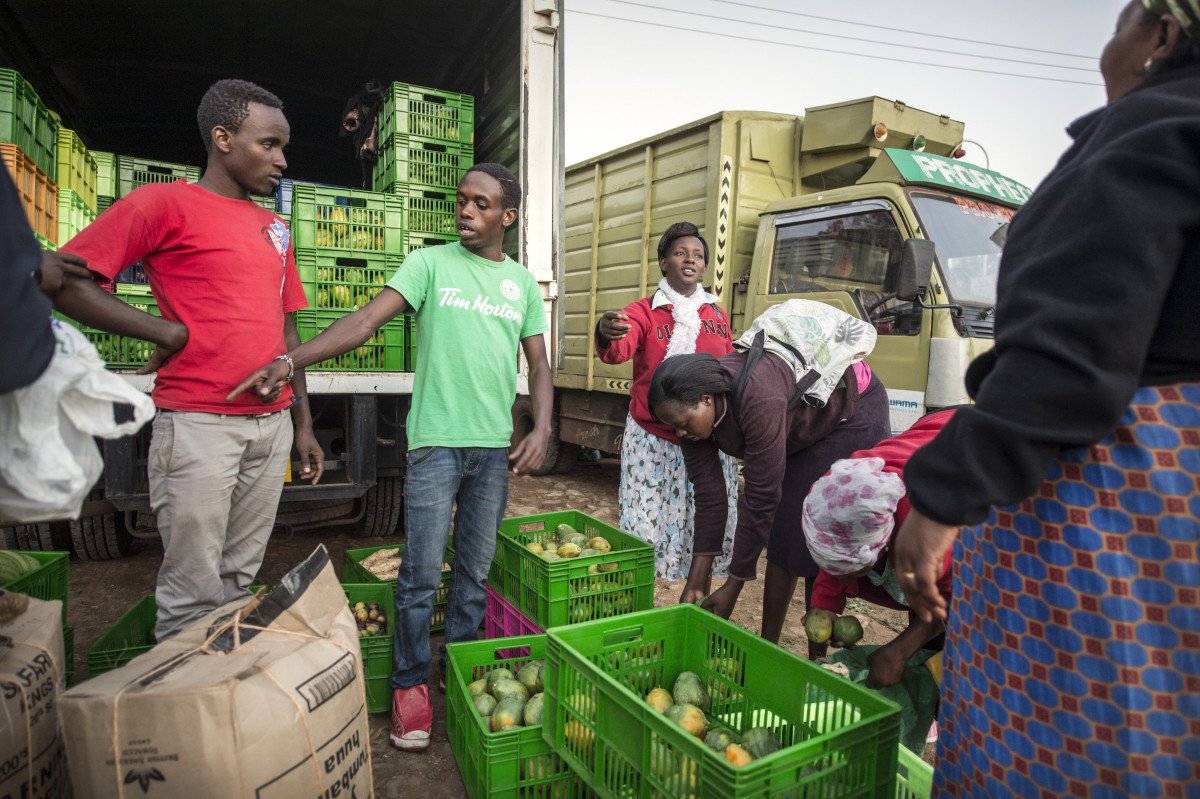
The wider economic implications
Uganda's policy debate is currently focused on the gap between raw exports and value addition. Fresh horticulture sits somewhere in between: it is raw in the sense that it is unprocessed, but it commands a quality-based premium and requires cold chains, packhouses and air freight. On 28 September, the Kyabazinga of Busoga held talks with UAE-based 5PL Logistics Solutions about a possible agro-processing, warehousing and cold-chain hub in Busoga, aimed at reducing post-harvest losses. No investment figure was disclosed and the talks are exploratory, but they show where the constraint lies: cold-chain and logistics capacity, not just farm production.
There is also a strategic point. A country whose export earnings depend on gold and coffee is exposed to price swings in both. Coffee prices, the Monitor noted on 19 September, had rebounded but remained below their pre-April highs. Horticulture will not replace either commodity, but each additional export line with a reliable record of acceptance in Europe reduces that concentration risk and gives the government a stronger hand when negotiating market access.
The risks to watch
The first risk is complacency. The 2022 spike showed how quickly a run of interceptions can arise, and the EU's earlier audits show that its regulators are willing to act. A single high-profile rejection, or a pest that slips through, could undo years of reputation-building.
The second is climate. Uganda is currently forecasting an El Nino-linked rainfall pattern for the coming months, and shifts in rainfall and temperature alter pest pressure. Producers who depend on irrigation for year-round supply, as many horticultural exporters do, face different exposure from rain-fed staple growers.
The third is that headline export values obscure who benefits. Without deliberate efforts to include smallholders in traceability, training and finance, the growth may be captured mostly by larger exporters and packhouses.
The bottom line
Uganda's fresh-produce sector offers a case study that is unusual in agricultural policy: a problem was identified, measured, and reduced. Exports more than doubled in value, and by the accounts available, the rejection rate fell. The task now is to consolidate that progress: keep the digital inspection system running and credible, get compliant inputs to smallholders, invest in cold-chain capacity, and make sure the farmers who grow the peppers, passion fruit and pineapples share in the gains. If they do, horticulture could become a meaningful third leg of Uganda's export economy rather than a footnote to gold and coffee.