Written By |
A recent CNN feature, republished on 5 October 2026, framed Jinja as the gateway to a wider circuit of natural wonders
TOURISM
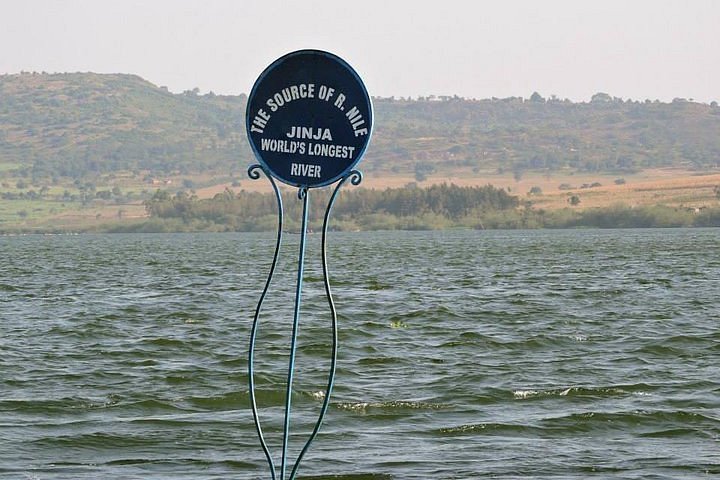
Just past dawn, the lake is the colour of pewter and the fishermen are already out. A wooden boat noses away from the Jinja shore, and the engine settles into a low murmur. Somewhere ahead, unmarked by anything but a signpost and a slab of rock, Lake Victoria stops being a lake and starts being the longest river on Earth. Nobody shouts. Visitors tend to go quiet, because the idea is bigger than the view.
A mystery that lasted two thousand years
For centuries, the origin of the Nile was one of geography's great puzzles. Speculation reaches back to Ptolemy around 150 CE, and for generations explorers argued over where the water truly began. The riddle was settled in the nineteenth century, when British explorer John Hanning Speke reached the northern shore of Lake Victoria and identified the outflow near Jinja, then marked by the Ripon Falls, as the river's starting point. Later dam construction downstream raised water levels, and the falls themselves now lie submerged. What remains is subtler but no less moving: a spot where lake water slips into a channel and begins a journey of thousands of kilometres through Uganda, South Sudan, Sudan and Egypt to the Mediterranean.
What you will actually see
The classic visit is a short motorised boat ride from the Jinja shoreline to the point where the river's flow separates from the lake, marked by a signpost. Because the dam has lifted the water, the rock slab beside the marker is sometimes submerged, though in drier spells visitors can occasionally step onto it for the famous photograph. Either way, boatmen and guides tell the story with local colour, and the ride doubles as an easy birding outing, with kingfishers, cormorants, herons and African fish eagles regularly in view. On the shore, a monument connects the place to Mahatma Gandhi, some of whose ashes were scattered in the Nile after his cremation, giving the site a layer of global memory that surprises many first-timers.
The source is also the doorway to Jinja, East Africa's adventure capital. The nearby rapids draw rafters and kayakers year-round, and the town offers bungee jumping, quad biking, horse riding and gentle sunset cruises for those who prefer their adrenaline optional. A former colonial trading town of tree-lined streets and faded verandas, Jinja has quietly reinvented itself with riverside lodges, craft coffee, and a creative scene that keeps travellers lingering a few days longer than planned.
Beyond the water
A recent CNN feature, republished on 5 October 2026, framed Jinja as the gateway to a wider circuit of natural wonders: Mabira Forest with its rare tree species, the spiritual traditions of Ssezibwa Falls, the thundering gorge at Murchison Falls, and Sipi Falls on the slopes of Mount Elgon. For travellers building a route, that is an elegant argument. The Nile is Uganda's connective thread, and Jinja is where the thread begins.
Practical information
Jinja lies in eastern Uganda, roughly one and a half hours by road from Kampala in good traffic, which makes it an easy day trip or the first stop on an eastern circuit. Boat trips to the source are arranged at the shoreline or through hotels and tour operators; prices vary by operator and group size, so confirm the fee and what it includes before departing, and agree on it before you board. Rafting operates throughout the year. For the source itself, drier months give the best chance of stepping onto the slab and the calmest light for photography, though the boat ride is worthwhile in any season. Bring a hat, sunscreen, a light rain jacket and binoculars, and carry small notes for tips and snacks.
This Week in Ugandan Tourism
Domestic travel takes centre stage (16-17 October). At the Uganda Marketers Society's UMS Ignite event in Kampala, Uganda Tourism Board CEO Juliana Kagwa urged Ugandans to travel at home and argued that promotion must be matched by better access, including domestic air connectivity, and by investment in hospitality and skills. She noted that international arrivals rose 19.7% in 2025 to about 1.64 million and that tourism earned US$1.7 billion in the 2025/26 financial year (The Monitor, 17 October).
EU funding for conservation (reported 16 October). The EU Delegation reportedly announced a €50 million conservation and tourism package at the Uganda-EU Partnership Dialogue in Kampala, aimed at wildlife protection, park management and eco-tourism infrastructure, including the gorilla habitats of Bwindi and Mgahinga. The report gives no disbursement schedule, so details should be treated as preliminary. It also cites first-half 2026 receipts up 25.6% year on year, to about Shs 2.3 trillion.
Africa's first dragon boat competition (1 October). Uganda hosted the first African Dragon Boat Racing Competition on Lake Victoria at Kawuku, Wakiso, with teams from across the continent and beyond (UTB).
Europe outreach (30 September). UTB met Germany's Import Promotion Desk to discuss growing Uganda's European market, following the Zanzibar roadshow on 28 September that promoted intra-African tourism (UTB).
Adventure on the Nile's doorstep (26 August). Uganda announced Race the Nile, a planned 800 km self-supported gravel bike race across the West Nile region (UTB). On 28 August the WHO declared Uganda free of the Bundibugyo Ebola outbreak after 42 days without new confirmed cases.
The last word
The Source of the Nile is not a spectacle in the way a gorilla encounter or a roaring waterfall is. It is a feeling of standing at the beginning of something enormous, and Uganda is quietly confident enough to let that be enough. Go early, go slowly, and let the boatman cut the engine for a minute.



