Technological Transformation
Tunisia is trying to build two different technology economies at once in 2026: a state-backed digital infrastructure push that is genuinely accelerating, and a private startup sector that is, by its own numbers, in the worst funding drought it has experienced in years. The country now has a new transcontinental submarine cable linking it directly to France, 5G service live nationwide, a national AI strategy running through 2030, and a mobile-payments market growing faster than almost anywhere else on the continent. At the same time, a sweeping new labor law has frozen equity investment in Tunisian startups to levels not seen in years, exposing the tension between a government eager to project digital ambition and a private tech sector that says it is being regulated out of existence.
Wiring the Nation: The Medusa Cable and a 5G Rollout
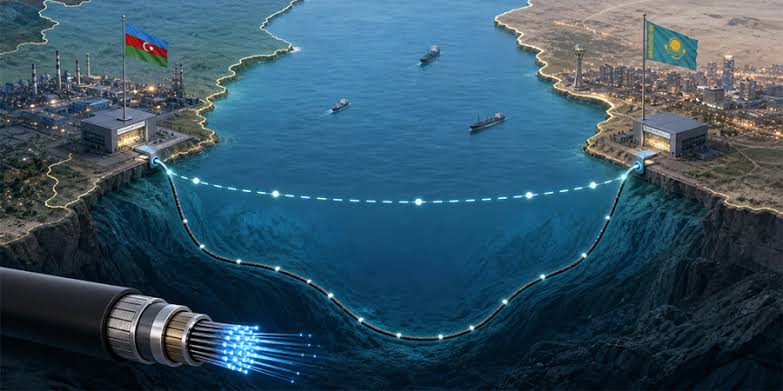
The most tangible sign of Tunisia's infrastructure ambitions arrived on June 5, 2026, when the ViaTunisia segment of the Medusa Submarine Cable System reached ready-for-service status, physically linking Bizerte in northern Tunisia directly to Marseille, France. The Tunisian landing is built on four pairs of optical fiber, each carrying up to 24 terabits per second of capacity, part of a broader 8,700-kilometer Medusa system that will eventually connect 17 landing points across Algeria, Cyprus, Egypt, France, Greece, Italy, Libya, Morocco, Portugal, Spain, and Tunisia. Orange Tunisia and Tunisie Telecom have both activated capacity on the system, which is designed to triple the country's international bandwidth and significantly cut latency to European data centers, positioning Tunisia as a Mediterranean digital bridge between Europe, North Africa, and the wider Middle East and North Africa region.
That subsea investment is being matched by a rapid mobile network upgrade. Tunisia awarded 5G operating licenses to all three mobile operators in December 2024, and commercial 5G service went live in February 2025. Fixed Wireless Access subscriptions, which use mobile networks to deliver home broadband, surged from just 9,425 in February 2025 to 277,616 by the first quarter of 2026, evidence that Tunisian households are increasingly bypassing fixed-line infrastructure altogether. The telecommunications sector's overall momentum shows in its finances too: total sector turnover surpassed one billion Tunisian dinars in a single quarter for the first time in the first quarter of 2026, reaching 1.0249 billion dinars. Internet penetration now stands at roughly 84.3% of the population, with about 10.4 million users as of October 2025, and mobile data subscriptions have climbed past 10.5 million, a penetration rate of nearly 88%.
On top of the international cable and 5G rollout, Tunisia and the UAE have also begun discussing data center partnerships explicitly framed around energy efficiency, aiming to position the country as a computing hub for Europe and the wider MENA region, leveraging its renewable energy resources and its new subsea connectivity.
Betting on AI: A National Strategy Takes Shape
Tunisia has moved beyond its earlier 2021-2025 AI roadmap to a more ambitious National AI Strategy covering 2026 through 2030, positioned as part of the broader "Digital Tunisia 2030" vision. The government describes the goal as shifting Tunisia from a passive consumer of artificial intelligence technology to an active regional hub for AI research and development. A National AI Council has been established to oversee a National AI Fund intended to channel capital into local AI research and infrastructure between 2026 and 2030, and the government has scheduled a mid-term review in 2028 to adjust the strategy for developments in generative AI and quantum computing.
In a symbolically notable move, Tunisian officials used generative AI tools to help draft the country's own 2026–2030 National Development Plan, with Mohamed El Kou, president of the Development Planning Commission, crediting AI tools with playing a central role in shaping the plan's priorities around digital transformation, legislative reform, SME support, regional equity, healthcare modernization, and renewable energy expansion. Separately, industry surveys suggest roughly 70% of Tunisian companies plan to integrate generative AI tools into their operations by the end of 2026, and policymakers are reportedly weighing a "Startup Act 2.0" that could include AI-specific incentives, such as research and development tax credits for firms building sovereign large language models.

The Fintech and Mobile Payments Boom
While equity funding for startups has stalled, the underlying usage of digital financial services in Tunisia is expanding briskly. The Central Bank of Tunisia reported an 81% surge in mobile payments during 2025. In the first quarter of 2026 alone, mobile transactions reached 8.4 million operations worth 1,769 million Tunisian dinars. The number of active digital wallets rose to 815,000, up from 595,000 a year earlier, while the network of licensed payment service providers expanded to 435 entities, up from 368. A notable technical step behind this growth was the integration of the government's E-Houwiya digital identity system with the Paysmart payments platform, which streamlined identity verification for digital transactions. E-commerce, meanwhile, is forecast to surpass $750 million in market size in 2026, with mobile commerce now accounting for more than 45% of all online sales.
A Startup Ecosystem in Crisis: The Subcontracting Ban
The most consequential and contentious development in Tunisia's tech sector in 2026 has been the fallout from Law No. 16-2025, passed by parliament in May 2025 with near-unanimous support (121 votes in favor, only four abstentions, no votes against). The law makes the open-ended employment contract the default form of work in Tunisia, sharply restricts the use of fixed-term contracts, and effectively bans subcontracting for any "main and continuous" business activity in both the public and private sectors, criminalizing arrangements that fall foul of the rule. Employers were given a three-month window to regularize subcontracted staff onto permanent contracts or reinstate eligible employees.
For Tunisia's IT services and outsourcing industry, which has long relied on flexible staffing and subcontracted arrangements to serve international clients, the impact has been severe. According to sector tracking by LaunchBase Africa, not a single disclosed equity funding round closed in Tunisia's startup ecosystem in the first six months of 2026, compared with at least six Tunisian companies raising capital over the same period a year earlier, a collapse the outlet attributes directly to the new law's chilling effect on hiring flexibility and cost structures. The Ministry of Labor is reportedly considering publishing a whitelist of sectors, potentially including IT services, outsourced logistics, maintenance, and private security, that could be treated as exempt from the subcontracting ban when properly structured, but as of mid-2026 no such carve-out had been finalized. Despite the funding freeze, Tunisia's broader startup ecosystem still grew 36.6% over the prior year by other measures and ranks 84th globally, with roughly 156 active startups tracked, suggesting the sector is expanding in headcount and activity even as formal investment capital has all but disappeared.
ICT as an Economic Pillar
Tunisia's government continues to treat information and communications technology as a strategic growth pillar comparable to tourism, one of the country's traditional economic mainstays. Officials have outlined plans for 138 separate digital transformation projects to be rolled out between 2025 and 2026 spanning public administration, the economy, cybersecurity, and infrastructure, supported by a network of 10 Technoparks and 18 specialized "Cyberparks" dedicated to ICT services around the country. The sector's contribution to GDP has, by some industry estimates, climbed to levels comparable with tourism, underscoring how central digital services exports and IT outsourcing have become to Tunisia's post-revolution economic model, even as the new labor law threatens to undercut the flexible-workforce model that helped build that industry in the first place.
Outlook
Tunisia's technology story in 2026 is really two stories moving in opposite directions. Physical and digital infrastructure, submarine cables, 5G networks, AI strategy, mobile payments, is advancing with real momentum and increasingly credible government backing. But the private capital and entrepreneurial layer that would normally capitalize on that infrastructure is retrenching sharply under new labor regulation, with startup equity funding effectively frozen through mid-year. Whether the government's rumored sectoral exemptions or a prospective Startup Act 2.0 can repair that damage before it becomes structural will likely determine whether Tunisia's digital ambitions translate into a thriving private tech sector, or remain primarily a state-led infrastructure project.
Published By | Tech Wiz