Technology
A Micro-State's Connectivity Challenge
São Tomé and Príncipe, a two-island nation of roughly 230,000 people off the coast of Gabon in the Gulf of Guinea, is Africa's second-smallest country by population — and one of its most digitally isolated. Its government is now betting that connectivity itself can become an engine of development, through a combination of a long-delayed second submarine cable, a newly arrived satellite alternative, a World Bank-financed digital-governance overhaul, and a pilot national digital identity system. Two years into implementation, the results are a mix of genuine progress and the kind of infrastructure delay familiar to small island states everywhere.
The ACE Cable: A Single Point of Failure
Since 2012, virtually all of São Tomé and Príncipe's international bandwidth has flowed through a single fiber-optic connection: the Africa Coast to Europe (ACE) submarine cable, which links West and Central African coastal states to Europe. The ACE landing transformed the country's internet from dial-up-era speeds to something resembling a modern connection, and internet penetration has since climbed to about 61.5% of the population as of January 2025.
But single-cable dependency leaves the country, in the words of telecom analysts covering the region, "one accident away from outage" — a vulnerability that has taken on new urgency as the government tries to extend affordable, reliable service to Príncipe, the smaller of the two islands, which has historically lagged São Tomé in connectivity and where a dedicated inter-island cable has been repeatedly delayed. World Bank supervision documents for the Digital STP project note that as of a September 2025 implementation-support mission, progress toward the project's development objective had been downgraded to "moderately satisfactory," specifically citing "ongoing challenges with the procurement of the Príncipe submarine cable" as a drag on the broader connectivity-equity goal between the two islands.
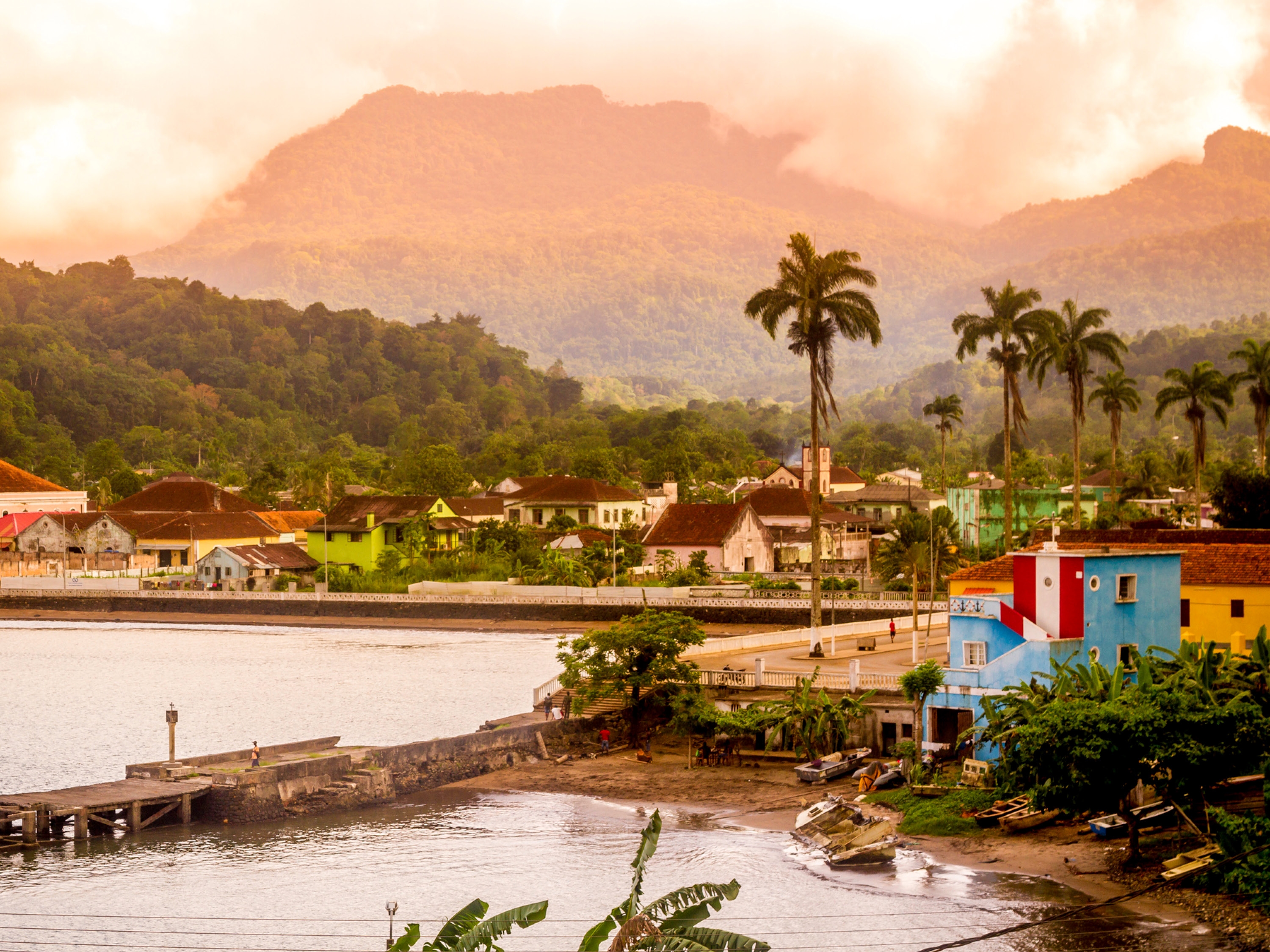
4G Arrives, Starlink Follows
On the terrestrial and satellite side, however, 2025 brought two tangible upgrades. Telecom operator Unitel STP launched fourth-generation (4G) mobile service, a step expected to meaningfully improve everyday connectivity quality for consumers who had previously relied on 3G or slower networks. Then, in December 2025, Starlink began commercial service in the country, giving households, businesses, and remote parts of Príncipe an alternative to cable-dependent fixed broadband for the first time.
Coverage of the launch noted that Starlink's entry provides real redundancy against ACE cable outages, though the upfront cost of satellite terminal hardware remains a significant barrier for a population where a large share of households still live on modest incomes tied to agriculture, fishing, and tourism. Even with Starlink and 4G now available, analysts covering the market continue to flag the need for a second submarine cable or additional low-earth-orbit capacity as the only durable fix to the country's single-point-of-failure connectivity risk.
Digital STP: The World Bank's Infrastructure and Governance Push
The centerpiece of the government's digital strategy is the World Bank-financed "Digital São Tomé and Príncipe" project (World Bank identifier P177158), approved in mid-2022 and running through June 2027. Structured around IDA grant financing alongside a separate Global Investment Facility (GIF) grant, the project is designed to modernize the legal and regulatory framework governing telecommunications, build out cybersecurity functions within government, create an integrated data-protection management platform, and — critically — improve the equity and sustainability of telecom services between São Tomé and Príncipe islands, addressing the connectivity gap that has long left Príncipe underserved relative to the main island.
As of March 31, 2025, roughly 36% of the IDA grant (about $7.71 million) and 35% of the GIF grant had been disbursed, reflecting a project that is moving but has not yet reached its halfway mark on financing, consistent with the "moderately satisfactory" implementation rating noted above.
Piloting a National Digital ID on MOSIP
Perhaps the most closely watched component of Digital STP is its national digital identity pilot, built on the Modular Open Source Identity Platform (MOSIP) — the same open-source identity framework adopted by several other African and Asian governments seeking lower-cost alternatives to proprietary biometric ID systems. According to reporting from Biometric Update in June 2025, São Tomé and Príncipe has been piloting a MOSIP-based system with planning for mass population registration on the future digital-identity platform originally targeted for January or February 2026.
A functioning national digital ID would give the government a foundation for a wide range of downstream digital-government services — from more efficient social-transfer payments to simplified business registration — that are difficult to deliver reliably without a trusted identity layer, particularly in a country where paper-based civil registries have historically been fragmented across the two islands.
Fintech and Mobile Money: Starting From Near Zero
Financial digitization, by contrast, remains at an early stage. Coverage from The Fintech Times and other outlets describes São Tomé and Príncipe's payments landscape as still nascent, with cash continuing to dominate day-to-day transactions even as the government and local banks explore digital-payment reforms and encourage telecom providers to build out mobile-money-style services.
Unlike fintech leaders such as Kenya or Ghana, São Tomé and Príncipe has no dominant mobile-money operator and no meaningful cross-border digital remittance corridor yet, reflecting both the small scale of its economy — nominal GDP of roughly $1.16 billion in 2026, according to IMF estimates — and the connectivity and identity gaps that Digital STP is meant to help close over time. Analysts covering the market describe incremental movement toward cashless payment options among banks and telecom providers rather than a decisive fintech breakthrough, with the country's tiny population and limited banking infrastructure making the economics of a dedicated mobile-money platform more challenging than in larger African markets.
The Economic Backdrop: An IMF Program Under Pressure
The digital push is unfolding against a difficult macroeconomic backdrop. On June 22, 2026, the IMF announced a staff-level agreement with São Tomé and Príncipe on the third review of its 52-month Extended Credit Facility (ECF) arrangement, which would unlock roughly SDR 4.4 million (about $6.1 million) in further disbursements once approved by the Fund's Executive Board. The IMF's review found that most quantitative targets had been met despite what it described as a "protracted energy crisis" and external shocks, including global oil-price pressure linked to conflict in the Middle East.
Growth projections have been revised down sharply — to around 1% in 2025 and just 0.4% in 2026 — before an expected recovery toward roughly 2.75% over the medium term, with agriculture, tourism, diaspora remittances, and public investment identified as the key drivers of that eventual rebound. The IMF was explicit that continued power-sector reform is essential, noting that electricity shortages continue to weigh directly on growth and complicate the country's ability to expand digital infrastructure that itself depends on reliable power. Separately, exploration activity offshore — including Shell's 2025 Falcão-1X well, which confirmed a working petroleum system, and a May 2026 bidding round for three additional offshore blocks — has raised the possibility of a future oil-revenue windfall, though no commercially producible reserves have yet been confirmed.
Outlook
São Tomé and Príncipe's digital transformation is thus a story of incremental, externally financed progress rather than the startup-driven leaps seen in some of the continent's larger tech hubs. A second submarine cable to Príncipe remains stuck in procurement, Starlink and 4G have added welcome redundancy without solving the underlying single-cable dependency, a MOSIP-based digital ID is moving from pilot toward national rollout, and fintech remains embryonic. Whether these pieces come together fast enough to matter will depend heavily on the same energy-sector reforms the IMF has flagged as essential — a reminder that in a country this small, digital transformation and basic infrastructure reform are, in practice, the same project.
Published By | Tech Wiz