SCIENCE & TECH
A Fireball China Can't Forget
The footage is the kind that lives forever on the internet. A slender, silver rocket booster, roughly the height of a 20-story building, descends out of the Gobi Desert sky toward a landing pad at the Jiuquan Satellite Launch Center. Its engines relight, the legs unfold, and for a few seconds it looks like history is about to be made. Then, instead of a triumphant touchdown, the booster erupts into an orange fireball that lights up the desert night, crumples, and crashes into the pad it was supposed to land on.
That was December 3, 2025, and the rocket was Zhuque-3, built by the Beijing-based startup Landspace. The mission's first half had gone almost perfectly: the rocket's second stage reached orbit on its very first try, a genuine milestone for a Chinese commercial launch company. But the moment that mattered most — the moment that would have made Landspace only the second entity on Earth, after Elon Musk's SpaceX, to recover an orbital-class rocket booster — ended in flames.
"An anomaly occurred after the first-stage engine ignited during the landing phase, preventing a soft landing on the designated recovery pad," Landspace said in its statement afterward, a clipped, technical sentence for what was, by any measure, a spectacular failure. Engineers later traced the problem to what appeared to be an engine loss during the critical landing burn, which let the booster tip, catch fire, and slam into the ground with high precision but zero grace.

Tonight, They Try Again
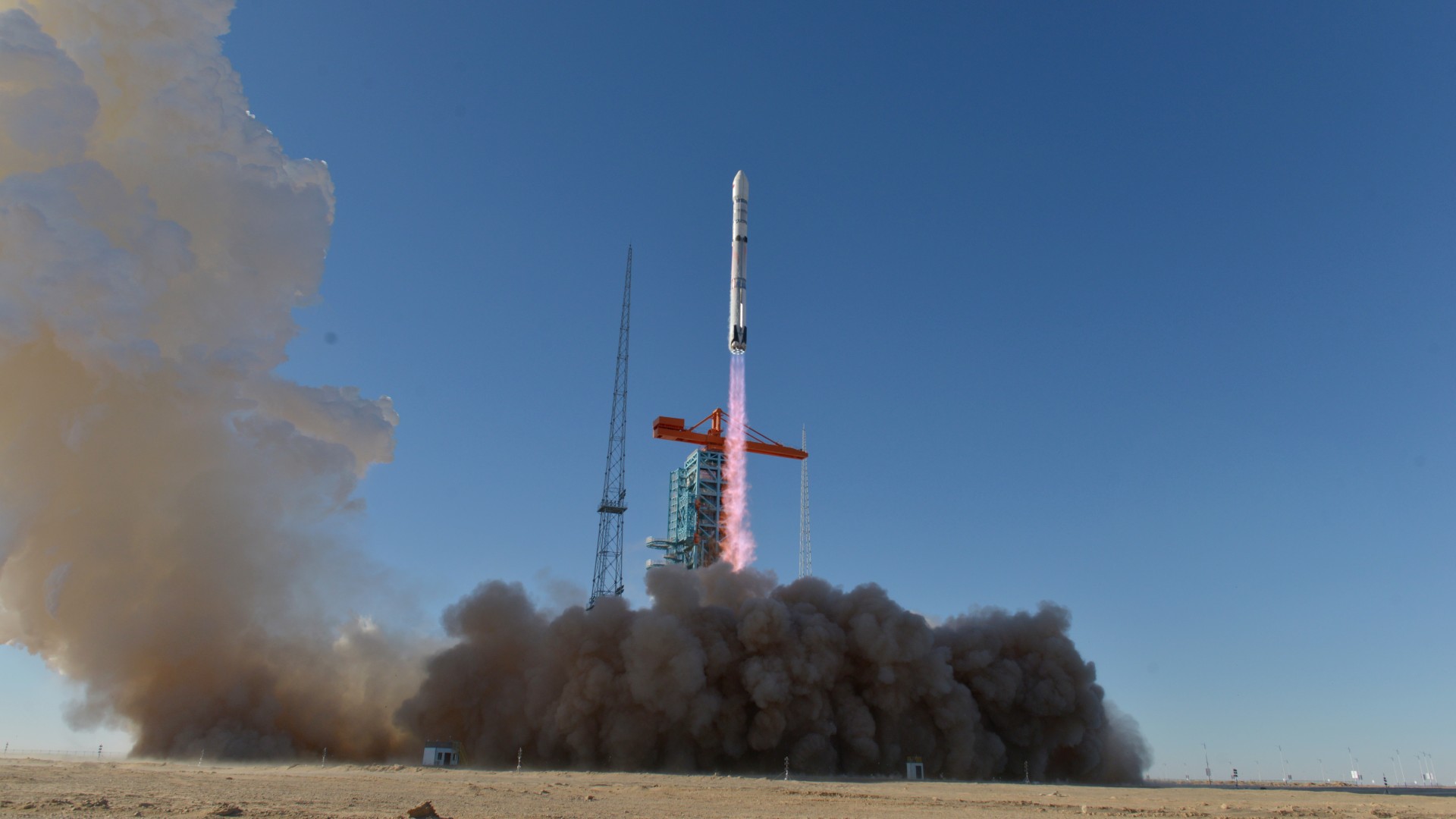
Now Landspace is back for round two — and this time, the whole point is to not repeat history. Airspace closure notices point to a launch window of around 7:45 p.m. EDT on August 10 (23:45 GMT, or 7:45 a.m. Beijing time on August 11) from the Dongfeng commercial space innovation pilot zone at Jiuquan, the same remote patch of desert where December's fireball unfolded.
The vehicle itself is an imposing piece of engineering: Zhuque-3 stands 216 feet tall — about 66 meters, taller than a football field laid on its end — built from stainless steel and powered by methane-liquid oxygen engines, the same fuel combination SpaceX popularized with its Raptor engines on Starship. In terms of raw capability, Zhuque-3 is designed to go toe-to-toe with SpaceX's workhorse Falcon 9, capable of hauling roughly 40,350 pounds (18,300 kilograms) to low Earth orbit. Like the Falcon 9, tonight's landing attempt will rely on a powered descent and fold-out landing legs, rather than the net-and-boat "catch" method that a rival Chinese rocket used successfully last month.
In the run-up to tonight's launch, Landspace has been trying to project quiet confidence rather than bravado. On June 29, the company completed a full static-fire test of the upgraded Zhuque-3 Y2 vehicle at the Dongfeng site. "All systems operated normally, and test data and results met expectations, validating the correctness and coordination of system operations and laying a solid foundation for upcoming flight missions," Landspace wrote in a social media post at the time — the kind of carefully worded update that tells you a company is trying very hard not to jinx itself twice.
China's Crowded, Combustible Rocket-Landing Race
What makes tonight's attempt especially interesting is that it isn't happening in a vacuum. Zhuque-3's launch will mark China's fourth attempt at recovering an orbital rocket booster in the space of about eight months — a breakneck pace that says a lot about how seriously Beijing is taking the reusability race that SpaceX has dominated for the better part of a decade.
The tally so far reads like a highlight reel of near-misses and one genuine breakthrough. First came Zhuque-3's own December debut and its fireball finale. Just days later, a second Chinese rocket, the state-run Long March 12A, also reached orbit on its debut flight — and also lost its booster to fire during a first-stage recovery attempt, an almost eerie repeat of Landspace's own failure. Then, on July 10 of this year, China finally broke through: the Long March 10B successfully landed its first stage using a very different approach — a floating sea platform equipped with a net-capture system, rather than the vertical, legs-down landing SpaceX and Landspace both favor. That success made China just the second country in the world, after the United States, to land an orbital-class rocket booster, and it happened on the water rather than solid ground.
Landspace's attempt tonight is notable because it's the first Chinese company trying to replicate SpaceX's exact playbook — powered vertical descent, deployable legs, a pad landing — rather than inventing a workaround. If it works, Landspace won't just join an exclusive club; it'll do so using the same basic method that made Falcon 9 the most flown orbital rocket in history.
China's broader ambitions make the stakes clear. The country launched 68 orbital missions in 2024, a number that jumped to 97 in 2025, with an official target of 140 or more for 2026 — a launch cadence that starts to look less like scientific curiosity and more like an industrial buildout. Alongside Landspace, companies including iSpace and Deep Blue Aerospace are racing to develop their own reusable boosters, all chasing the same prize: driving the cost of reaching orbit down toward what SpaceX has achieved by flying (and re-flying) the same hardware over and over again.
Why a Landing Matters More Than a Launch
To outsiders, it can be easy to shrug off a rocket landing as a flashy stunt — cool to watch, but not obviously more important than just getting a payload into orbit. In the industry, though, the landing is the whole ballgame. SpaceX's central insight, proven out over more than 500 successful Falcon 9 booster landings, is that reusing the most expensive part of a rocket — the engines, the fuel tanks, the plumbing — rather than throwing it away after a single flight can cut launch costs by an order of magnitude. That's the difference between a rocket that costs tens of millions of dollars to fly once and one that can fly dozens of times for a fraction of the cost per mission.
For Landspace, tonight isn't really about proving Zhuque-3 can reach orbit; it already did that in December. It's about proving the company can bring a booster home intact, refurbish it, and fly it again — the entire business model that has allowed SpaceX to launch satellites, cargo, and astronauts at a pace no government space agency has matched. Landspace has said it hopes to fly a previously used booster as soon as its fourth Zhuque-3 mission, a target that depends entirely on tonight going better than December did.
Expert Perspective
Space analysts who track China's commercial launch sector describe tonight's attempt as a genuine coin-flip moment rather than a formality. Landspace reached the landing zone with striking precision back in December — the booster's guidance, navigation, and structural systems largely did their jobs right up until the final seconds, when the engine anomaly took over. That's widely seen in the industry as a good sign: it suggests the hard problem (getting a 66-meter steel rocket to the right spot, at the right speed, at the right angle) was mostly solved, and what remains is an engine-reliability issue that engineers can iterate on, rather than a fundamental design flaw.
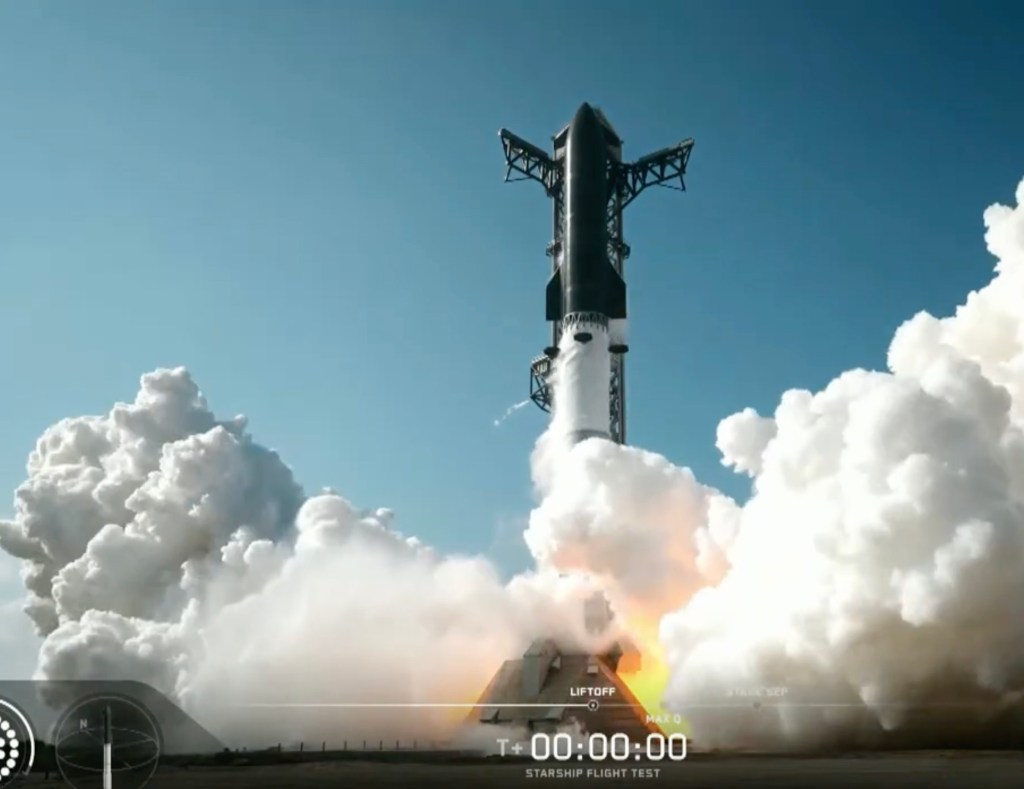
That framing echoes what happened at SpaceX itself, where the road to routine Falcon 9 landings ran through a long string of very public, very expensive explosions before the company got it right. Reusable rocketry, in other words, tends to be an expensive, fiery apprenticeship no matter who's attempting it — and China's commercial space sector is now paying that same tuition, on a compressed timeline, with three different companies simultaneously.
What This Means for You
It's easy to see a rocket landing in the Gobi Desert as a story that has nothing to do with daily life outside China's space industry, but the ripple effects are closer than they seem. A second viable path to reusable, medium-lift rockets means more competition for satellite launch contracts worldwide, which historically pushes prices down for everyone — including the companies building broadband satellite constellations, Earth-observation networks, and the next generation of GPS-style positioning systems that increasingly run daily infrastructure, from bank transaction timestamps to farm equipment.
It also matters geopolitically. For most of the last decade, SpaceX has had no real peer in reusable orbital rockets, giving the United States an outsized and largely unchallenged advantage in cheap access to space. A successful Chinese landing tonight wouldn't erase that gap overnight — SpaceX's Falcon 9 has flown hundreds of successful recoveries and reuses, while Zhuque-3 would be attempting its very first — but it would be a visible, symbolic marker that the gap is narrowing faster than many expected. Expect that narrative, win or lose tonight, to shape how governments, satellite operators, and rival launch companies plan their next moves.
Conclusion
By the time most people in the Americas wake up on August 11, the world should already know whether Landspace pulled off what eluded it in December. A clean landing would make Zhuque-3 the first vehicle outside SpaceX's Falcon family to complete a legs-down, engine-powered recovery of an orbital booster — a milestone eight months, one fireball, and one very careful static-fire test in the making. A second failure wouldn't be the end of the story either; China's launch cadence and appetite for iteration suggest a fifth attempt would follow before long, fireball or not.
Either way, the Gobi Desert has become an unlikely proving ground in a race that started in California more than fifteen years ago and now, unmistakably, has company.
Published By | Tech Wiz