Written By | Torch Media Africa
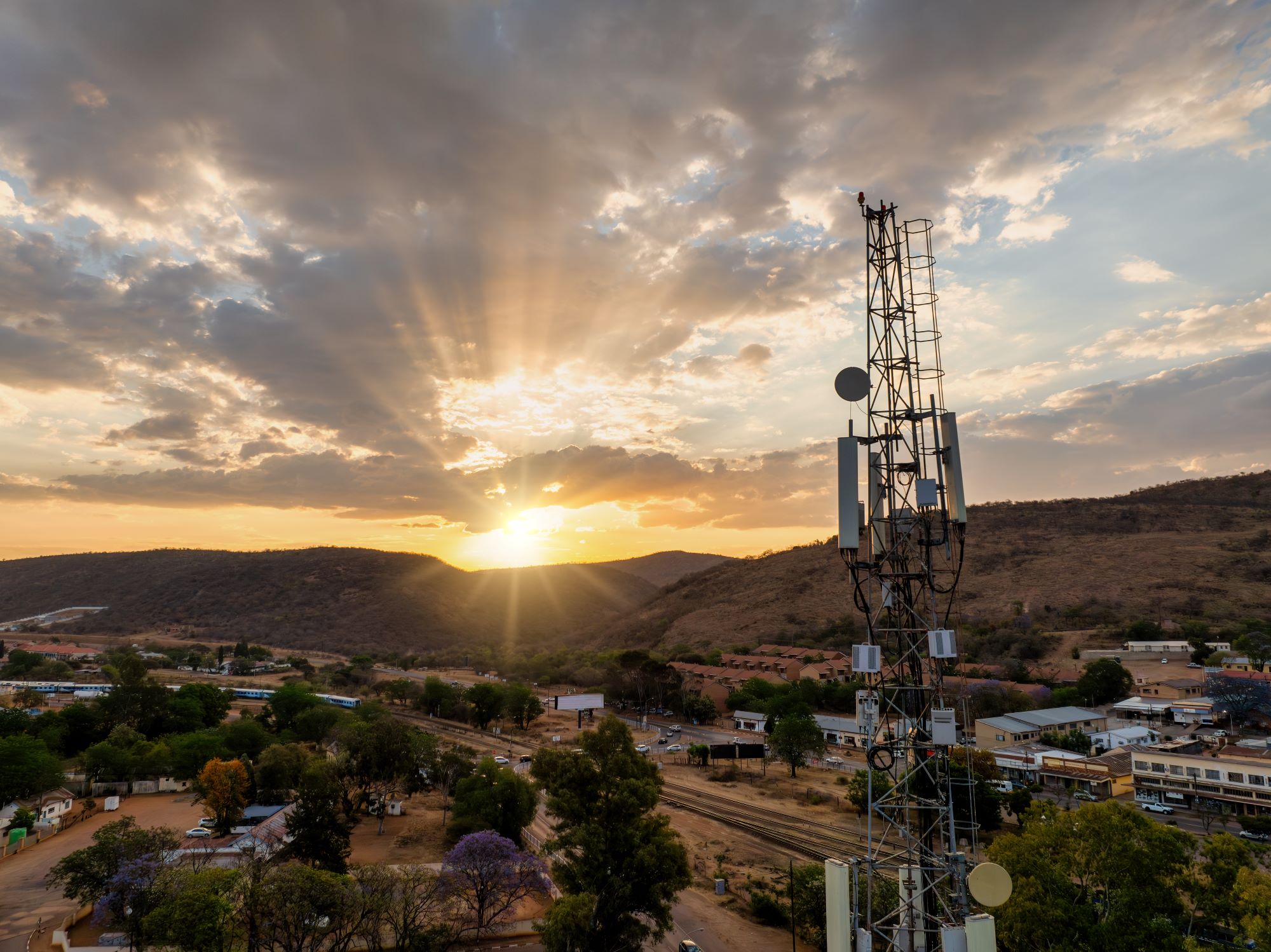
Brazzaville has also moved to build domestic data infrastructure rather than rely solely on foreign hosting
An Oil Economy Looking for a Second Engine
The Republic of Congo — Congo-Brazzaville, distinct from its much larger neighbor across the river — remains one of the more oil-dependent economies on the continent, with crude accounting for roughly 80 percent of exports and the state oil company SNPC deeply embedded in public finances. The IMF's 2026 Post-Financing Assessment, concluded in March, described a recovery that softened in 2025 as weak public investment and energy supply disruptions weighed on non-hydrocarbon activity, while spending overruns combined with lower oil prices widened fiscal pressures. The Fund's own baseline sees average growth of only around 3.6 percent between 2027 and 2030, and explicitly conditions that outlook on Congo improving its business climate and gradually reducing hydrocarbon dependence — a diagnosis that has, over the past two years, pushed the government to lean harder on its digital economy as a second growth engine rather than a peripheral initiative.
That pivot has a name: Congo Digital, first articulated as "Vision Congo Digital 2025" when the Council of Ministers approved it in May 2019, and now folded into a broader Congo Digital Strategy 2030 that framed discussions at the Digital Africa Summit held in Brazzaville on June 22, 2026. The strategy rests on three pillars — digital services for citizens (e-citizens), digitized public administration (e-government), and support for private ICT-linked enterprises (e-business) — backed by a legal framework that now includes laws on personal data protection, cybersecurity, electronic transactions and e-commerce, and cybercrime.
What a GSMA Report Says Digital Reform Is Worth
The clearest quantification of the opportunity came from the GSMA report unveiled at that June 2026 Digital Africa Summit. It found that targeted policy and regulatory reforms in the telecom and digital sector could unlock roughly FCFA 870 billion — on the order of $1.4 billion — in additional economic value, create more than 144,000 jobs, and connect over 540,000 more people to mobile internet by 2030. The report's framing was notable: Congo has largely solved the infrastructure side of connectivity, building networks capable of carrying modern mobile broadband, but converting that built capacity into actual usage — affordability, device access, digital literacy — is now the harder and more economically consequential task.
A Second Submarine Cable Ends a Single Point of Failure
Until early 2026, Congo-Brazzaville's international bandwidth ran almost entirely through the West Africa Cable System, or WACS, which has served the country since 2012 and carries a nominal capacity of about 14.5 terabits per second. That single-cable dependence became a visible liability when an anchor-drag incident off West Africa in 2024 disrupted WACS and, with it, internet access across several markets that relied on it, Congo among them. In February 2026, MTN Congo activated a link to the 2Africa cable at the port city of Pointe-Noire, a system with roughly 180 terabits per second of nominal capacity — more than twelve times WACS's throughput — and additional international routing options via London, South Africa, and Nigeria. The upgrade gives Congo meaningful redundancy for the first time and is widely seen locally as the precondition for the data-center, cloud, and streaming ambitions the government has attached to Congo Digital 2030.
On the wireless side, two mobile operators have now secured 5G licenses, with launch in Brazzaville described by industry trackers as imminent. That would put Congo-Brazzaville among a growing but still limited group of Central African markets to move beyond 4G, following broader regional efforts by MTN and Airtel to modernize network infrastructure across their Central African footprints.
Mobile Money Is Scaling, Even Where Banking Has Not
Financial inclusion in Congo-Brazzaville, as in much of the CEMAC monetary zone, is being built primarily through mobile wallets rather than traditional bank branches. Airtel Money became the market leader in 2023 after absorbing the assets of Warid, and it now competes chiefly with MTN MoMo Congo for a customer base that, according to industry trade press, generated on the order of $54.3 million in operator revenue from mobile money services. Regionally, the CEMAC zone — which groups Congo with Cameroon, Gabon, Equatorial Guinea, Chad, and the Central African Republic — recorded mobile money accounting for 71 percent of all non-cash transactions in 2026, across roughly 52.4 million active accounts and an annual transaction volume of 23,800 billion CFA francs. The combination of mobile money and messaging apps like WhatsApp has, according to local digital-commerce trackers, effectively become the default model for online and small-business commerce in a market where formal e-commerce infrastructure remains thin.
Sovereign Cloud and a National Data Governance Push
Brazzaville has also moved to build domestic data infrastructure rather than rely solely on foreign hosting. A new national data center reached its final development phase around May 2026, alongside a parallel sovereign satellite project, according to local reporting; the facility is intended to offer local cloud hosting to Congolese businesses at preferential rates denominated in CFA francs, aimed particularly at young companies that would otherwise pay in foreign currency for offshore servers, while also cutting latency for users in Brazzaville and Pointe-Noire. The government has paired that physical infrastructure with an institutional one: the UN Economic Commission for Africa, working with Congo's Ministry of Posts, Telecommunications and the Digital Economy, ran a National Data Governance Strategy assessment across Brazzaville and Pointe-Noire from June 2 to 6, 2026, followed by a stakeholder engagement and capacity-building workshop on June 8 and 9. The explicit goal, per UNECA's own framing, is to build a "trusted data ecosystem" that supports digital sovereignty rather than dependence on foreign cloud and data infrastructure — language that echoes the resource-sovereignty debates that have long shaped Congo's approach to its oil sector.
A Continental First in Artificial Intelligence
Congo-Brazzaville's most distinctive claim in the digital space predates the current wave of activity but continues to shape it: in February 2022, UNECA and the Congolese government inaugurated the African Research Center for Artificial Intelligence, described at the time as Africa's first dedicated AI research center, on the campus of Denis Sassou Nguesso University in Kintélé, just north of Brazzaville. The center trains researchers, young people, and even secondary-school students in AI and robotics, and offers a joint Master of Science degree in AI and data science with the university. Its stated mission extends beyond pure research to exploring AI's macroeconomic and sectoral effects — in banking, health, agriculture, transport, and environmental management — and UNECA has explicitly cast Congo as a prospective "regional AI hub" for the continent. Four years on, that early bet has become a recurring reference point in Congo's digital diplomacy, cited alongside newer initiatives like OSIANE, billed as Central Africa's largest digital event, which drew participants to Brazzaville's Grand Hôtel de Kintélé and to Pointe-Noire in the first week of June 2026, and which included the Challenge Startup Bassin du Congo competition for early-stage entrepreneurs.
Taken together, the elements are still those of an early-stage digital economy rather than a mature one: a startup scene organized more around annual forums — the Brazza Cybersecurity Forum, the National Forum for Technological Innovation, the Congo Digital Forum — than around a deep bench of scaled companies, and a mobile money market still concentrated between two international operators rather than a broader fintech ecosystem. But the sequencing is deliberate. A second submarine cable removed the connectivity bottleneck in February 2026. A national data center and sovereign cloud addressed the hosting bottleneck around the same time. A national data governance strategy, still being drafted through mid-2026, is meant to address the regulatory bottleneck. And an AI research center that predates most of this activity gives Congo a talent and research anchor that few peer-sized Central African economies can claim. Whether that sequencing converts into the $1.4 billion in economic value the GSMA has modeled by 2030 will depend less on further infrastructure spending, which is now largely in place, and more on affordability, digital skills, and the kind of sustained non-hydrocarbon business climate reform the IMF has been pressing Brazzaville to deliver.



