Share
After Uganda’s general elections of January 15, the political temperature did not cool—it thickened. At the centre of this dense fog stood Robert Kyagulanyi, the principal challenger to Yoweri Museveni and leader of the National Unity Platform (NUP). Shortly after the polls, reports emerged that Kyagulanyi was confined to his residence under heavy security deployment. Later, claims surfaced that he had “escaped” surveillance. Since then, ambiguity has overshadowed clarity. His whereabouts, movements, and political strategy have become matters of speculation rather than transparent communication. In politics, however, disappearance is never neutral. It is either a tactic, a symptom, or a surrender.
A State Conspiracy or Political Convenience?
One of the most profound questions Ugandans must ask is whether the state’s alleged silence and ambiguity signal incompetence—or design. Can a modern state, equipped with sophisticated intelligence and surveillance systems, deploy security around a high-profile political figure and genuinely fail to control the situation if it so intended?
If the state truly wanted to arrest him, could it not do so? If it truly wanted him confined, would escape be plausible? And if he truly escaped, why has there been no definitive state communication clarifying the matter? In political science, ambiguity often benefits both adversaries. The state avoids international backlash by refraining from overt action. The opposition avoids accountability by invoking persecution. Between those two narratives lies the ordinary supporter—confused, emotionally invested, and uncertain.
A Comparative Precedent: The Besigye Question
Uganda’s recent political history adds another layer to this analysis. When the state sought to apprehend Kizza Besigye in previous political confrontations, reports indicated that security agencies were capable of tracking, coordinating across borders, and effecting arrest even beyond Uganda’s immediate territorial comfort zones, including incidents involving Kenya.
If a state possesses the capacity to monitor, track, and apprehend an opposition leader beyond its borders, then what explains ambiguity in the case of Robert Kyagulanyi within Uganda itself?
This comparison does not allege conspiracy; rather, it raises a structural question about state capability versus political calculation. Is the difference a matter of evolving strategy? Has the state recalibrated its approach to opposition management? Or is selective enforcement part of a broader political chessboard?
In governance studies, inconsistency often signals policy adaptation—or political utility. The public is left to interpret silence as either strategic tolerance or calculated ambiguity.
Fear, Strategy, or Internal Party Turbulence?
Another troubling dimension is internal accountability within NUP itself. Political movements are sustained not only by charisma but by organisational discipline. When a leader retreats without structured communication, it leaves a vacuum. And vacuums in politics breed suspicion.
Could there be internal disagreements? Is there a possibility of ideological fracture? Or worse, could there be elements within the party cooperating with the regime to weaken internal cohesion?
Speculation grows where transparency dies.
If Kyagulanyi is indeed in hiding, what is he hiding from? Is it legal persecution? Is it fear of revived charges from campaign-related incidents? Or is it a calculated retreat to reorganise strategy away from the public eye?
A revolutionary posture demands visible leadership. History rarely celebrates commanders who retreat without briefing their troops.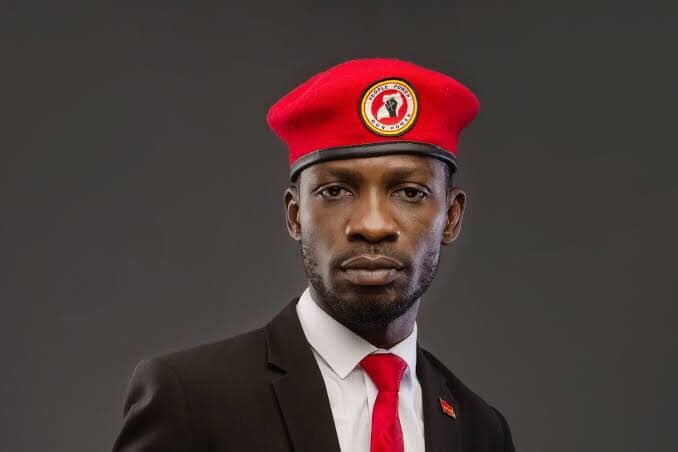
What Does Disappearance Mean to Supporters?
Trust is the currency of political mobilisation. NUP’s support base—particularly the youth—rallied behind a promise of fearless resistance and transformative leadership. If that leadership appears absent at critical moments, psychological consequences follow.
Supporters begin to ask:
Is our struggle personalised around an individual rather than institutionalised?
Is the movement bigger than its founder?
Are we prepared for continuity beyond charisma?
In liberation narratives, symbolism matters. A leader who vanishes risks transforming momentum into melancholy.
The Controversial Remarks of His Son
Recently, Kyagulanyi’s son reportedly referred to Ugandans as “pussies” for failing to demonstrate and fight for liberation. Such language, regardless of the frustration behind it, is politically reckless.
Liberation movements are not built on insult but persuasion. Citizens who have endured decades of structural fear, economic vulnerability, and political uncertainty cannot be bullied into bravery. Civic courage grows from organised confidence, not emotional provocation.
If indeed such statements were made, they reflect a deeper issue: confusion within the movement. A struggle that calls citizens cowards while its central figure is physically absent sends contradictory signals. Leadership requires moral coherence.
Where Lies the Future of NUP?
Political parties survive turbulence when they institutionalise ideology beyond personality. NUP must now confront a defining question: Is it a movement anchored on Robert Kyagulanyi, or is it a structured political institution capable of collective leadership?
If this is a strategic silence—a “Plan B” to reorganise and return stronger—then clarity will eventually vindicate it. But if it is fear-driven retreat, the damage to trust may be long-term.
Ugandans must remain rational. Emotional politics often clouds structural analysis. Whether one supports the regime or the opposition, the greater concern is institutional maturity. Uganda’s democratic evolution depends not on personalities disappearing or reappearing, but on strengthening the rule of law, internal party democracy, and transparent political engagement.
A Call for Intellectual Sobriety
Political confusion should never be answered with emotional extremism. Ugandans deserve clarity from both the state and opposition. Silence breeds conspiracy. Transparency builds legitimacy.
If Kyagulanyi is reorganising, he must communicate.
If the state has no case, it must clarify.
If NUP seeks longevity, it must institutionalise.
Liberation rhetoric must translate into responsible leadership. History demands more than slogans—it demands structure, courage, and consistency.
Ugandans must avoid being trapped between state opacity and opposition ambiguity. Democracy matures when citizens demand accountability from all sides.
About the Writer
Evan Sande Ndahura is a Ugandan political and legal commentator, columnist, poet, and social justice advocate whose writings focus on governance, constitutionalism, democracy, and the political economy of power in Africa. He is widely published on issues of judicial accountability, electoral justice, human rights, and institutional reform, with a particular emphasis on Uganda’s political and legal systems. Ndahura writes from a Pan-African critical perspective, interrogating the failures of state institutions and the lived realities of ordinary citizens under entrenched systems of power. He believes that the liberation of Africa will occur through a mighty pen, not the gun.



