Written By | Torch Media Africa
Record connectivity and a world-first satellite-to-phone test sit alongside thin venture funding and contested cyber laws
Connectivity Is Growing; Confidence Is the Constraint
Zambia's technology story in 2026 is easy to tell as a connectivity success. The Zambia Information and Communications Technology Authority (ZICTA) reported in March 2026 that mobile subscriptions rose from 23.2 million to 26.2 million during 2025 and are projected to reach 27.8 million by the end of 2026, while internet users grew from 13.3 million to 14.7 million. Mobile operator revenue climbed from 11.54 billion to 13.15 billion kwacha, and domestic voice traffic rose from 34.7 to 36 billion minutes. Yet a closer look suggests that the binding constraints are no longer only about signal. They are about capital, regulation and public trust, and the way Zambia resolves them will decide whether its digital economy deepens or plateaus.
This article looks at three pieces of that picture: the state-led infrastructure push, including a pioneering satellite-direct-to-phone trial; the unusually thin start-up funding base; and the cybersecurity laws enacted in 2025 that sit awkwardly beside the country's digital-government ambitions. Zambia is a useful case precisely because it is not a regional tech hub like Nigeria, Kenya or South Africa. It shows what digital transformation looks like in a mid-sized, largely rural, copper-dependent economy.
The Infrastructure Push: Towers, Solar and Starlink Kits
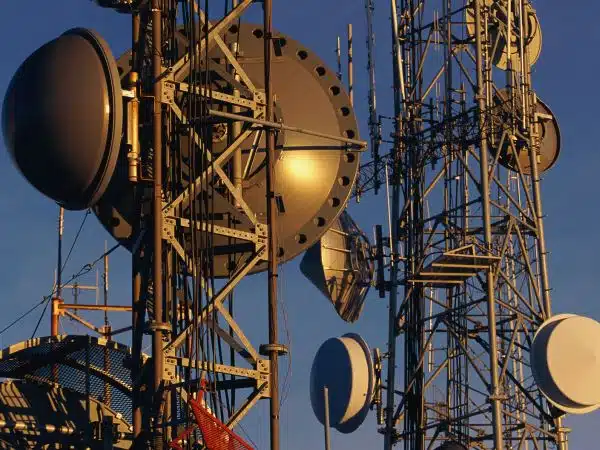
The government's 2026 budget framed digital infrastructure as a gateway to rural economic empowerment. ZICTA's figures show mobile towers rising from 3,551 to 3,751 in 2025, with total network sites at 14,909. The Digital Innovation Profile published by the International Telecommunication Union (ITU) in 2026 lists 520 communication towers under construction, aiming for 96 percent coverage by 2026, on top of more than 1,000 towers Huawei deployed over the past decade. It also reports 4G coverage reaching 91.2 percent of the population and mobile broadband at 60 subscriptions per 100 inhabitants.
The public-sector layer is more unconventional. According to TechAfrica News's account of the budget, the state has deployed 525 Starlink kits across government entities since 2023, including 230 departments, 156 constituency offices, 109 post offices and 23 youth centres, with a plan to add 400 health facilities under a Solar for Health initiative. The Government Wide Area Network connects 438 sites, among them 93 local authorities, 79 district administration offices and 29 schools, and solar systems have been installed in all 116 councils to protect connectivity from power outages. The logic is sound: in a country where the ITU records a rural population of 53.7 percent, satellite terminals and solar panels can reach places that fibre and grid power will not for years.
A caveat is the gap between coverage and use. The ITU profile reports 7.29 million internet users, a 33 percent penetration rate, in October 2025, a figure well below ZICTA's 14.7 million, a discrepancy that reflects different definitions of an active user and a reminder that headline figures should be read with care. Median download speeds are 24.86 Mbit/s on mobile and 26.58 Mbit/s on fixed networks. Coverage has outrun affordability and digital skills, which is the usual story across Sub-Saharan Africa.
Africa's First Satellite-to-Phone Test
On 7 March 2026 Space in Africa reported that MTN Zambia had become the first African mobile operator to complete field testing of Starlink's Direct to Cell service. The tests ran on MTN's own spectrum and worked with existing 4G handsets without a new device or app. They included Zambia's first satellite data session and the first fintech transaction over satellite, through MTN's MoMo platform, plus voice, video, WhatsApp calls and navigation and weather apps. Commercial launch was targeted within weeks, subject to ZICTA's approval. Airtel Africa had announced a continent-wide partnership with Starlink in December 2025 covering 14 markets and about 174 million subscribers, so competition on this front is imminent.
The significance for Zambia lies in geography. Direct-to-cell service could cover game parks, farming areas and lakeshores that lack towers, and it positions mobile money, which the budget describes as 55 percent of total financial inclusion in Zambia, as a service reachable beyond the tower grid. The open questions are price, regulatory treatment of foreign satellite capacity, and whether coverage-by-satellite undermines the business case for the 520 terrestrial towers being built. The sources reviewed for this article do not confirm whether a commercial launch has occurred, so that remains a point to watch.
Mobile Money as the Rail, Government as the Customer
Digital public services are following the same rail. The 2026 budget set out plans to deliver the Social Cash Transfer Programme and the Farmer Input Support Programme digitally, and to give farmers real-time market prices and weather forecasts. ZamPortal already makes 322 public services available online, according to the ITU. The Smart Zambia Electronic Government Master Plan covers 2018 to 2030, alongside the National Digital Transformation Strategy 2023-2027 and the National ICT Policy of 2023. The World Bank has committed US$120 million for digital public infrastructure, and the government invested US$54 million in digital infrastructure in 2024, according to the ITU profile.
The strategy mirrors approaches taken elsewhere on the continent, in which the state builds payment and identity rails and lets private operators compete on top of them. The risk is dependence on a small number of operators and on foreign vendors, notably Huawei for towers and Starlink for satellite links, in a sector that the ITU says contributed just 2.6 percent of GDP in the third quarter of 2023.
The Start-up Gap
If infrastructure is the strength, venture capital is the weakness. The ITU profile records that Zambian start-ups raised US$145 million across equity rounds in 2023, but only US$475,000 across four rounds in early 2024. The 2023 total was dominated by a few large deals, notably Union54's US$15 million seed and Good Nature Agro's US$8.5 million Series B, which illustrates how a single transaction can transform a small market's annual statistics.
Support institutions are present but small. BongoHive has supported nearly 1,300 start-ups and micro, small and medium enterprises since 2016 and mobilised more than US$2 million. ZICTA's innovation programme has benefited over 500 innovators, the Women's Entrepreneurship Access Centre has launched about 680 start-ups and served 6,700 entrepreneurs, and the Zambia Business Angels Network has invested in 12 companies. The European Union committed EUR 22.27 million through its green and digital innovation programme. The demographic base is promising: two-thirds of Zambians are under 25, and university ICT enrolment rose from 126,739 in 2021 to 156,044 in 2022. But Zambia ranks 112th of 139 economies on the Global Innovation Index, and micro, small and medium enterprises make up 97 percent of businesses and employ 88 percent of the workforce, most of them informal and poorly placed to adopt digital tools without finance and training.
The Trust Deficit: Cyber Laws and the August 2026 Election
The weakest link in Zambia's digital strategy may be legal rather than technical. In April 2025 the country enacted a Cyber Security Act and a Cyber Crimes Act, replacing the 2021 law. The Journal of Democracy argues that the new laws rebrand repression: Section 39 requires communications providers to install full-time monitoring facilities for interception, with no clear limits on use of the data; information deemed critical must be stored domestically; and Section 22 of the Cyber Crimes Act criminalises publishing content that is obscene or intended to humiliate, effectively reintroducing defamation offences after the earlier repeal of the criminal defamation of the president law. The United States embassy issued a warning about surveillance in April 2025.
These concerns came to a head around the general election on 13 August 2026. Amnesty International warned of a rising authoritarian risk, citing the cyber laws' use against journalists and critics, the July 2026 arrest of ZNBC journalist MacPherson Mukuka, and the effective cancellation of RightsCon 2026 in May. A coalition of 26 digital-rights groups urged the government to protect internet access before the vote. The sources reviewed do not report the election result or any shutdown, and this article makes no claim about either.
The commercial relevance is direct. Investors and start-ups weigh data-localisation mandates, interception requirements and speech risk when deciding where to host data and base teams. A government that wants Zambia to be a digital-government leader will find that fintech and cloud customers, who need confidence in privacy and predictability, are the ones most sensitive to these provisions.
What to Watch
Four indicators will show whether Zambia's digital model matures. First, whether ZICTA approves commercial satellite-direct-to-phone services and at what price, and how Airtel responds. Second, whether the 520 towers reach the 96 percent coverage target and whether usage, not only coverage, grows past the gap between 7.29 million and 14.7 million users depending on the measure. Third, whether venture funding recovers from the 2024 trough or remains hostage to a few deals. Fourth, whether implementation of the cyber laws is narrowed through regulation or amendment.
Zambia has built much of the physical foundation for a digital economy in a short time and in some respects, as the Starlink trial shows, is ahead of larger neighbours. Turning connectivity into growth will depend on capital, skills and the trust that only predictable, rights-respecting rules can supply.



