Starting from a Low Base
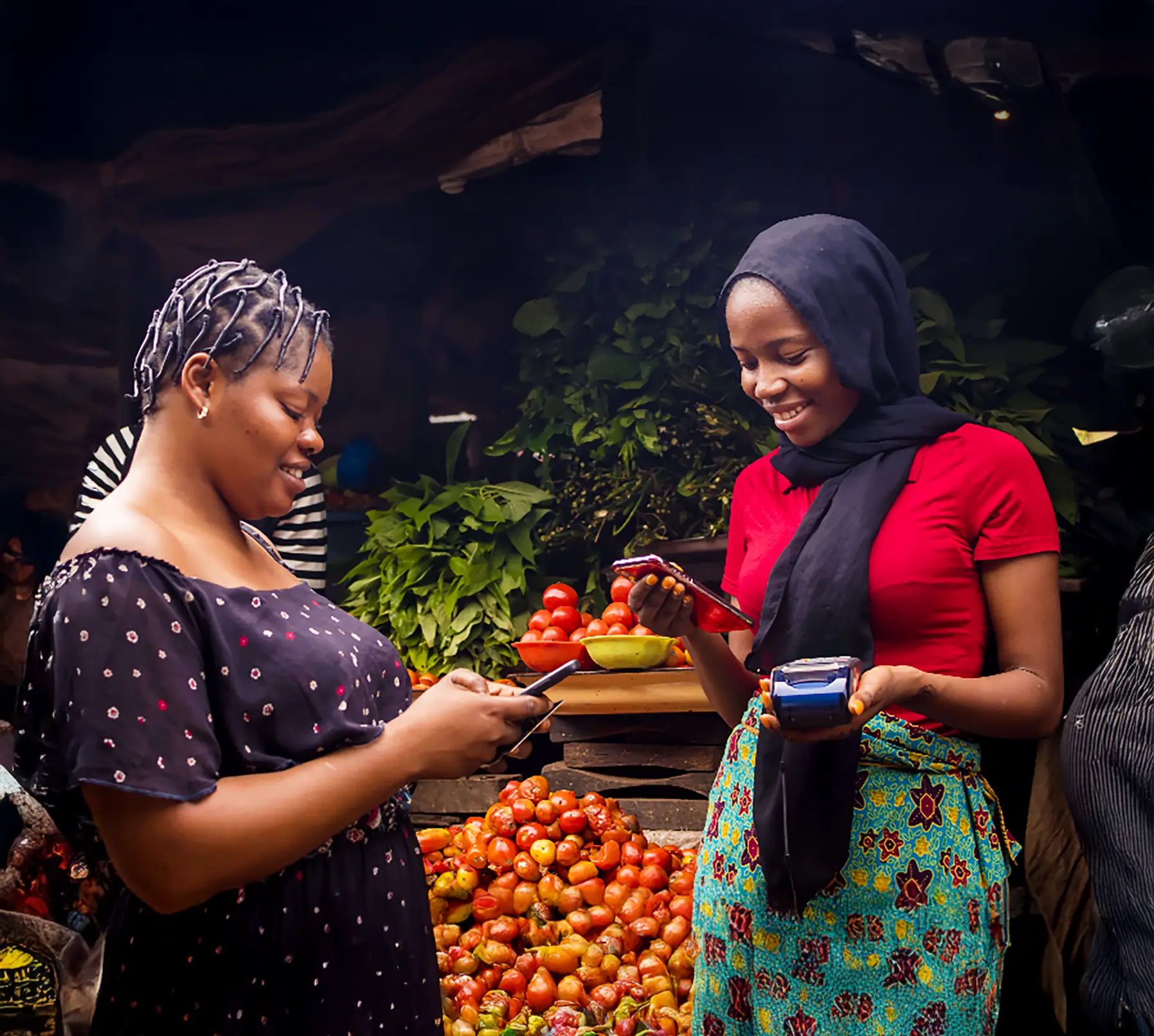
Sierra Leone's digital economy has long trailed regional peers like Nigeria and Ghana, and the raw financial-inclusion numbers explain why policymakers in Freetown have treated digital infrastructure as an urgent priority rather than a discretionary upgrade. According to the Bank of Sierra Leone's National Strategy for Financial Inclusion (2022–2026), only about 12.4% of adults in the country hold a formal bank account, leaving the overwhelming majority of the population outside the formal financial system entirely. That gap has made mobile money and agent-based digital payments — rather than traditional banking — the primary channel through which financial inclusion efforts are being pursued, a pattern familiar across much of West Africa but especially acute in Sierra Leone given its lower starting base.
The government's response has run on two parallel tracks over the past eighteen months: a domestically-focused push to make payments interoperable and instant through a national switch, and a more ambitious, internationally-partnered effort to rebuild the country's digital identity system on open blockchain standards rather than proprietary vendor software. Together, these initiatives — coordinated through the Ministry of Communication, Technology and Innovation and the Directorate of Science, Technology and Innovation (DSTI) — represent a bet that Sierra Leone can leapfrog into a more modern, sovereign digital-infrastructure model even without the deep private capital base of Lagos or Nairobi.
The Salone Payment Switch Goes Live
The centerpiece of the domestic push is the Salone Payment Switch (SaPS), a national instant-payment platform built under the World Bank-funded Sierra Leone Financial Inclusion Project. SaPS launched formally at a ceremony at the Radisson Blu Mammy Yoko Hotel in Freetown on February 13, 2025, with Vice President Mohamed Juldeh Jalloh delivering the keynote address. At launch, seven commercial banks and two mobile network operators were already connected to the system, which enables real-time transfers, card transactions, bulk payments, government disbursements, and digital merchant payments across previously siloed financial institutions.
The Bank of Sierra Leone initially set April 1, 2025 as the deadline for full integration of all banks and mobile money operators into SaPS, later extending that deadline to June 30, 2025 after some institutions struggled to complete the technical integration work on schedule. The extension reflects a broader pattern in Sierra Leone's digital rollouts: ambitious timelines set by regulators, followed by pragmatic extensions as smaller banks and operators catch up on infrastructure and compliance costs. Even so, the shift toward a genuinely interoperable national payment rail — where a customer at one bank can instantly settle with a mobile money account at a different provider — marks a structural change from the fragmented, closed-loop payment systems that dominated the market as recently as 2023.
For a country where mobile money already serves as the de facto financial system for most households, interoperability of this kind directly targets one of the biggest frictions in West Africa's mobile money markets: the inability to move money seamlessly between competing mobile wallets and bank accounts. Analysts covering the rollout have described SaPS as part of a broader regional shift toward interoperable, inclusive payment infrastructure, following similar national switches deployed in recent years across the region.
A Blockchain Bet on Digital Identity
The more unusual and internationally attention-grabbing development came on July 5, 2026, when Sierra Leone's Ministry of Communication, Technology and Innovation signed a partnership agreement with Bhutan's National Digital Identity (NDI) program and the SIGN Foundation to build a new digital identity platform. The agreement is broad in scope, covering open-source, W3C-standard verifiable credentials, a digital wallet, stablecoin payment rails, asset tokenization, and plans for a regional technology hub based in Freetown, according to reporting from Biometric Update and Bhutan News Network.
The choice of open standards is deliberate and is being framed by officials on both sides as a sovereignty decision as much as a technical one: rather than licensing a closed, proprietary identity platform from a single vendor and paying recurring fees indefinitely, Sierra Leone is adopting the same open, W3C-standard credential architecture that Bhutan has already built and open-sourced. Bhutan brings direct experience to the partnership — in October 2025 it became the first country in the world to anchor its national digital identity system directly to the Ethereum blockchain, and it is now sharing that battle-tested architecture with Sierra Leone while prioritizing the training of local Sierra Leonean developers so the system can eventually be maintained domestically rather than through perpetual foreign vendor contracts.
The SIGN Foundation, the other partner in the deal, originated as EthSign in 2021 and has raised more than $55 million since inception, including a $12 million seed round backed by Sequoia Capital in 2022 and a $25.5 million investment from YZi Labs and IDG Capital in October 2025 — giving the partnership real financial backing beyond a bilateral government-to-government arrangement. Sierra Leone's existing digital identity coverage is already fairly broad on paper: the government had issued ID numbers to roughly 80% of the population by 2024. But the practical gap has been stark — fewer than 500,000 physical ID cards were actually collected that year, meaning most registered citizens still lack the physical credential needed to complete know-your-customer checks and open a bank account, a bottleneck that helps explain the country's persistently low 12.4% bank account ownership rate. Closing that last-mile gap between registration and usable, verifiable credentials is the explicit goal of the new blockchain-based system.
A Fintech-Heavy, Still-Nascent Startup Ecosystem
Sierra Leone's broader technology startup ecosystem remains small by regional standards but is showing signs of an inflection point. According to startup-tracking data compiled by Tracxn, 46 funded companies in Sierra Leone have collectively raised approximately $279 million in venture capital and private equity to date, spread across 44 funding rounds involving 32 distinct investors — modest figures next to Nigeria or Kenya, but meaningful relative to the size of Sierra Leone's economy and the youth of its formal tech sector. Fintech is by far the most concentrated category, with startups offering digital payments, mobile wallets, group savings tools, micro-lending, and financial infrastructure services aimed squarely at the same unbanked population the national payment switch and digital ID program are trying to reach.
The Directorate of Science, Technology and Innovation has played a coordinating role well beyond payments and identity. Its Sierra Leone Drone Corridor project, run jointly with the UNICEF Office of Innovation and Njala University, has served as a testbed for humanitarian and logistics drone applications, while DSTI-commissioned research — including a 2021 study conducted with the UN Capital Development Fund — found that more than 66% of Sierra Leonean tech entrepreneurs relied on personal savings rather than formal financing to start their businesses, underscoring how thin the domestic capital base remains even as government-led digital infrastructure projects accelerate. Freetown's coworking and incubation scene has grown around this gap, but access remains heavily concentrated in the capital, leaving entrepreneurs in provincial towns with comparatively little access to mentorship, shared infrastructure, or investor networks.
Regional venture capital funds and diaspora investors have begun to take more notice. Commentary from cross-border investment networks has specifically framed Sierra Leone as an under-capitalized market relative to more mature ecosystems like Kenya's, where venture funding has reached hundreds of millions of dollars annually, arguing that policy improvements, growing digital infrastructure, and thematic alignment with pan-African VC priorities in fintech, agritech, and climate technology position Sierra Leone for a funding inflection point — though formal venture capital activity in the country remains nascent, with only a handful of firms investing directly and much of the risk capital still arriving through development finance institutions and impact investors rather than commercial VCs.
The Road Ahead
Sierra Leone's digital transformation strategy is unusual in the current African landscape less for its ambition than for its sequencing: rather than building flashy consumer fintech apps first and hoping identity and payment infrastructure catch up later, the government has prioritized the interoperable plumbing — a national payment switch and an open-standards, blockchain-anchored identity system — as the foundation on which private fintech and broader digital services are meant to be built. The World Bank-funded SaPS rollout and the Bhutan-SIGN Foundation identity partnership both share a common thread: an explicit preference for open, internationally interoperable standards over closed, single-vendor systems, a choice officials describe as protecting long-term national ownership of critical digital infrastructure.
Whether that sequencing pays off will depend heavily on execution details that are still unresolved as of mid-2026 — how quickly banks and mobile money operators complete full SaPS integration, how fast the Bhutan-modeled identity wallet can be built and distributed to ordinary citizens beyond pilot phases, and whether Freetown's fintech-heavy but thinly-capitalized startup scene can convert improved infrastructure into the kind of funding growth seen in Kenya, Nigeria, and Ghana. For a country starting from a 12.4% bank account penetration rate, the stakes of getting that sequencing right extend well beyond the technology sector itself.
Published By | Tech Wiz