Written By | Torch Media Africa

Eritrea is a country of 3.63 million people on the Red Sea where four out of five residents have never used the internet,
Technological Transformation
Almost every account of African technology in 2026 is a story about acceleration — data centres, submarine cables, AI strategies, mobile money at national scale. Eritrea is the useful counter-case. It is a country of 3.63 million people on the Red Sea where four out of five residents have never used the internet, where a single autonomous system carries the country's traffic, and where the entire national social media audience would fit into a mid-sized football stadium. It is not a market that failed. It is a market that was never opened, and it offers an unusually clean natural experiment in what telecommunications infrastructure does and does not achieve when it is built as a state utility with no competitive or commercial layer above it.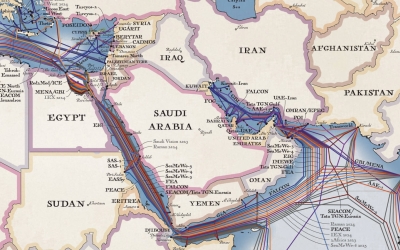
The smallest digital market on the continent
DataReportal's Digital 2026 report for Eritrea, compiled from ITU, GSMA Intelligence and platform advertising data as of October 2025, provides the clearest available baseline. There were 726,000 internet users, an adoption rate of 20.0 per cent of the population. The user base grew by 15,000, or 2.1 per cent, over the preceding twelve months — precisely matching population growth of 73,000, also 2.1 per cent. As a result, Eritrea's internet adoption rate did not move at all over the year. Some 2.90 million people, 80.0 per cent of the population, remained offline at the end of 2025.
The mobile picture is equally distinctive. GSMA Intelligence counted 859,000 cellular connections, equivalent to 23.7 per cent of the population — one of very few countries anywhere where mobile connections remain far below one per person, at a time when the figure exceeds 100 per cent across most of Africa. Connections grew 8.2 per cent year on year, faster than population, so this is the one series genuinely moving. Of those connections, 49.3 per cent are broadband-capable, meaning they run on 3G, 4G or 5G; the other half are voice and SMS only.
The social layer is thinner still. Kepios counted 21,200 active social media user identities in October 2025 — 0.6 per cent of the total population, and just 2.9 per cent of the internet user base. In most African markets social platforms reach a majority of people who are online; in Eritrea they reach roughly one in thirty-five. Facebook's advertising reach was 20,000, Instagram's 21,200, TikTok's 12,000 adults, LinkedIn's 12,000 registered members, X's 1,528 and Reddit's 68. Growth rates on some of those bases are dramatic in percentage terms — Instagram's reported reach rose 127 per cent year on year — but from bases so small that the absolute change is a few thousand accounts. Men outnumber women across every platform, by 59 to 41 on the aggregate measure and by roughly seven to three on TikTok. The median age is 19.2 and 55.3 per cent of the population is rural.
What a single autonomous system means
The structural picture is best read from routing data rather than user surveys. Internet Society Pulse's 2026 country report for Eritrea records one active network — a single autonomous system number carrying the country's internet traffic — and rates upstream diversity as very poor. Pulse notes that more than two connections to the global internet improve a country's ability to recover from unexpected events; Eritrea does not have them. Market competitiveness is likewise rated very poor. There are 57 domains registered under the .er country-code top-level domain, for a country of 3.6 million people.
The governance indicators are consistent. Eritrea scored 2 out of 100 on the ITU's 2024 Global Cybersecurity Index, and 15.76 on the UN's e-government development readiness measure. There is no published national cybersecurity strategy. Oxford Insights places the country near the bottom of its 2025 Government AI Readiness Index. Against that, two indicators run unexpectedly high: 11 per cent of users can reach resources over IPv6, against an African average of 7 per cent, and 89 per cent of domains under .er are protected with DNSSEC against an African average of 1 per cent. Both are artefacts of scale — when a registry has 57 domains and one operator runs everything, uniform technical policy is trivially easy to impose. Centralisation produces clean engineering and almost nothing else.
The state's account of what it has built
Eritrea publishes very little economic data, but it does publish infrastructure claims, and they deserve to be read on their own terms. On 19 May 2026 the Ministry of Information reported remarks by Tesfaselasie Berhane, Minister of Transportation and Communications, setting out what has been spent since independence: more than 35 billion nakfa on expanding telephone and internet services. The specifics cited were 184 towers and associated equipment, the replacement of legacy network services, and roughly 73 kilometres of new cable laid in the Akria, Edaga-Hamus, Hazhaz, Mihram-Chira and Central administrative areas of Asmara. Landline services were installed in Akordet and Adi-Quala, the old line in the port city of Assab replaced, and installation or renovation work carried out in Dekemhare, Keren, Massawa, Teseney, Adi-Keih and at the Naval Force Base.
Two figures from that statement are worth isolating. First, the minister put geographic mobile coverage at 90 per cent. Second, he described international internet capacity rising from half a megabit in 2001 to 1,536 megabits over the past decade, with service reaching 4G level, Wi-Fi introduced in remote areas and semi-urban centres, and dedicated provision for research users. Planned works include towers in the Araeta, Central Denkalia, Gaden and Dekemhare sub-zones.
Taken at face value, that is a national network. And 1.5 gigabits of international capacity for a country of 3.6 million is not nothing in the abstract — but it is roughly what a single large office building consumes in a mature market, and it sets a hard ceiling on what 726,000 users can do once they are connected. This is the central tension in Eritrea's digital file: the state has built more physical coverage than adoption numbers would imply, and the binding constraints lie elsewhere.
Coverage is not adoption
Ninety per cent geographic mobile coverage against 23.7 per cent mobile connections is one of the widest gaps of its kind on the continent. The explanation is price, device cost and what sits at the far end of the connection. Reported retail pricing puts a one-gigabyte ADSL plan at around 1,000 nakfa, roughly 60 to 65 US dollars at official rates, in a country where the World Bank estimates GDP per capita at 860 US dollars for 2025. On that arithmetic a single gigabyte costs something close to a month of average income. No coverage figure survives that ratio.
Handsets are the second barrier. Half of all mobile connections cannot carry data at all, which means that even where 3G or 4G is present, the installed device base is not there to use it. The third barrier is the one hardest to measure: with 57 registered domains, no meaningful e-commerce, almost no digital public services and a state-run media environment, there is comparatively little locally relevant content or service to consume — the demand side of the equation that infrastructure alone never creates.
The missing international layer
Eritrea's international connectivity position is the most unusual feature of its network. The Eastern Africa Submarine Cable System, which entered service in July 2010, includes Massawa in its landing-point documentation, but Eritrea has never participated in the submarine cable consortia that transformed connectivity for its neighbours, and the country's routing profile — one autonomous system, very poor upstream diversity — is not consistent with an active, commercially used cable landing. Djibouti, roughly 300 kilometres down the same coast, hosts one of the densest cable clusters in Africa and has built an entire transit economy on it. Eritrea has built none.
Satellite is the obvious workaround and, so far, a refused one. As of mid-2026 Eritrea remains among the markets where Starlink has no committed service date and no licence. Yet Internet Society Pulse's 2026 market-share table for Eritrean internet service providers lists SpaceX Starlink at 87 per cent alongside EriTel at 42 per cent. Those figures do not sum to a coherent market share and should be treated with caution — Pulse's ISP measurements are derived from sampled traffic, and in a market with a few hundred thousand users the sample is easily skewed. But the entry is telling regardless of its precision: a service that is not licensed in the country is registering a substantial share of observed traffic, which points either to unregistered terminals in use or to Eritrean-attributed traffic routed through satellite links. It is the same pattern seen across the Sahel, and it is the clearest signal that the demand which official infrastructure does not meet finds another route.
A financial system with no digital front end
Payments follow the same shape. More than 70 per cent of Eritreans are estimated to be unbanked. The banking sector consists of a small number of state-owned institutions, with the Commercial Bank of Eritrea providing the bulk of retail services and the Bank of Eritrea acting as central authority. Online banking, ATMs and mobile financial applications are largely absent; cash dominates and processes remain substantially manual. Total online commerce is estimated at under 10 million US dollars a year, growing at 15 to 20 per cent annually from that base. Fewer than five fintech or digital financial service providers operate in the country, most tied to telecommunications or state initiatives, and there is no independent startup or venture capital layer. Open banking has not been implemented and, as of 2024 assessments, there was no active effort to introduce it — the data frameworks and API infrastructure do not exist.
Mobile wallets linked to EriTel are the one emerging entry point, still limited in functionality. The most plausible catalyst is remittances: Eritrea's diaspora is large relative to its resident population, and the World Bank's macro data records remittance inflows equivalent to 13.6 per cent of GDP over 2020 to 2024. In market after market, remittance corridors have been the wedge that opened broader digital financial services. That path is available here and has not been taken.
Money is not the binding constraint
It would be easy to read all of this as poverty, and inaccurate. The World Bank's April 2026 Macro Poverty Outlook estimates Eritrean real GDP growth at 3.2 per cent in 2025, rising to 3.5 per cent in 2026 and 3.6 per cent in 2027, supported by mining and by lower global food and fuel prices. Inflation is easing to around 4 per cent. Most strikingly, the country runs a large and persistent current account surplus — 14.1 per cent of GDP in 2025 and a projected 14.8 per cent in 2026 — reflecting strong mineral exports and tight import and capital controls. Gold prices rose 44 per cent in 2025; gold, copper and zinc together account for more than 95 per cent of export earnings. Government revenue runs at roughly 27 per cent of GDP.
Capital investment is arriving. Since early 2023 China's Sichuan Road and Bridge Group has held a 50 per cent stake in the Colluli potash project alongside the state mining corporation ENAMCO; once operational, expected by end-2027, Colluli could contribute up to 10 per cent of GDP and generate around 200 million US dollars a year. In September 2025 Eritrea began upgrading its two main power stations at Beleza and Hirgigo, above a current installed capacity of 151 megawatts, in a project carried out by the Chinese contractor CFECO and due for completion by end-2026. The African Development Bank is financing a 30-megawatt solar plant at Dekemhare scheduled for 2027.
So the country has export earnings, a surplus, incoming energy capacity and active infrastructure partners. What it does not have is a competitive telecommunications market, an international transit strategy, a licensed satellite option, a payments rail or a private digital sector. The World Bank's own framing of the wider economy — state-owned enterprise dominance, regulatory restriction, import controls and the absence of a competition law — describes the digital sector as exactly as it describes the rest. Public debt at 212.5 per cent of GDP in 2025, projected to rise to 214.8 per cent in 2026, is the fiscal shadow over all of it.
What would move the number
Eritrea's internet adoption rate did not change at all between October 2024 and October 2025. That single fact is the most efficient summary of the country's technology position, and it will not be altered by more towers. Three changes would alter it, and each is a policy decision rather than an engineering problem: diversifying international transit beyond a single upstream path, whether by cable participation or by licensing satellite service; pricing data in some relationship to average income rather than at a month's income per gigabyte; and permitting a payments and services layer — starting with the diaspora remittance corridor — that gives people a reason to be online.
There is also a data problem worth naming. The World Bank observes that Eritrean national accounts are unpublished, inflation data cover only Asmara, balance of payments statistics are incomplete, and poverty statistics have not been produced for over a decade. An ongoing population and health household survey conducted with UN support should improve the social picture. In the meantime, the digital indicators compiled by ITU, GSMA, Kepios and the Internet Society are among the few consistently measured time series available for the country. That they show a flat line is, in its own way, the most reliable thing anyone currently knows about Eritrea's development trajectory.



