SCIENCE & TECH
Somewhere over the Gulf of Mexico test ranges near Eglin Air Force Base, a $30 million fighter jet screamed through the sky in a mock dogfight — and the "pilot" pulling the stick wasn't a pilot at all. It was code.
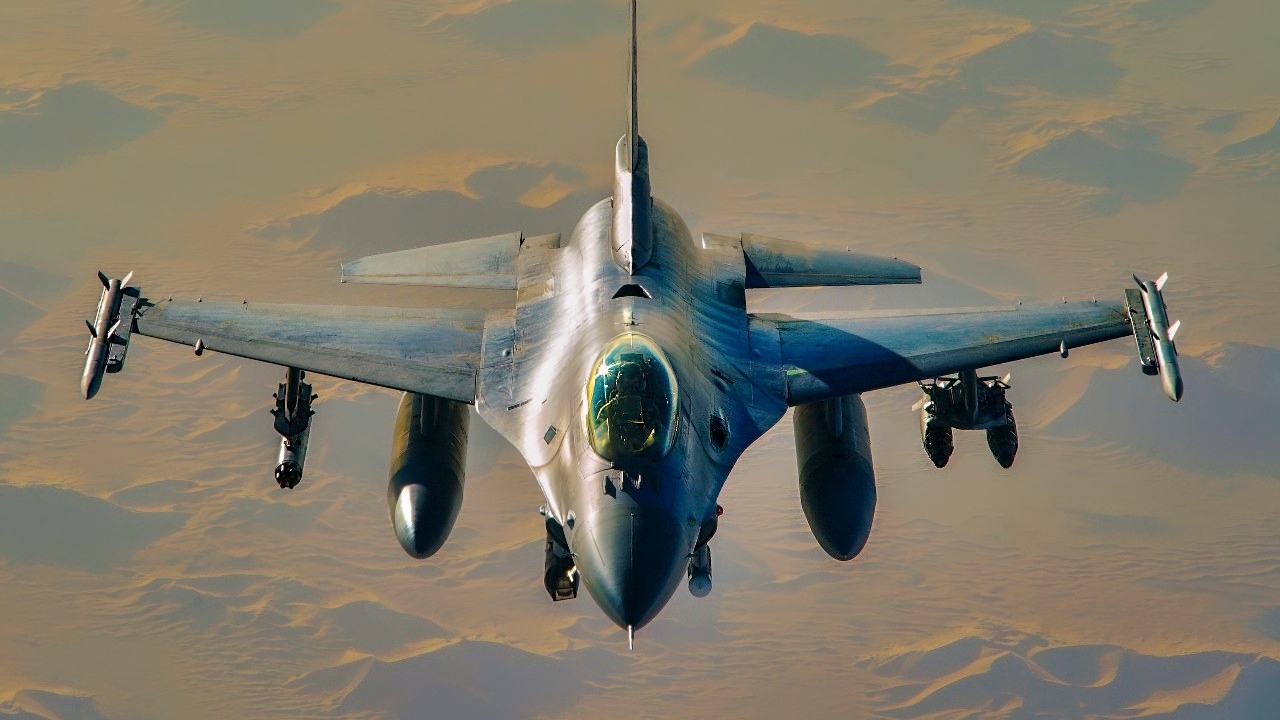
For the first time in the U.S. military's history, an artificial intelligence agent has taken the controls of a fully combat-capable, operational-fleet F-16 Fighting Falcon in live flight, banking, diving and maneuvering the jet through tactical scenarios while a human pilot sat strapped in beside it, thumb hovering over a kill switch. The tests, conducted under a joint DARPA and U.S. Air Force program called VENOM — Viper Experimentation and Next-generation Operations Model — mark what officials are calling a "monumental milestone" in the race to put artificial intelligence in the cockpit of America's warplanes.
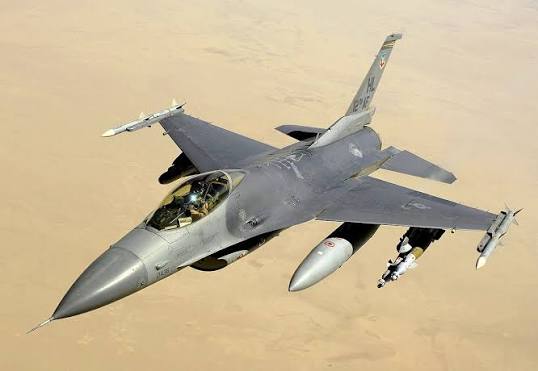
And unlike previous AI dogfight experiments, this was not some one-of-a-kind prototype built in a lab. This was a standard-issue F-16, the workhorse of the Air Force fleet since the Reagan era, retrofitted with a plug-in autonomy kit that could, in theory, be bolted onto virtually any Viper in the inventory.
"These groundbreaking flight tests of VENOM-modified F-16s advance the infrastructure needed to develop trusted, autonomous air combat capabilities," said Brig. Gen. James "Fangs" Valpiani, the DARPA official overseeing the program. "The Air Force and DARPA team has automated flight controls and sensors on a standard F-16 without changing the jet's core software."
In plain English: they didn't need to gut the jet and rebuild it from scratch. They gave it a brain transplant instead.
THE FLIP OF A SWITCH
The technology at the heart of the program is called the VENOM Autonomy Kit, or VAK — an onboard system that wires directly into the F-16's flight controls and mission systems. What makes it remarkable isn't just that an algorithm can fly a fighter jet. It's how seamlessly the human and the machine can trade off control.
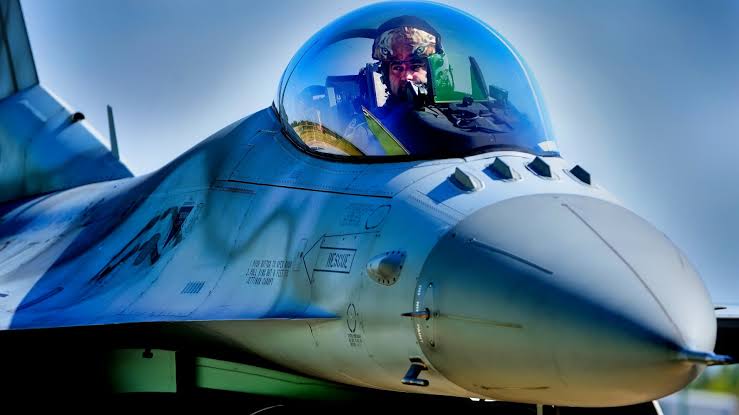
According to DARPA, the kit gives the human pilot in the cockpit the ability to toggle between traditional manual flight and full AI control "with the flip of a switch" — meaning that if the AI does something erratic, or the mission calls for a human touch, the pilot can wrest back control in an instant. It's the aviation equivalent of a driving instructor's second brake pedal, except the vehicle is a supersonic jet capable of pulling nine g's.
The Air Force and DARPA began flying VENOM-modified aircraft in June 2026 to confirm that the jets and their new systems operated safely under conventional human control. Then, in July, engineers finally let the AI agent take the controls in flight for the first time, with the safety pilot monitoring every move and ready to intervene. Six F-16D aircraft at Eglin are being modified with the kit as the testing expands.
The July flight built directly on an earlier and even more eyebrow-raising milestone: the X-62A VISTA, a one-of-a-kind experimental jet, had already proven an AI agent could autonomously fly — and dogfight — a fighter aircraft in the air, closing to within visual range of an adversary aircraft while under machine control. VENOM is the next step: taking that lesson out of the boutique lab jet and onto the kind of aircraft the Air Force actually flies by the hundreds.
WHY THIS MATTERS: THE UNMANNED WINGMAN
The Pentagon isn't spending hundreds of millions of dollars teaching software to fly fighter jets purely as a science experiment. The strategic logic is blunt: the U.S. Air Force wants to build a future in which a single human pilot, sitting in a manned aircraft, can command a small fleet of unmanned or optionally-manned combat drones flying alongside them — sometimes called "loyal wingmen." The VENOM tests are meant to "pave the way for human pilots to seamlessly command and orchestrate teams of autonomous, uncrewed aircraft," according to DARPA's own description of the program's goals.
That vision — a manned "quarterback" jet directing a swarm of AI-flown drones into contested airspace — has become one of the central pillars of the Air Force's modernization strategy in an era when China has been rapidly expanding its own fighter fleet and unmanned systems. Cheaper, expendable AI-piloted aircraft could, in theory, absorb the riskiest missions — probing enemy air defenses, jamming radar or drawing fire — without putting a human pilot's life directly on the line.
There's also a numbers problem the Pentagon is trying to solve. The U.S. Air Force has struggled for years to recruit and retain enough fighter pilots, a training pipeline that takes years and costs millions of dollars per aviator. Autonomous systems, however imperfect today, offer a path to scaling up combat air power without needing to scale up the number of humans qualified to fly it.
INSIDE THE COCKPIT: HOW SAFE IS "SAFE ENOUGH"?
Officials have been careful to stress that a human remains "in the loop" throughout the current phase of testing — both literally, sitting in the physical cockpit, and functionally, retaining override authority at every second. That's a meaningfully different posture than a fully autonomous combat aircraft with no human anywhere near the controls, which remains a more distant and more controversial goal.
Still, the symbolism of the moment is hard to overstate. This is the first time an AI agent has piloted a jet that could, on any other day, be scrambled to intercept a real threat or dropped into an actual combat zone — not a specially built demonstrator, but genuine hardware pulled from operational squadrons.
Defense analysts note that the VENOM program is explicitly structured as an incremental "crawl, walk, run" effort. The initial flights focused on basic flight control — takeoff, cruise, basic maneuvers — under AI management, with more complex tactical scenarios, including simulated air-to-air engagements, to follow as confidence in the system builds. The dogfight-capable X-62A already demonstrated the "run" phase is technically achievable; VENOM's job is proving it can be done affordably and at scale on jets the Air Force already owns.
Critics of battlefield AI, including some arms-control advocates and military ethicists, have long warned about the risks of delegating lethal decision-making to algorithms, and about the potential for AI systems to behave unpredictably under the chaotic, high-stakes conditions of actual combat — conditions that are notoriously difficult to fully replicate in training and simulation. The Pentagon has repeatedly stated that current policy requires "appropriate levels of human judgment" over the use of force, though how that principle translates to a fast-moving autonomous dogfight remains an active and unresolved debate inside defense policy circles.
WHAT THIS MEANS FOR YOU
If you're not a fighter pilot or a defense contractor, it might be tempting to file this under "not my problem." But the VENOM tests are a preview of a broader shift that touches everyone, whether they realize it or not: the handoff of split-second, high-stakes physical decisions from humans to machines is no longer confined to chatbots and self-driving cars. It's happening in the sky, backed by the world's largest military budget, and it's advancing far faster than most people outside the defense world are tracking.
The technology underpinning VENOM — sensor fusion, real-time decision-making software, human-machine "trust" interfaces that let a person hand off and reclaim control instantly — is also a preview of where autonomous systems are headed more broadly, from delivery drones to autonomous trucking to emergency response robotics. The "flip of a switch" handoff DARPA engineered for a fighter jet is the same basic design challenge every company building autonomous systems is racing to solve: how do you let a human and a machine share control safely when milliseconds matter?
There are also geopolitical stakes. Allies and rivals alike are watching how quickly the U.S. can field autonomous combat aircraft, and successful tests like this one tend to accelerate parallel investment from other nations. China, Russia, and several European defense consortiums are pursuing their own loyal-wingman and autonomous-fighter concepts, meaning the VENOM milestone isn't happening in a vacuum — it's a data point in an intensifying, and largely unregulated, global arms race in military AI.
THE ROAD AHEAD
DARPA and the Air Force have not published a firm date for when VENOM-style autonomy kits might be fielded operationally, or when AI agents might fly without a safety pilot in the seat at all. Officials have signaled that additional flight tests — including more complex tactical maneuvers and eventually simulated engagements between multiple autonomous aircraft — are planned through the rest of 2026 and into 2027, using the expanding fleet of six modified F-16Ds at Eglin.
For now, the message from the Pentagon is one of cautious triumph: the technology works, a human is still firmly in charge, and the next steps are about pushing the AI harder to see where its limits lie. But make no mistake — the aircraft that once needed a decade of flight school to master just flew itself, and everyone from Beijing to Capitol Hill took notice.
CONCLUSION
The dogfights of the future may not be won by the fastest reflexes or the steadiest hand — they may be won by the smartest algorithm. The VENOM program's F-16 flights are an early, carefully chaperoned glimpse of that future, one flip of a switch at a time. Whether that future arrives as a triumph of American airpower or a cautionary tale about ceding control of deadly machines to code depends on decisions still being made in test hangars, Pentagon briefing rooms, and, increasingly, in the skies above Eglin Air Force Base.
Published By | Tech Wiz