Written By | Staff Writer
Part of what makes Uganda's pitch credible to international buyers is a problem it does not have
Agriculture
In late August, Hotel Africana in Kampala will fill with beekeepers, entomologists and honey buyers from across Africa and beyond for the fourth Africa-Apimondia Symposium, a continental gathering that has been hosted only four times in the 102-year history of Apimondia, the World Federation of Beekeepers. For Uganda, winning the right to host the event from August 25 to 28 is being treated as more than a diplomatic honour. It is the centrepiece of a bet that the country's honey sector — one of its fastest-growing but least-discussed agricultural success stories — can be turned into a serious export earner, just as a tightening European regulatory deadline threatens to complicate that ambition.
Uganda's honey numbers, as government officials tell them, are striking. The Ministry of Agriculture, Animal Industry and Fisheries says the country now has roughly 1.2 million people involved in beekeeping, working an estimated 16 million beehives, and producing 210,000 metric tonnes of honey a year. Of that, the ministry says Uganda exports 80,000 metric tonnes of honey, worth an estimated Shs889 billion, alongside 1,500 metric tonnes of beeswax valued at roughly $10.5 million. Whatever the precise figures — and Ugandan agricultural statistics of this kind are not always independently audited — the direction of travel is unmistakable: a sector once treated as a rural side-hustle is being reframed by government as a genuine pillar of the country's agricultural export basket, alongside coffee, tea and horticulture.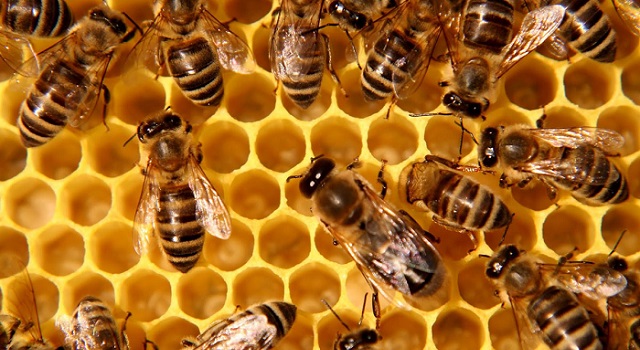
A quiet global advantage
Part of what makes Uganda's pitch credible to international buyers is a problem it does not have. Commercial beekeeping in Europe and North America has been battered for two decades by Colony Collapse Disorder and a cocktail of pests, pesticides and disease that have wiped out entire apiaries. Uganda's bee populations, by contrast, have remained comparatively stable, something Dr. Dickson Biryomumaisho, executive director of the Uganda National Apiculture Development Organisation (TUNADO), attributes to the country's largely low-intervention, natural approach to beekeeping. "When people buy Ugandan bee products, they are not just buying a product — they are buying the science and technology used to keep bees healthy," Biryomumaisho said ahead of the symposium.
That framing — selling not just honey but the story and ecology behind it — is central to how TUNADO and the ministry want to use the Apimondia platform. Biryomumaisho has pointed to Manuka honey from New Zealand as the model to emulate: a product that commands premium global prices because years of scientific research established and marketed its specific medicinal properties. Uganda, he argues, has comparable raw material — including honey regarded locally as medicinal and other hive products such as propolis — but has not yet invested in the research needed to prove and brand those properties for pharmaceutical or cosmetic buyers willing to pay a premium. "If we study the medicinal values, profile our honey and examine its chemical composition, we can create high-quality products for pharmaceutical and cosmetic industries," he said.
There is also a less obvious payoff inside Uganda's borders. Officials credit intensified beekeeping in Robusta coffee-growing areas of Greater Masaka with contributing to higher coffee yields over the past five years, through improved pollination — a reminder that the apiculture sector's value extends well beyond honey jars, into the productivity of Uganda's most important export crop.
The clock is ticking in Brussels
Set against that optimism is a hard regulatory deadline that has injected new urgency into the sector's push for better quality control. Under EU rules originally set out in Commission Implementing Regulation 2024/2598 — since folded into a consolidated list under Regulation 2026/1189 — countries wishing to keep exporting animal-origin products, honey included, to the European Union must be formally listed as authorised with respect to the bloc's prohibition on certain antimicrobial medicinal products. From September 3, 2026, any consignment arriving without that country-level authorisation in place will simply not be allowed entry. Exporting countries have had to submit evidence to the European Commission demonstrating that antimicrobials reserved for treating serious human infections are not being used in ways that could leave residues in honey.
Uganda has reason for cautious confidence here: it has been one of a handful of African countries accredited to export honey to the EU since 2005, and officials say the country's annual Residue Monitoring Plan submissions — tracking chemical residues in honey destined for European markets — have never been queried or rejected by EU authorities. But officials are not treating the September deadline as a formality. Dr. Anna Rose Okurut Ademun, the Ministry's Commissioner in charge of Animal Production and Health, has been explicit about where the pressure now sits: on farmers, not just processors. "The challenges are that, as we export more, the requirements for quality also increase," Ademun said. "If tests detect unwanted chemicals, buyers may block our products. Farmers need guidance on what chemicals can and cannot be used near bee colonies to maintain market access."
That warning points to the sector's central vulnerability. Uganda's honey is produced overwhelmingly by smallholder beekeepers, often keeping hives alongside farms where pesticides and veterinary drugs are used on crops and livestock. A single farmer's misuse of an agrochemical near a colony can, in principle, produce residue levels that jeopardise an export consignment — and by extension, Uganda's whole EU market access — regardless of how clean the rest of the national supply chain is. That is precisely the kind of diffuse, farm-level risk that is hardest to police through national-level regulation alone, and it explains why the ministry has been pushing to embed entomologists in local governments and align beekeepers with extension programmes such as the Parish Development Model and the World Bank-backed Uganda Climate Smart Agricultural Transformation Project.
Building the case before the buyers arrive
The timing of the Apimondia Symposium, just three weeks before the EU's new listing regime takes full effect, gives Uganda an opportunity to make its quality case directly to an international audience of scientists, regulators and industry figures before the deadline lands. Government officials have said they intend to use the gathering to showcase not just Uganda's production volumes but the "science and technology" behind its healthy bee populations — an implicit pitch to buyers nervous about supply security elsewhere in the world.
Whether that translates into higher prices and expanded market access will depend on follow-through that goes beyond a four-day conference. Biryomumaisho's own diagnosis is that research funding remains the missing piece: without deeper scientific characterisation of Ugandan honey's composition and medicinal properties, the country risks continuing to sell a commodity product at commodity prices, even as it markets itself as ecologically distinctive. Government interventions — recruiting and retooling district entomologists, folding beekeepers into PDM financing, and channelling World Bank climate-smart agriculture funding toward apiculture value chains — represent a first attempt to close that gap, but each will take years, not months, to show results.
For the roughly 1.2 million Ugandans whose incomes depend on beekeeping, the immediate stakes are more concrete than symposium branding or research funding pipelines. It is whether the honey they harvest this season clears an EU residue test in September, and whether the guidance reaching them about what not to spray near their hives arrives before, rather than after, a shipment is turned away at a European port.



