Written By | Staff Writer
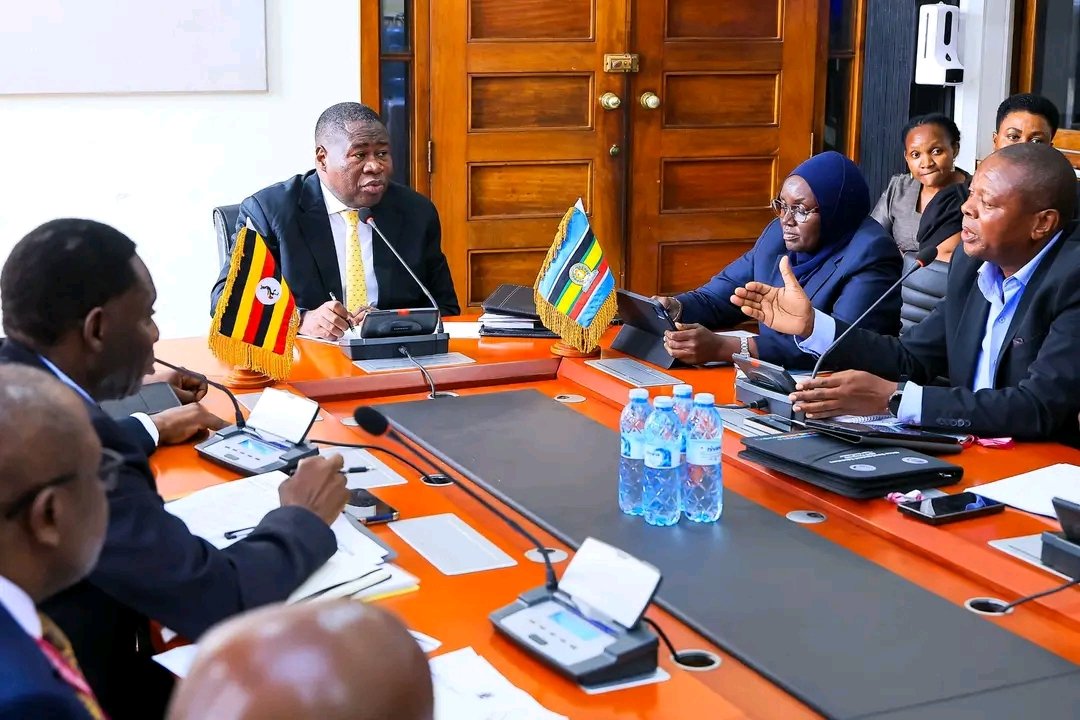
Parliament Speaker Jacob Marksons Oboth brought the central bank and the cooperative movement into the same room and brokered what participants are calling a truce
Kampala
For three weeks, Uganda's savings and credit cooperatives had a date circled in red: September 30, 2026. That was when the Bank of Uganda said it would cut off any large SACCO without a licence from the commercial banking system and mobile money rails that move billions of shillings in farmer savings, Parish Development Model (PDM) disbursements and seasonal loan repayments every month. As recently as September 22, Governor Michael Atingi-Ego had written to cooperative leaders refusing to move the date, warning that missing it would tip the country into a regulatory "grey zone." Two days later, that deadline was gone.
On September 23 and 24, Parliament Speaker Jacob Marksons Oboth brought the central bank and the cooperative movement into the same room and brokered what participants are calling a truce. The Bank of Uganda has agreed to stop enforcing the September 30 cut-off, push the effective compliance date to March 31, 2027, with a further outer limit floated for June 30, 2027, and — the concession cooperative leaders had been asking for since August — instructed the Ministry of Finance, Planning and Economic Development to draft amendment legislation that would harmonise the tangle of laws currently governing SACCOs. It is a sharp reversal of position within 48 hours, and it changes, for now, the risk calculus for tens of thousands of farmers whose only formal financial institution is their local SACCO.
From ultimatum to truce in two days
The dispute traces back to a Bank of Uganda circular issued in mid-September under the Microfinance Deposit-Taking Institutions Act (Cap. 58) and the MDI (Registered Societies) Regulations of 2023, which require any SACCO holding voluntary savings above Shs1.5 billion or institutional capital above Shs500 million to obtain a BoU licence. Of roughly 90 SACCOs that meet that "large" threshold, only eight had been fully licensed by the September deadline, with 21 more at the final stage of approval and around 50 still in the process of collecting application forms. From October 1, the circular said, banks and mobile money operators would be barred from transacting with any unlicensed large SACCO — effectively freezing them out of the formal payment system that PDM funds, farmer savings and loan disbursements flow through.
Cooperative leaders did not dispute that regulation was needed. Their objection was to being regulated by three different authorities at once: the Ministry of Trade under the Cooperative Societies Act, the Ministry of Finance's microfinance department under the Tier 4 Microfinance Institutions and Money Lenders Act, and now the Bank of Uganda under the MDI framework. Sylvester Ndiroramukama, chief executive of the Uganda Cooperative Savings and Credit Union (UCSCU), put the movement's position plainly in the days before the truce: "We want to be regulated, but we want this to be done under one law, one regulator, like other successful countries such as Kenya" — a reference to the single-regulator model Kenya built around the SACCO Societies Regulatory Authority (SASRA).
Atingi-Ego's public stance had been that the law left no room for delay. "The law is clear," he said. "If we do not adhere to the deadline, the country will be moved into the grey zone" — a reference to the Financial Action Task Force's anti-money-laundering compliance review, with Uganda's next FATF mutual evaluation scheduled for 2027. An unlicensed, unsupervised layer of deposit-taking institutions holding an unknown but significant share of rural savings is exactly the kind of gap FATF assessors flag.
It was Speaker Oboth who found the opening. "When two laws conflict or contradict each other, you need a Speaker to speak to both sides," he said, framing his intervention as a mediation between two lawful but incompatible regulatory claims rather than a political override of the central bank. Under the terms reached this week, large SACCOs are to collect their licence application forms within seven days as a goodwill gesture demonstrating genuine intent to comply; those that show real progress by March 31, 2027 will be treated as compliant, with a further extension to June 30, 2027 under discussion for phased completion. Crucially, the Ministry of Finance has been directed to draft legislation harmonising the competing frameworks, and a previously dormant inter-agency taskforce is being reconstituted to oversee the transition.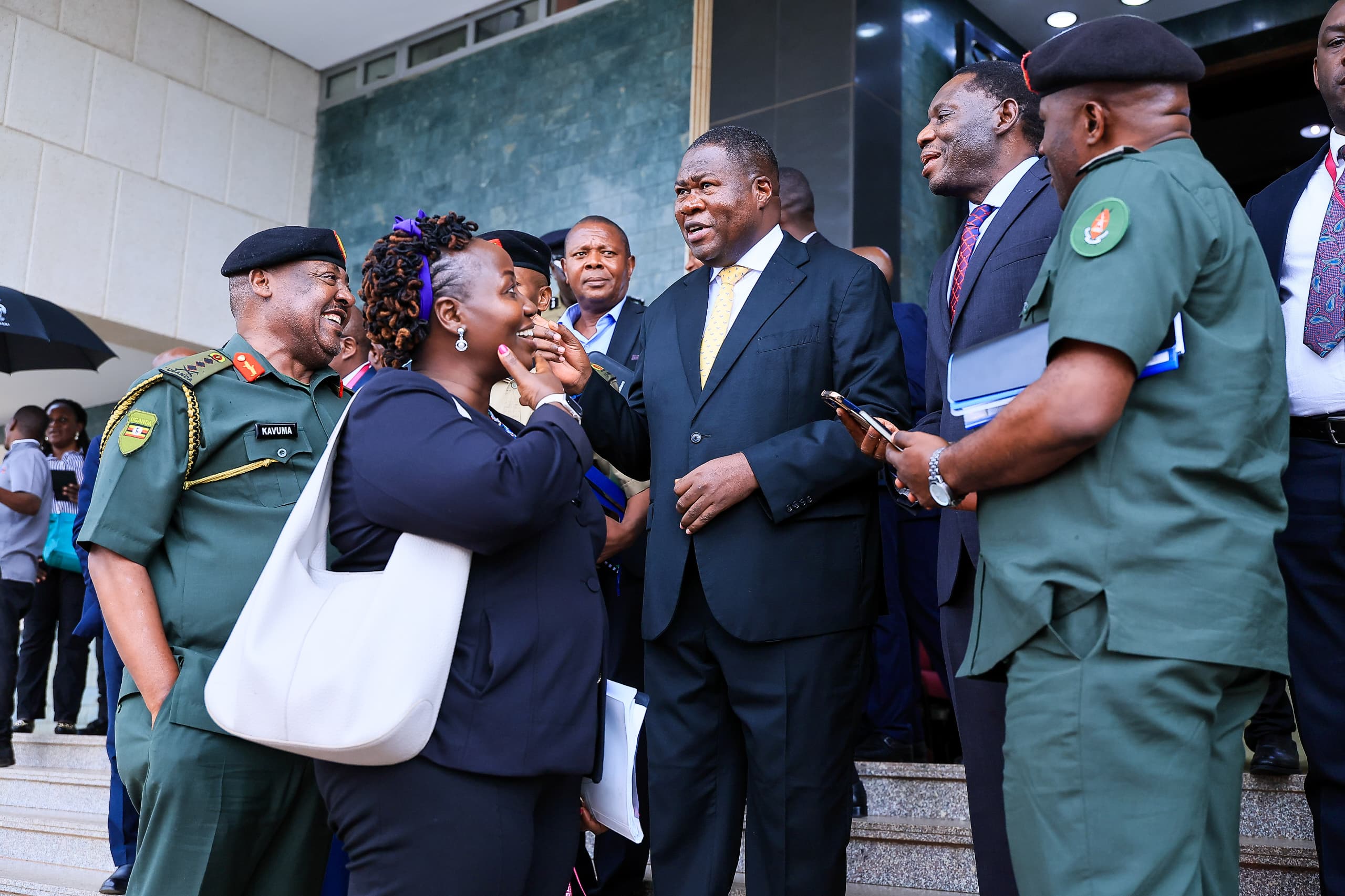
Why it matters beyond Kampala's regulatory corridors
The abstraction of "regulatory harmonisation" translates into something very concrete on the ground: whether a farmer in Bushenyi, Kabale or Kumi can still walk into their SACCO and withdraw savings, receive a PDM parish revolving fund disbursement, or roll over a seasonal input loan without interruption. SACCOs are the backbone of rural finance in Uganda in a way commercial banks are not — they are where Parish Development Model money is meant to land for many of the 3.57 million registered PDM beneficiaries, and where smallholders who cannot meet a commercial bank's collateral requirements go for credit against next season's harvest.
That dependence cuts both ways. Uganda's cooperative movement has spent much of 2026 under scrutiny for governance failures — from the High Court-ordered takeover of Igara Growers Tea Factory over disputed liabilities to almost every PDM recovery hearing this year showing SACCOs and parish revolving funds recovering only a small fraction of what was disbursed, such as Nakaseke District's Shs28.2 million recovered against Shs25 billion disbursed. Regulators argue that is precisely the case for bringing large SACCOs under prudential supervision with capital and governance standards attached. Cooperative leaders counter that a chaotic, multi-regulator transition imposed on a hard deadline risked doing more damage to farmer confidence than the governance gaps it was meant to fix — pushing savers toward informal, entirely unsupervised money-lending instead.
The timing has an added edge. Uganda's agricultural lending environment is already tight: the Bank of Uganda's own August 2026 Monetary Policy Report put the weighted average lending rate for agriculture at 19.6 percent, among the highest of any sector and well above trade (17.0 percent) or transport (14.8 percent), even as the central bank held its policy rate at 9.75 percent. Bankers' Association leaders have been publicly pushing for a dedicated agricultural financing architecture and a tenfold expansion of the country's private credit stock by 2040. A disorderly SACCO shutdown at the end of September would have removed, overnight, one of the few sources of credit priced anywhere near affordable for smallholders — just as the country heads into a second planting season shadowed by El Niño-linked rainfall uncertainty and fresh from a drought that has already strained farm incomes and loan repayment capacity in districts from Masaka to Isingiro.
What happens next
The truce buys time rather than settling the underlying question of who regulates Uganda's cooperative savings sector and how. The Ministry of Finance now has a mandate — but no fixed deadline of its own — to draft legislation that would fold the Cooperative Societies Act, the Tier 4 Act and the MDI framework into something resembling a single-regulator model. Parliament will need to pass whatever emerges, and cooperative leaders will be watching closely to see whether the reconstituted taskforce genuinely moves toward the Kenya-style SASRA model they have asked for, or whether the Bank of Uganda ultimately absorbs large SACCOs into its existing supervisory architecture largely on its own terms.
For now, the seven SACCOs licensed since mid-September — including EBO Financial SACCO in Mbarara and Kyazanga-Kwegatta SACCO in Lwengo — remain the exception rather than the rule. The other roughly 80 large SACCOs have breathing room they did not have a week ago, but also a March 2027 marker that, if history over the past six months is any guide, will arrive with the same last-minute brinkmanship that produced this week's truce in the first place.



