Written By | Staff Writer
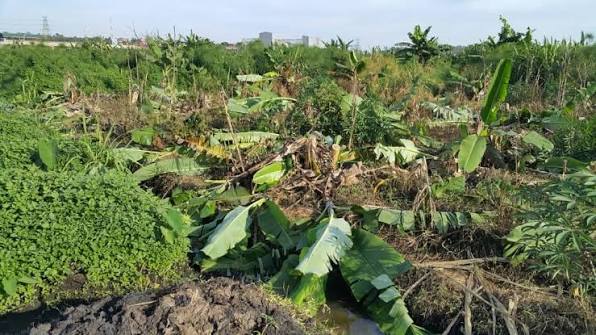
The operation, led by Deputy Resident District Commissioner Wilberforce Ahimbisibwe Ongom alongside the municipal environment office, community development office and local law enforcement
Agriculture
Authorities in Rukungiri Municipality this week launched a three-month operation to reclaim degraded wetlands, warning farmers and institutions occupying protected land that they now face fines of up to Shs600 million, up to 12 years in prison, or both. The exercise began at Nyakibale Wetland in the municipality's Eastern Division, where officials moved immediately to halt cultivation that had spread across the swamp over recent years, converting what should be a water catchment area into gardens of maize, vegetables and other crops.
The operation, led by Deputy Resident District Commissioner Wilberforce Ahimbisibwe Ongom alongside the municipal environment office, community development office and local law enforcement, is the latest and one of the most sharply worded entries in a rapidly expanding national campaign against wetland encroachment — one that is placing Uganda's environmental protection ambitions on a direct collision course with the survival strategies of farmers who have depended on wetland gardens, often for generations, to see their households through Uganda's increasingly erratic dry seasons.
"Wetlands are vital for water conservation, climate resilience and environmental sustainability. Anyone found encroaching on wetlands risks prosecution under the law, with penalties including a fine of up to Shs600 million, imprisonment for up to 12 years, or both, depending on the court's ruling," said Laban Kushaba Katende, Rukungiri Municipality's Senior Environment Officer, at the launch of the operation. Ongom, addressing the crowd gathered at Nyakibale, ordered an immediate halt to all cultivation within the wetland and went further, warning institutions — including churches and schools that hold land containing wetland sections — against leasing that land out for cultivation or excavation without government clearance.
Rukungiri's action did not emerge in isolation. It lands squarely within a nationwide enforcement drive that Uganda's National Environment Management Authority (NEMA) has been steadily escalating through 2026. In June, NEMA issued a 30-day ultimatum ordering wetland occupants across Kampala to vacate voluntarily or face forced eviction, a notice that triggered a multi-agency operation — backed by police and, in some instances, the military — that left hundreds of families homeless when bulldozers moved into the Lubigi wetland. Weeks later, a similarly forceful operation at the Kaliddubi wetland in Busabala flattened roughly 100 homes, drawing public outrage even as NEMA insisted the demolitions were necessary to restore a critical flood buffer for the city. NEMA has signalled that its enforcement will not stop at the capital, naming Wakiso District, Mbale City and the banks of the ecologically fragile River Rwizi in Mbarara as the next targets for intensified action. Just five days before the Rukungiri announcement, authorities in Ngora District had issued a separate eviction directive covering the Agirigiroi Kapir sub-county wetland, giving crop farmers and cattle keepers there until December to leave — underscoring how, district by district, the same enforcement logic is now being applied across very different parts of the country, from the cattle corridor to the western highlands.
The scale of what is being contested is significant. Uganda's wetlands, government data show, declined from covering about 15.5 percent of the country's land area in 1994 to roughly 13 percent by 2017, with a 2026 government assessment suggesting the country lost some 7,500 square kilometres — about 750,000 hectares — of wetland between 2000 and 2021 alone, converted into farmland, settlements and commercial developments. NEMA has responded by gazetting more than 8,600 wetland areas under a national declaration notice requiring occupants to vacate, and government figures now claim more than 55,000 hectares of degraded wetland have been restored, with over 3,000 kilometres of wetland boundaries physically marked with concrete pillars to make the protected zones unmistakable. Encouragingly for the agency, more recent estimates suggest wetland coverage has begun recovering, climbing back toward roughly 14 percent nationally — a reversal officials have pointed to as evidence the crackdown is working, even as the human cost of getting there draws sustained criticism.
That human cost is the crux of the tension playing out in Rukungiri and everywhere else NEMA's enforcement reaches. Wetlands in Uganda are not empty ecological reserves awaiting restoration; for many rural households they are active, often essential, farmland — valued precisely because they retain moisture through the dry months when rain-fed gardens on higher ground wither. Johnbosco Tumwebe, the LC I chairperson of Rwempisi Cell in Rukungiri's Eastern Division, pointed to a specific driver of the problem: landowners who lease out wetland plots to cultivators for a fee, pocketing the income while the tenant farmer absorbs the eventual loss when government moves in to restore the land. "Many landowners end up suffering financial losses when government restores wetlands after they have leased them to cultivators," he said, though it is often the poorer tenant farmer, not the landowner, left without a harvest. Local resident Evangelista Beinenama urged the community to abandon wetland farming altogether in favour of more sustainable livelihoods, suggesting even something as modest as harvesting wetland grass for mulching banana plantations as an alternative source of income that does not require cultivating inside the protected zone.
The dilemma facing policymakers is that wetland cultivation is, in significant part, a symptom of exactly the pressures the government is simultaneously trying to address through other agricultural programmes: a warmer, drier climate; degraded upland soils that no longer hold moisture; and smallholder households with few alternatives when the rains fail. Uganda's own Ministry of Water and Environment forecast this year's June-to-August season as warmer and drier than average across most of the country, particularly in central and western districts — the very areas, including Rukungiri, now facing wetland enforcement. When upland gardens fail, wetland plots, with their naturally higher water table, become one of the few remaining sources of food and income for households with no irrigation and no savings to fall back on. Cracking down on that cultivation without offering a viable alternative risks pushing already vulnerable farmers deeper into hardship, even as it serves the legitimate and increasingly urgent goal of protecting water catchments that supply municipalities like Rukungiri with reliable water, especially during dry spells — a point Ongom himself made in defending the operation.
There are also broader economic and ecological stakes tied up in the wetlands themselves. Beyond water supply, wetlands filter pollutants, control flooding, recharge groundwater and support fish breeding grounds and biodiversity — functions that, when lost, tend to reappear as other costs: more severe flooding in downstream communities, declining fish catches in nearby lakes and rivers, and shrinking dry-season water availability for both farming and domestic use. Uganda's fisheries sector, which the country's officials have proudly noted leads Africa in inland production, depends in part on wetlands functioning as breeding and nursery habitat, linking the health of swamps like Nyakibale to industries seemingly far removed from a Rukungiri maize garden.
For now, Rukungiri's three-month restoration window gives affected farmers a narrow runway to adjust, and local leaders are urging residents to at minimum verify that any landowner offering wetland plots for cultivation actually holds the government authorisation required to do so — a safeguard meant to prevent tenant farmers from unknowingly investing labour and inputs into land that could be reclaimed at any moment. But the deeper question raised by Rukungiri, Ngora, Lubigi, Busabala and the districts NEMA has signalled are next — Wakiso, Mbale, and the River Rwizi corridor — is whether Uganda's environmental enforcement machinery is being paired with an equally serious investment in irrigation, drought-resilient farming and alternative livelihoods for the farmers being asked to leave the land that has, for many of them, quietly kept their households fed through the driest months of the year. Without that parallel investment, the wetlands may recover even as the rural poverty the crackdowns displace simply resettles somewhere else.



