Written By | Staff Writer

The Regional Export and Free Zones Awareness Meeting, organised by the Uganda Free Zones and Export Promotions Authority (UFZEPA), was ostensibly a routine sensitisation workshop
Agriculture
In a conference room at Las Vegas Garden Hotel in Mbarara City on July 30, government officials delivered a blunt message to the small manufacturers, processors and traders of Uganda's Ankole sub-region: the export markets you want are open, but most of you are not yet allowed through the door. The Regional Export and Free Zones Awareness Meeting, organised by the Uganda Free Zones and Export Promotions Authority (UFZEPA), was ostensibly a routine sensitisation workshop. In substance, it was a snapshot of the widening gap between Uganda's national ambitions for agro-industrial export growth and the informal, undercapitalised reality of the small businesses expected to deliver it.
The numbers driving that ambition are large. Speaking on behalf of the Minister of State for Trade, Industry and Cooperatives, Sanjay Tanna, UFZEPA's Senior Manager for Export Development and Promotion, David Katungi, told the gathering that Uganda's exports of goods and services have grown by roughly 204 percent over the past five years, from $5.93 billion in the twelve months to March 2022 to $18.4 billion in the twelve months to March 2026. That growth sits inside a far more ambitious national target: the government's Ten-Fold Growth Strategy, under Uganda's Fourth National Development Plan, aims to expand the economy to roughly $500 billion, raise the ratio of exports to GDP from 12 percent to 50 percent, and push manufactured goods to half of the export basket. Agricultural products — coffee, cocoa, fish, sugar and a growing list of processed goods — remain central to that export mix alongside gold and steel.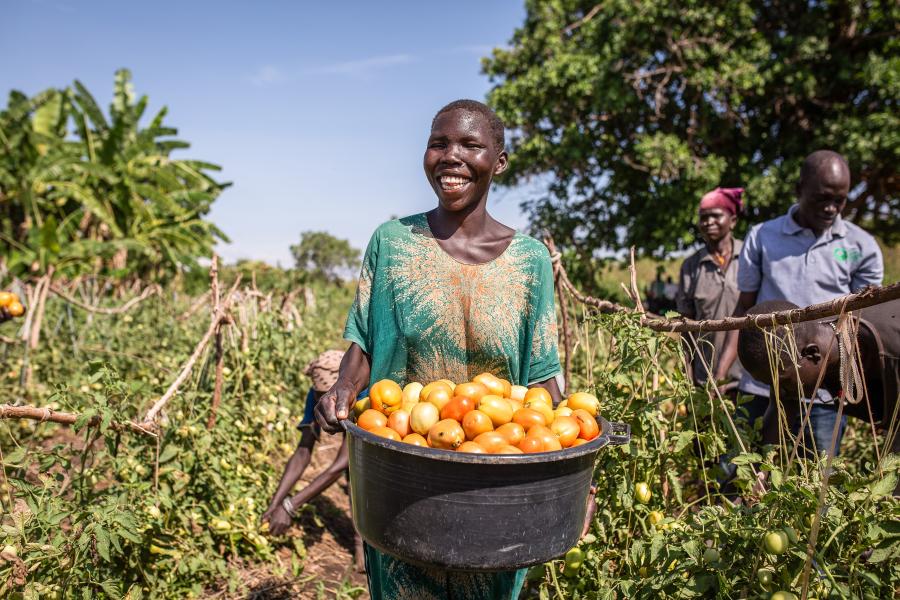
THE FORMALISATION PROBLEM
The gap between that macro target and life on the ground in Greater Mbarara and Greater Bushenyi was the workshop's central theme. Rebecca Wamono Nalumu, UFZEPA's Executive Director, represented at the meeting by the authority's Senior Manager for Special Economic Zones Operations and Compliance, said many regional enterprises have real production capacity but operate entirely informally, cutting them off from lucrative regional and continental trade frameworks such as the East African Community Common Market and the African Continental Free Trade Area (AfCFTA). "Many companies operating in the western region struggle with where to find information," she said. "New regulations have emerged, such as the European Union Deforestation Regulation requirements for coffee producers, processors and exporters to register for traceability. Because many of our companies remain informal, they miss out on these lucrative market opportunities."
The consequences of that informality run in both directions. Nalumu pointed to a second, less discussed problem: poor coordination among government regulators has allowed substandard agro-inputs, counterfeit pesticides and ineffective acaricides to circulate in local markets, undermining the quality and safety of the very export crops the country is trying to promote. "When substandard pesticides or chemicals enter the market, they compromise the safety of our agricultural exports," she said. "It is not just the individual exporter who suffers; the reputation of the entire country is affected." UFZEPA, she said, now plans to engage at least 100 private-sector associations annually in an effort to close that information gap at the grassroots.
MAAIF TIGHTENS THE RULES ON AGRO-DEALERS
The regulatory response is already taking shape. Emmanuel N. Blair of the Ministry of Agriculture, Animal Industry and Fisheries' Department of Crop Inspection and Certification told the forum that the ministry is actively updating the legal framework governing agrochemicals, much of which dates to regulations adopted in 1993 under a parent law enacted in 2006. "We recently updated these regulations to address emerging chemical issues," Blair said. "As of last week, we had drafted new regulations specifically for pesticide monitoring and submitted them to the Solicitor General for review before enactment, so that we can commence strict pesticide residue monitoring."
Blair also announced a significant tightening of qualification standards for the agro-dealers who sell seed, fertiliser and crop chemicals directly to farmers. Where operators of agro-shops previously needed only a two-week agricultural course from Makerere University to qualify, MAAIF is now raising that bar to a full Diploma in Agriculture, arguing that farmers need agro-dealers capable of providing genuine extension advice rather than simply moving product off a shelf. On enforcement, Blair was direct about the limits of government capacity and the role ordinary citizens will need to play: "MAAIF cannot be everywhere at once, so citizens must act as government watchdogs. Report unqualified agro-dealers and counterfeiters to us so we can target them directly and take enforcement action." He warned that counterfeit acaricide producers, in particular, would have their products seized on discovery.
VOICES FROM THE GROUND: BUREAUCRACY, CAPITAL AND CLIMATE
If the government officials framed the problem as one of compliance and standards, the region's own business and local government representatives painted a picture of an entrepreneur caught between too many agencies and too little support. Simon Seith Mwijuka, chairman of the Mbarara City Traders Association, criticised the fragmented way government engages small manufacturers. "When we manufacture, MAAIF handles raw production, UNBS certifies, URA demands digital stamps, URSB handles registration, and the Free Zones Authority looks for markets," he said. "Why can't these entities coordinate better instead of requiring local producers to constantly carry samples back and forth to Kampala for testing?" Mwijuka also flagged access to affordable trade financing as a persistent constraint, arguing that commercial lending terms remain too rigid for the seasonal cash-flow realities of manufacturing and processing businesses.
Aggrey Ategyeka, Principal Commercial Officer for Bushenyi-Ishaka Municipal Council, echoed the coordination complaint from the local government side, noting that his office had, days earlier, attended a near-identical sensitisation session organised separately by the Ministry of Trade in Mbarara District. "We need stronger collaboration so that we can utilise the same resource envelope to achieve the broader national objective," he said, while also urging small businesses to adopt basic record-keeping so that support programmes can be targeted using evidence rather than guesswork.
Gerard Nuwagaba, representing Ntungamo District's administration, widened the conversation to the climate pressures bearing down on the sub-region's livestock farmers, whose animals form part of the same export value chains under discussion. Dry-season pasture and water shortages, he said, are becoming a recurring shock for households still reliant on rain-fed grazing, compounded by degraded rural roads that damage produce quality in transit before it ever reaches a certified processor.
THE ROAD FROM COOPERATIVE TO CONTAINER
Several speakers converged on a similar prescription for the sub-region's smallholders and micro-enterprises: aggregate, or stay locked out. Joan Kisakye Nabwemi, Agribusiness Lead at the Federation of Small and Medium-Sized Enterprises, argued that individual smallholders simply cannot meet the volumes international buyers demand on their own. "By operating through cooperatives, smallholders can pool yields, meet export quotas and maintain consistent supply chains," she said. Herbert Mugisha, chief executive of Green Cane Innovations, urged businesses to design their production around international standards and organic certification from the outset, warning that chemical residues remain one of the most common causes of export rejections for Ugandan produce, a concern that echoes the roughly 70 percent rejection rate Ugandan avocado exporters have separately reported on the Kenyan market this year.
For the government side, the workshop was pitched as one node in a much larger campaign. Tanna's remarks, delivered on his behalf by UFZEPA's Katungi, tied the day's discussion directly to national strategy: "Sustainable prosperity will only be realised when we move beyond primary production to value addition, processing, packaging, branding and export marketing." The minister's written remarks acknowledged that many MSMEs continue to struggle with financing, standards compliance, certification, packaging, logistics and market information — precisely the list of grievances raised by Mwijuka and Ategyeka from the floor.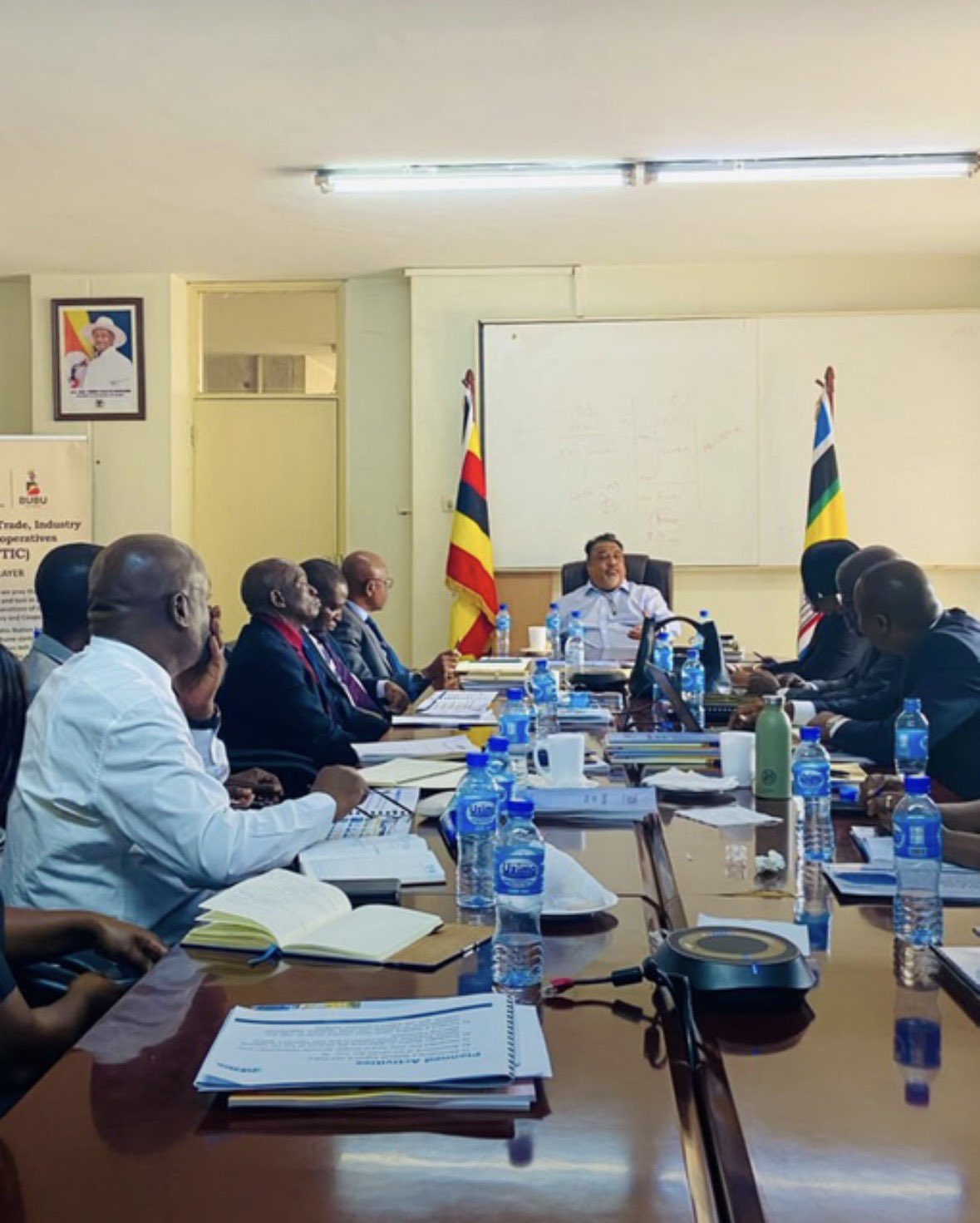
WHAT IT MEANS FOR FARMERS AND THE WIDER ECONOMY
The stakes of closing this formalisation gap extend well beyond Ankole's borders. Uganda's agricultural export ambitions increasingly depend on a layer of small and medium agro-processors capable of turning raw coffee, cocoa, fish, cotton and horticultural produce into certified, traceable, exportable goods — the value addition the National Development Plan explicitly prioritises. If that middle layer of the value chain remains informal, undercapitalised and drowning in duplicated bureaucracy, the burden of meeting new international requirements, from EU deforestation traceability to pesticide residue limits, falls disproportionately on producers least equipped to absorb it. Conversely, every MSME that successfully formalises and certifies becomes a new outlet for farmers seeking better prices for higher-quality raw produce, potentially easing some of the market access and price volatility problems that have long dogged smallholders across western Uganda.
Whether Friday's session in Mbarara translates into faster formalisation on the ground will depend on follow-through that has, by officials' own admission, been inconsistent in the past. UFZEPA's pledge to run 100 such engagements annually suggests the government understands the scale of the outreach required. For the traders, farmers and processors of Ankole, the more immediate test will be whether the promised coordination between MAAIF, UNBS, URA, URSB and the Free Zones Authority actually reduces the number of trips they must make to Kampala — or simply adds one more agency to the list.



