Written By | Staff Writer
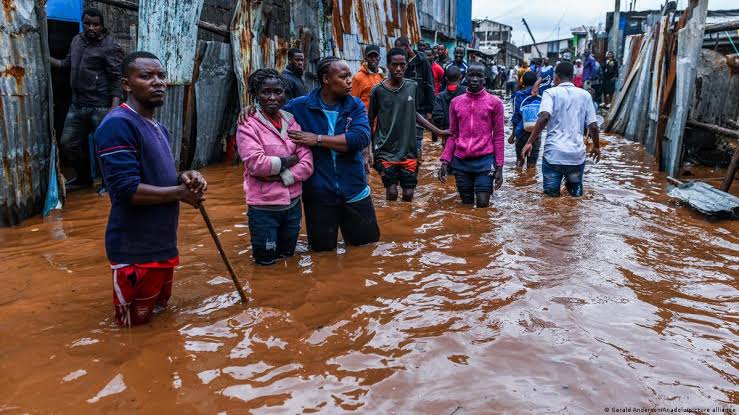
The ministry's Department of Meteorological Services cautioned that most of Uganda should expect above-normal rainfall between August and December 2026
Agriculture
For much of the past four months, Uganda's agricultural story has been one of thirst. Since April, large swathes of Karamoja, Acholi and the cattle corridor have gone without meaningful rain, crops have withered in the field, herders have watched cattle collapse from hunger, and at least 19 people in Karamoja have starved to death in a crisis the government has met with emergency food relief. Now, just as farmers begin to count the cost of that dry spell, the Ministry of Water and Environment has delivered a second, almost contradictory warning: get ready for too much rain.
In an advisory signed on July 30 by Permanent Secretary Dr Alfred Okot Okidi, the ministry's Department of Meteorological Services cautioned that most of Uganda should expect above-normal rainfall between August and December 2026, driven by the development of a weak-to-moderate El Niño event interacting with a positive Indian Ocean Dipole. The advisory warns of an elevated risk of river overflows, flash floods, urban flooding, landslides, lightning strikes and destruction of roads, bridges and drainage infrastructure — and flags that agricultural production could be significantly disrupted just as the country tries to recover from the drought.
For a sector that employs roughly 70 percent of Uganda's workforce and contributes close to a third of GDP, the whiplash from drought to deluge inside a single farming season is more than a meteorological curiosity. It is a direct threat to food security, household incomes and the fragile recovery efforts already under way in the north and northeast.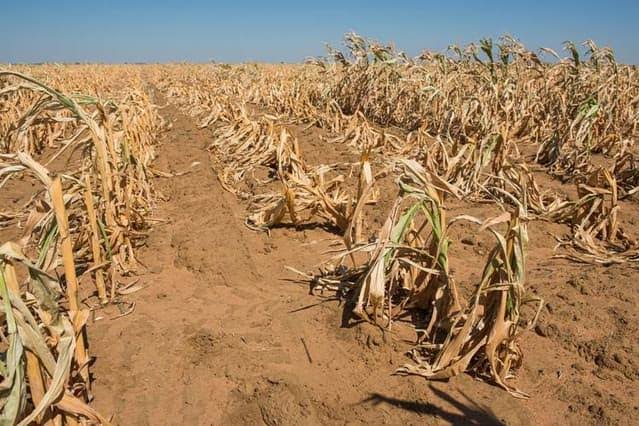
A two-phase climate shock
Climate scientists tracking the 2026 El Niño describe a "compounding drought-to-flood cascade" now unfolding across East Africa. The first phase — the drought that gripped western and northern Uganda's unimodal rainfall zones from roughly June through September — curtailed planting and stunted whatever crops did emerge. That is the phase Uganda has been living through, and it is the direct cause of the Karamoja hunger crisis that prompted Prime Minister Robinah Nabbanja to announce the distribution of 9.4 million kilogrammes of relief food — mostly maize flour and dry beans — to 313,987 households across 480 parishes in the sub-region's nine districts, backed by a Shs45 billion government allocation. The Famine Early Warning Systems Network (FEWS NET) projects that between 2.5 million and 2.99 million Ugandans will need food assistance between June 2026 and January 2027, with needs peaking between September and November — precisely the window in which the second phase of the El Niño cascade is expected to hit hardest.
That second phase is the one the Ministry of Water and Environment's advisory is trying to get ahead of. Regional climate analysts project that an Indian Ocean Dipole-driven deluge from October through December will unleash widespread flooding across Kenya, Somalia, southern Ethiopia and Uganda, destroying standing crops, spoiling grain already in store, and rupturing the roads, bridges and markets that farmers rely on to move what they do manage to harvest. Staple cereals such as sorghum and millet — already battered by the earlier drought — could see yields plummet by as much as 30 percent under the flood scenario, according to regional agricultural risk assessments. Health authorities are separately bracing for surges in cholera, malaria, dengue and other water-borne and vector-borne illnesses that typically accompany prolonged flooding in East Africa.
Where the risk is greatest
The ministry's advisory singles out flood-prone lowlands, urban centres with weak drainage systems, river catchments, wetlands and mountainous regions prone to landslides as the areas facing the greatest danger. That list reads like a roll call of Uganda's most disaster-scarred agricultural landscapes. The Mount Elgon sub-region, and Bulambuli District in particular, has a grim track record: a landslide there in March 2010 killed more than 150 people and displaced roughly 5,000, and a follow-up slide in Sisiyi village the following year killed 31 more and displaced over 1,500. In November 2024, heavy rains again triggered landslides across six villages in Bulambuli. Farther afield, the 2006/2007 El Niño episode flooded villages across Teso, Acholi and Lango, displacing more than 10,000 people, while the 2020 floods and landslides affected 64 districts nationwide. Uganda's National Planning Authority has estimated that the 2019–2020 disaster cycle alone cost the country roughly $152.2 million, concentrated in the transport, housing and agriculture sectors.
For farmers in the cattle corridor and the wetland-fringed lowlands of eastern and central Uganda, the irony is bitter: many of the same low-lying, moisture-retentive areas that offered some relief during the drought — wetland margins, riverine gardens, seasonal swamps repurposed for rice or vegetable cultivation — are precisely the zones most exposed to flooding once the rains intensify. Wetland cultivation, already the subject of aggressive eviction and restoration campaigns by the National Environment Management Authority in districts such as Rukungiri, Kampala and Wakiso in recent weeks, is likely to face renewed scrutiny as flood risk rises.
A sector still recovering, now facing a second shock
Uganda's agricultural economy has had little time to breathe. The Uganda Bureau of Statistics reported agriculture GDP growth of 6.7 percent for the 2025/26 financial year, with cash crop production expanding by 12.1 percent — figures the government has used to argue that its Parish Development Model and Operation Wealth Creation interventions are paying off. But that growth was recorded before the worst of the current drought took hold, and any gains risk being wiped out if flooding in the last quarter of the year damages the second-season harvest on top of a first season already compromised by dry conditions.
Farmers in Acholi were advised in July to delay second-season planting because meteorologists expected the dry spell to persist into late August — advice that, if followed, pushes planting dates later into the year and closer to the window when the ministry now expects heavier rains to begin. That timing squeeze leaves smallholders with an unenviable choice: plant late and risk having young crops overwhelmed by flooding, or plant on the original schedule and risk losing everything to a rain deficit that has not yet fully broken. Either way, the margin for error this season is unusually thin.
The government's own restocking programmes in Acholi, Lango and Teso — intended to replace cattle lost to drought and to earlier disease outbreaks — also face a fresh threat. Flooded pastures, waterlogged grazing land and the higher disease burden that follows flooding (particularly for foot rot, parasitic infections and vector-borne livestock diseases) could undercut restocking efforts before newly distributed animals have had time to build herd resilience.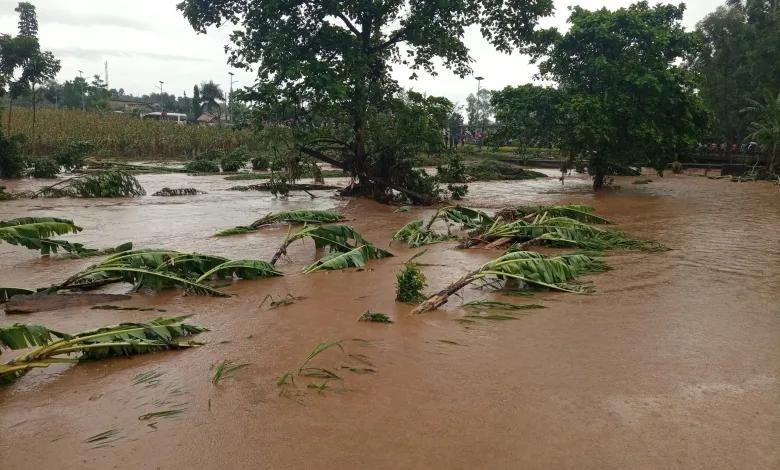
What comes next
The Ministry of Water and Environment's advisory is explicitly a call to action rather than simply a forecast. It urges district disaster management committees, the Office of the Prime Minister and line ministries to pre-position relief supplies, clear drainage channels, reinforce flood defences in known hotspots, and communicate early warnings to communities in vulnerable catchments. For the agriculture sector specifically, meteorologists and agronomists are recommending that farmers in flood-prone zones prioritise short-duration, flood-tolerant crop varieties where possible, avoid planting in known floodplains this season, and where feasible, harvest and move stored grain out of low-lying stores before the rains intensify.
Whether that guidance reaches the smallholders who need it most — and whether it arrives in time — will determine how much of this year's double climate shock translates into another humanitarian emergency. Uganda's meteorological authorities have, in effect, given the country a roughly one-month window between the publication of the advisory and the point at which the heaviest rains are expected to arrive. For a country still burying its dead from the drought that preceded it, that window may prove uncomfortably short.



