Written By | Staff Writer
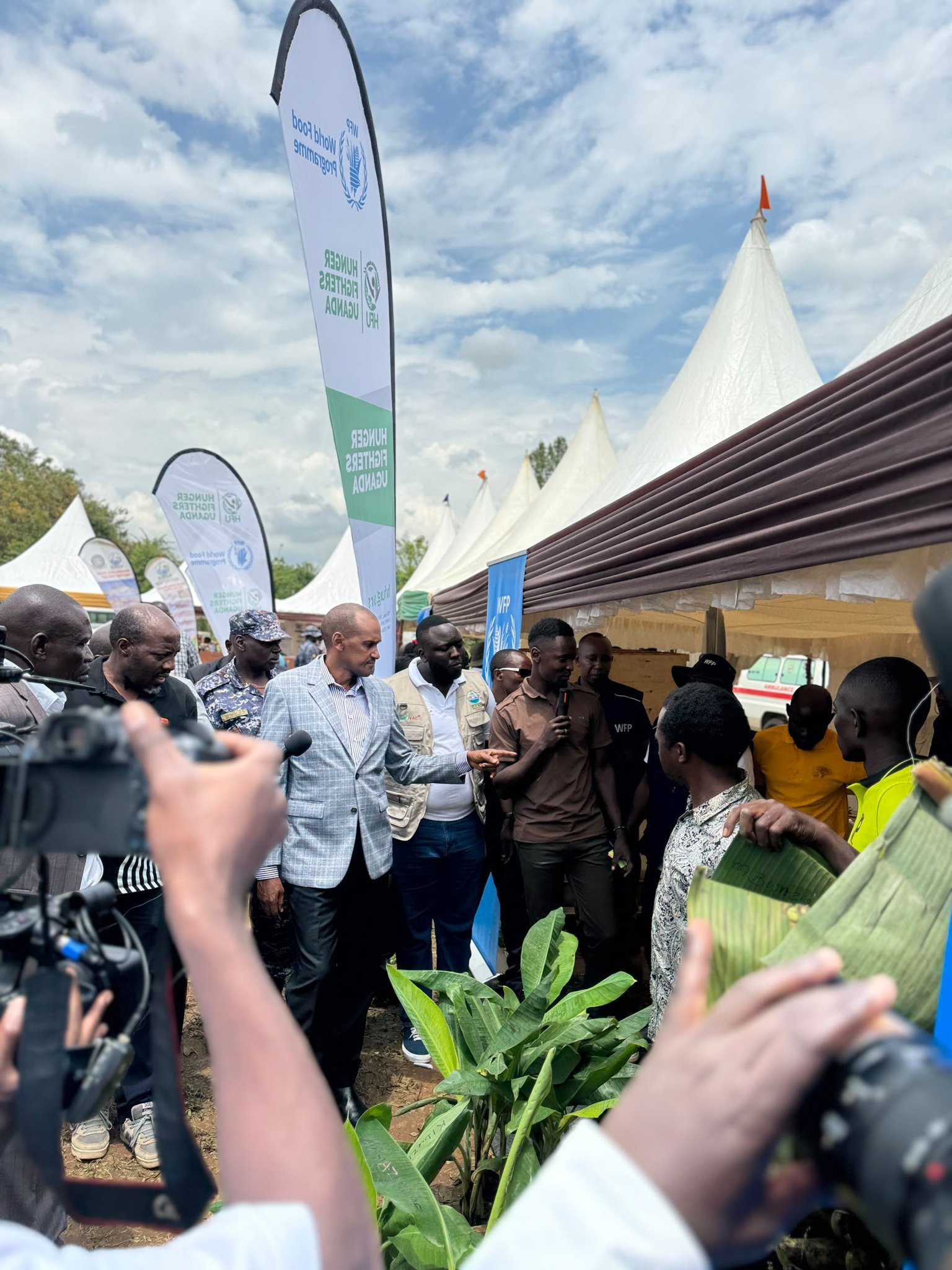
At the centenary of one of Uganda's oldest research stations, ministers, the UN and scientists agreed on the diagnosis.
AGRI-TECH AND RESEARCH
Agriculture
On Friday 16 October, more than 3,000 farmers, researchers, officials and development partners gathered in Mbarara for Uganda's national World Food Day celebrations. The setting carried its own symbolism. The host, the Mbarara Zonal Agricultural Research and Development Institute (MBAZARDI), was founded in 1926 and this year marks 100 years of agricultural research. The theme was "Innovate Today. Nourish Tomorrow."
The four-day programme included exhibitions, technology tours, crop and livestock shows, farmer clinics, and training in commercial banana, coffee and dairy production. Digital tools, artificial intelligence and climate-smart farming were prominent. Behind the exhibition stands, though, sat a blunt set of numbers and warnings that deserve more attention than the ribbon-cutting. The most striking came from the World Food Programme (WFP): between 30 and 40 percent of food in Uganda is lost between harvest and market because of poor handling and storage.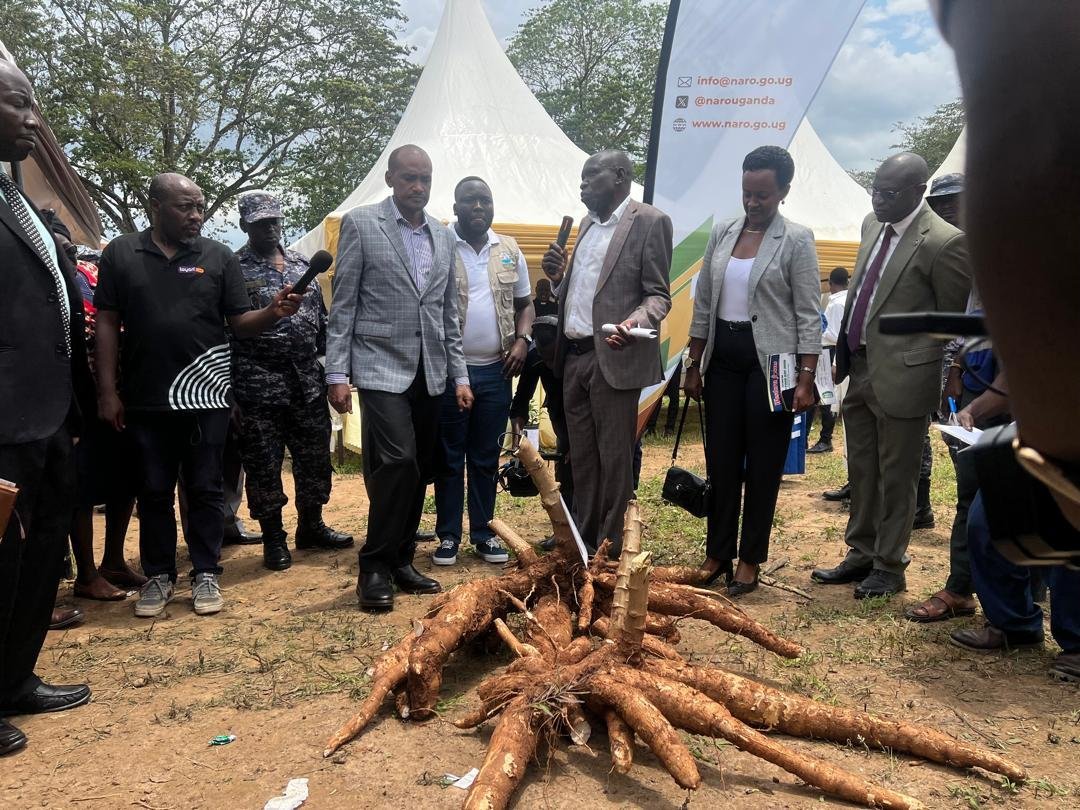
The number that frames everything
Emmanuel Rutsinda, head of the WFP's south-west regional office, spoke on behalf of country director Wanja Kaaria-Ndoho. He told the gathering that Uganda faces food shortages even in good harvest years, and he tied that paradox directly to losses after harvest. If a third or more of what farmers grow never reaches a plate or a buyer, then a bumper season is partly an illusion. Farmers invest in seed, labour and, increasingly, expensive fertiliser, only to see a large share of the return vanish in a leaky granary or on a delayed truck.
The figure is easier to grasp through a household example. In a June 2025 East African feature on storage, Julius Kabole, a maize and rice farmer with the Yetana Farmers Group in Kibiniko, Mbale, described harvesting 900 kilograms of maize and finding only about 400 kilograms left by March, a loss of more than half. Pests had damaged the stored grain, and he said he had not realised his storage method was the problem. His case is one farmer's account, not a national statistic, but it illustrates why the WFP's headline range matters to household incomes.
Rutsinda warned that an El Niño weather pattern expected between October and December threatens to reverse hard-won gains against hunger and malnutrition. "Innovation now is the difference between holding these gains and losing them," he said. The WFP is expanding what it calls anticipatory action, which means releasing support before a forecast shock hits rather than after a disaster has already struck. It is also linking farmers with agro-dealers and private buyers, and working with the Office of the Prime Minister to help refugees and host communities grow food on shared land.
The El Niño warning arrives at an awkward moment for farmers. Earlier reports this month described a delayed onset of the rains, with the peak now expected in late October and November. A late and then heavy season raises two risks at once: planting delays and, once the crop is in, waterlogging and damp conditions that make drying and storage harder. Post-harvest handling, in other words, is not a separate topic from climate. It is where climate risk is either absorbed or passed on to households.
Science that stays in the laboratory
Agriculture Minister Frank Tumwebaze used the occasion to argue that research must reach farmers as practical tools. He urged a balance across four pillars of farming: food security, income-generating crops, animal feed security, and environmental protection. He cautioned against over-reliance on cash crops with a rhetorical question that drew attention: "Can a person wake up and eat coffee?" The remark was a pointed one in a country whose export earnings lean heavily on coffee, and whose August coffee shipments, according to a Reuters report on 15 October, fell 13.7 percent year on year to 737,766 bags, with revenue down 11.6 percent to $181.7 million. An industry source told Reuters that prolonged drought had damaged trees.
Tumwebaze also promoted purple-fleshed sweet potatoes, noting their antioxidant benefits, as an example of research with direct household value. It is a modest example, but a telling one: a nutrient-dense crop with a short growing cycle speaks to both the nutrition and the income pillars the minister described.
Martin Ameu, the FAO's assistant representative in Uganda for programmes, put the point most sharply. Agricultural innovations must reach farmers, processors and consumers, he said, and not stay inside research institutions. "Access must therefore be part of how we define innovation." That is a quiet challenge to how success is measured. A new variety released by a research body counts as an achievement on paper, yet if seed is scarce, counterfeit or unaffordable in the villages that need it, the innovation has not yet happened in any economic sense.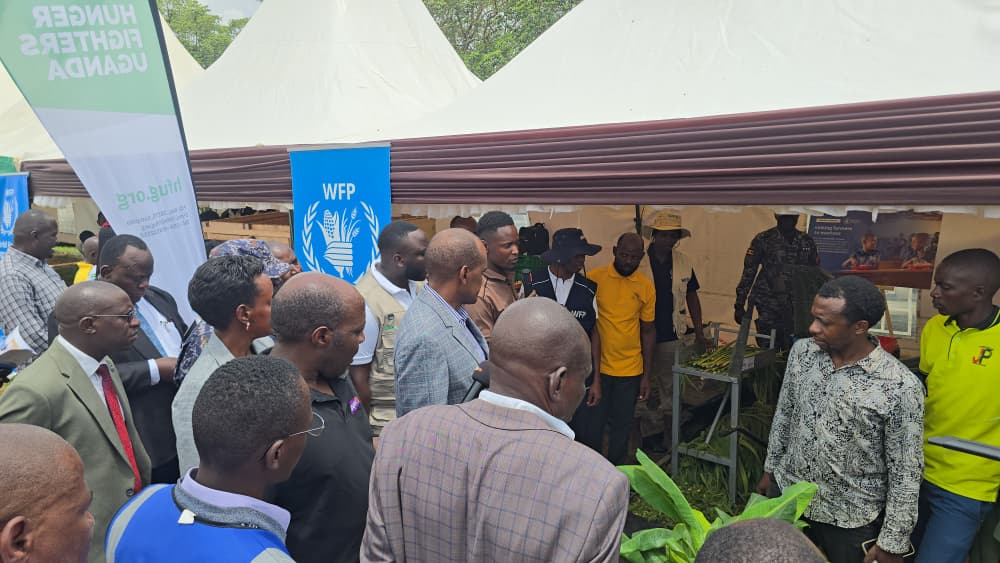
What the research system says it is building
Dr Sadik Kassim, NARO's deputy director general for agricultural technology promotion, outlined an expansion of research infrastructure. It includes a two-acre coffee mother garden in Mbarara with similar gardens in several other districts, a potato seed laboratory in Kabale, a poultry hatchery at Ngetta, and specialised centres for dairy, tea and sugar research. Mother gardens matter because they are the supply point for clean planting material; their value depends on how many farmers can ultimately buy from the nurseries they feed.
FAO and the government also introduced Big Ear goats from China under South-South cooperation. They are kept at Mbarara for breeding, with FAO monitoring the programme. MBAZARDI, which serves as Uganda's National Dairy Centre of Excellence, plans a one-stop centre for agricultural technologies and innovations under the Fourth National Development Plan, intended to drive rural transformation and youth employment.
The ambition is clear. The test will be delivery. Uganda has tried to bridge the gap between laboratory and farm for decades through extension services, demonstration plots and, more recently, digital channels. On 13 October, at a separate symposium in Makindye on the Enabling Rural Innovation programme, Angela Nanyenya of the agriculture ministry argued that farmers should be treated as the "first mile" of innovation, taking "the driver's seat" and not serving as the last link in a chain. She said farmers should take part from the start in identifying problems, testing solutions and scaling what works, and noted that they can already share field problems through WhatsApp, photos and audio. The programme's implementer, Horizont3000, described a four-year framework running from 2027 to 2030 with a budget of Shs4.8 billion (about 1.2 million euros) reaching about 5,940 farmers. Those are small numbers against millions of smallholders, which is precisely the scaling problem.
Implications for farmers and the economy
For farmers, the immediate lesson is that the cheapest yield gain may be the grain they already grow. Reducing losses requires no new variety and no extra acre. It requires drying, sorting and storage practices, access to suitable containers, and reliable links to buyers so produce does not sit waiting. The WFP's work connecting farmers with agro-dealers and private buyers points in that direction, as does the minister's insistence that research arrive as a tool.
For markets, high losses keep food prices volatile. Uganda has seen food-crop inflation push headline inflation upward in recent months, and a poor distribution of stored supply between seasons tends to amplify price swings. Processors, including the poultry industry, depend on steady supplies of maize and soya. Poultry Association chairman Peter Senkungu said in September that maize and soya production has not kept pace with industry demand, forcing imports from Malawi, Zambia and Ethiopia. Every tonne saved after harvest is a tonne that does not have to be imported at higher cost.
For the wider economy, the centenary offers both pride and a reminder. A century of research has produced varieties, breeds and practices that are catalogued in the exhibition halls. The next hundred years, or more urgently the next El Niño season, will be judged by whether those products sit in farmers' hands, and whether what those farmers harvest survives the journey to market.
What to watch
Three things will show whether the Mbarara messages translate into change. The first is how quickly the one-stop technology centre moves from plan to operation, and who pays for it under the new development plan. The second is whether anticipatory action is funded in time for the October to December rains, so that storage and drying support reaches districts before waterlogging does. The third is whether the research expansion, from mother gardens to hatcheries, is matched by affordable, well-distributed inputs and extension at the district level. If it is, the 30 to 40 percent figure can fall. If it is not, Uganda will keep celebrating good harvests while still facing shortages.



