Written By | Staff Writer
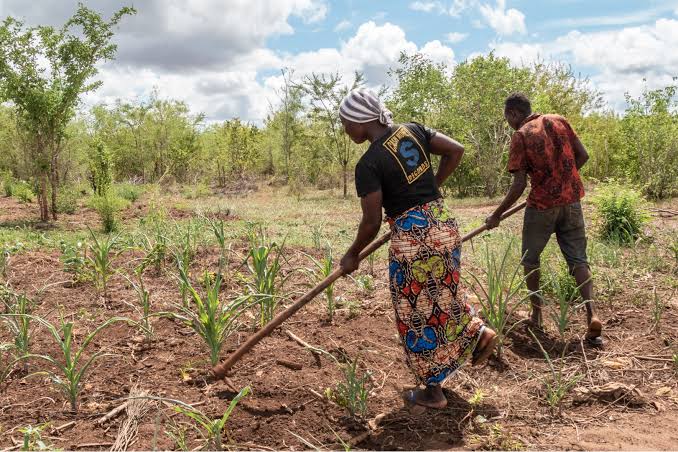
Uganda has quietly redrawn the terms of engagement for anyone hoping to build a factory, processing plant or agribusiness venture in the country.
Agriculture
Uganda has quietly redrawn the terms of engagement for anyone hoping to build a factory, processing plant or agribusiness venture in the country. On July 8, the Uganda Investment Authority (UIA) released a revised set of investment guidelines that, for the first time in years, sets hard numerical thresholds for how much of an investor's raw material must come from Ugandan soil, how many Ugandans must be on the payroll, and how much of what gets produced must leave the country as exports.
The headline conditions are blunt. Local investors must now source at least 70 percent of their raw materials from within Uganda. Both local and foreign investors must ensure at least 60 percent of their workforce is made up of Ugandans or citizens of other East African Community member states. And companies across the board are expected to designate at least 80 percent of their total output for export markets. On top of that, the UIA has attached specific capital floors: foreign investors setting up in industrial parks must commit a minimum of $50 million, while local investors need $10 million. Smaller manufacturing ventures face lower bars — $300,000 for local investors setting up in Kampala, dropping to $150,000 for those willing to build upcountry. Every investor, regardless of size, must still obtain an Investment License, which itself carries minimum capital requirements of $50,000 for Ugandans and $250,000 for foreign nationals.
None of this is happening in a vacuum. The guidelines land squarely inside Uganda's most ambitious agricultural investment drive in years — a push to attract $1.4 billion (roughly Shs5.3 trillion) into five value chains: coffee, dairy, beef, maize and soybeans. That plan was first pitched to international investors at the Africa Food Systems Forum in Dakar, where Uganda's Minister of State for Agriculture, Fred Kyakulaga Bwino, told a room of potential financiers that the country's demographics made the case for them. "Uganda is a young and fast-growing society of nearly 46 million people, with over 78 percent under the age of 35," Kyakulaga said, describing a workforce and consumer base that, in his words, made Uganda "open, stable, competitive, and endowed with numerous comparative advantages."
The numbers behind that pitch are eye-catching. UIA Investment Executive Peter Mulira told the Dakar audience that Uganda wants to triple coffee production from 7 million to 20 million 60-kilogram bags. On dairy, he pointed out that exports currently sit at a modest $3.2 million even though the sector could realistically be worth $1.3 billion, with production targeted to rise from 3.85 billion litres to 6.4 billion litres backed by new integrated dairy hubs and processing plants. Beef consumption in Uganda, Mulira noted, is just 6 kilograms per person a year — about a quarter of what comparable countries consume — which he frames not as a weakness but as headroom for growth. Government has now backed that ambition with money: the 2026/27 budget allocates Shs2.26 trillion to the agro-industrialisation programme, described by officials as the single largest sum ever channelled into the sector in one financial year.
For farmers, the local-content requirement is potentially the most consequential piece of the new guidelines. If a dairy processor, an edible-oils plant, a maize miller or a soybean crusher wants to operate in Uganda, at least 70 percent of what feeds its production line has to be grown or reared domestically. In principle, that forces investors to build durable buying relationships with smallholder farmer groups and cooperatives rather than importing cheaper inputs from the region, which could translate into steadier farmgate prices and more predictable demand for maize, milk, soybean and cattle producers who currently sell into thin, volatile local markets. It is the kind of backward linkage that agricultural economists have long argued Uganda's processing sector lacks — plants that exist alongside farmers rather than in spite of them.
The export quota cuts the other way and carries real tension. An 80 percent export requirement pushes investment toward foreign exchange earnings and regional market share — the EAC's 300 million consumers, the 600-million-strong Common Market for Eastern and Southern Africa, and the 1.3-billion-person African Continental Free Trade Area are the markets UIA officials openly say they are chasing. But an economy still grappling with localized food insecurity, as seen in this month's emergency declarations over drought losses in Karamoja, will need clarity on whether the export quota applies uniformly to staple food processors or is calibrated by sector. UIA has not yet published sector-specific carve-outs, and how strictly the rule is enforced against, say, a maize milling operation versus a coffee roaster will matter enormously for domestic food availability.
There is also a scale question baked into the capital thresholds. A $50 million minimum for a foreign investor in an industrial park, or even $10 million for a domestic one, put the incentive package for the flagship agro-industrialisation parks — like Kapeeka Industrial Park, which UIA has separately profiled as a growth showcase — out of reach for the vast majority of Uganda's agribusiness entrepreneurs, who typically operate with a fraction of that capital. The lower-tier thresholds for Kampala and upcountry manufacturing ($300,000 and $150,000, respectively) are more attainable, but they still sit well above what most cooperative-linked processing ventures or farmer-owned agro-processing startups can currently raise without external financing, whether from development finance institutions, commercial banks or diaspora investors.
The incentive package is designed to offset some of that friction. Investors get a 10-year income tax exemption on rentals within industrial parks and free zones, indefinite tax exemptions for qualifying non-profits, special income tax deductions, and a 100 percent depreciation allowance on mining exploration equipment — the latter a reminder that these guidelines apply across sectors, not agriculture alone, even as agriculture is where government has pinned its most detailed numerical targets.
Development partners have signaled they see the broader logic. David Wozemba, Uganda country director for the Alliance for a Green Revolution in Africa (AGRA), called the $1.4 billion investment push "a critical catalytic investment; one that will support investors, government, and smallholder farmers to realise their vision," while flagging post-harvest losses as the immediate bottleneck the money needs to solve. Officials project the targeted investments could create 85,000 direct jobs, a figure that will be tested against the new 60 percent local-employment rule as the first wave of qualifying projects breaks ground.
What happens next will determine whether these guidelines function as intended or as a filter that quietly favours large, well-capitalised players. The UIA has framed the rules as pro-industrialisation and pro-jobs; agribusiness analysts will be watching for the first licensing decisions under the new thresholds, and for whether the 70 percent local-content rule actually reaches smallholder farmers or gets satisfied through large commercial estates that already dominate supply to processors. For a country whose Vision 2040 and forthcoming National Development Plan IV both lean heavily on agriculture as the engine of industrial transformation, the fine print released this month may end up mattering more than the headline billion-dollar figure.



