Written By | Torch Media Africa
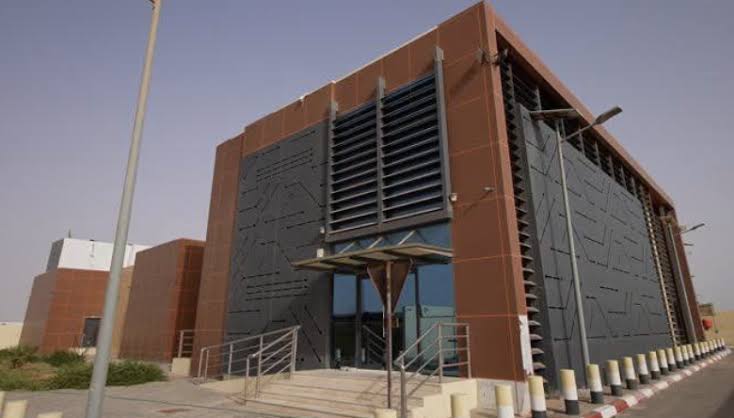
the National Data Centre in Nouakchott, Mauritania
Mauritania, West Africa / Sahel-Atlantic
On 29 June 2026, at the National Data Centre in Nouakchott, Mauritania switched on a national cloud platform intended to host government data and public digital services inside the country rather than on foreign infrastructure. It is the sort of milestone that, across Africa in 2026, has become a standard statement of intent: sovereignty over data, consolidation of scattered ministerial servers, a single shared pool of compute and storage for the state. What makes Mauritania’s version worth examining is the mismatch between the sophistication of the stack being assembled — Tier III colocation, a sovereign cloud, four 5G licences, a second submarine cable, an artificial-intelligence component added to a World Bank programme — and the size of the population currently able to use any of it.
Two sets of numbers that do not agree
Officially, the picture is close to solved. Government communications around World Telecommunication and Information Society Day in 2026 described internet penetration above 80 percent, 4G coverage reaching 86 percent of the population, a national fibre backbone past 9,100 kilometres, and international capacity above 500 gigabits per second. Independent measurement tells a different story. DataReportal put internet penetration at 37.4 percent at the start of 2026. The ITU recorded roughly 63 percent of Mauritanians offline in 2023. Regulatory filings behind the country’s satellite tender cite 2G coverage at 97 percent of the population in 2023 but 3G and 4G coverage at only 43.9 percent and 34.7 percent respectively in 2022.
The gap between the two accounts is the gap between SIM cards and users, and between coverage on a map and service a household can afford and reach. Mauritania is a country of roughly 4.5 million people spread across more than a million square kilometres, much of it desert, with population concentrated in Nouakchott, Nouadhibou and a thin band along the Senegal River. Coverage statistics flatter such geographies; adoption statistics do not. The United Nations E-Government Development Index ranked Mauritania 165th in its 2024 edition — a reminder that the constraint on digital public services is not only the pipe but what is at the other end of it.
The pipes: from one cable to two
Until now Mauritania has depended almost entirely on a single international fibre link, the ACE cable it joined in 2011. A single landing is a single point of failure, and it is also a pricing problem: with no alternative route, wholesale capacity costs have little competitive discipline. That is changing. Mauritania and EllaLink have landed a new branch at Nouadhibou, running more than 670 kilometres from EllaLink’s main trunk, equipped with two fibre pairs and capable of multi-gigabit service from day one and multi-terabit capacity over time. The main-trunk laying operation is scheduled for August 2026, with commercial service expected in January 2027. The project is financed through a partnership between the Mauritanian state, the European Union and the European Investment Bank, and is a flagship of the EU’s Global Gateway portfolio in the country.
The domestic anchor for that capacity is the Nouakchott data centre, a Tier III facility inaugurated on 8 May 2025, built under the West Africa Regional Digital Integration Programme (WARDIP) with a €15 million EIB loan and construction monitoring and certification by the Uptime Institute. It is the physical home of the national cloud launched in June 2026. The Ministry of Digital Transformation has not published a migration timetable for moving government applications and databases onto the platform, nor disclosed its storage capacity or total cost — which is the single most important unanswered question about the project, because a sovereign cloud with no workloads on it is a building.
A 5G auction with a fourth operator in it
The mobile layer was re-cut in 2026. The Regulatory Authority (ARE) issued a call for tenders for 5G licences on 2 December 2025; submissions closed on 30 March 2026 and financial bids were opened publicly on 7 April. Eight companies bought tender documents; four bid. All four cleared the reserve price and were named provisional winners: the incumbent Mauritel, Mattel, Chinguitel, and — notably — Rimatel, a name that widens a market long described as a three-operator one. Financial offers were MRU 305 million from Mauritel, MRU 265 million from Rimatel, MRU 260.56 million from Chinguitel and MRU 252.6 million from Mattel, each plus 5 percent of annual 5G revenue, for a combined take of around MRU 1 billion, roughly US$27 million. On technical scores the order reversed: Mattel led with 81 out of 100, ahead of Mauritel on 76, Chinguitel on 72 and Rimatel on 71.
Four 5G licences in a market where 4G reached barely a third of the population a few years earlier is a deliberate bet on leapfrogging rather than backfilling. It is defensible — 5G equipment increasingly ships as the default, and fixed-wireless access can substitute for last-mile fibre in dense urban blocks — but it does not address the households outside any high-speed footprint at all. ARE has been enforcing coverage and quality-of-service obligations along major transport corridors, including through sanctions, which is the more telling regulatory signal: the regulator’s attention is on the roads between cities, not on the cities.
Satellite as the real last mile
For a country with Mauritania’s density, satellite is not a niche. On 22 January 2026 ARE launched an international tender for licences covering mobile electronic communications by satellite, structured in two lots: one for operators selling retail service directly to the public over geostationary satellites, and one for wholesale sale of satellite capacity to operators or private entities without direct public provision. Low-Earth-orbit providers such as Starlink and Amazon were not yet authorised to sell directly to the public at the time of the tender, with Starlink expected to seek authorisation and planning a commercial launch in Mauritania during 2026.
The two-lot design is worth noting. By separating retail GEO service from wholesale capacity, the regulator preserves the option of letting mining camps, fishing operations, schools and clinics buy bandwidth without creating a parallel consumer telecom market outside the licensing regime that funds universal-service obligations. Whether that structure survives contact with LEO economics is the question every African regulator is currently working through.
Money moved before the state did
One part of Mauritania’s digital economy did not wait for the sovereign stack. Mobile financial services — principally Bankily, Masrvi and SEDAD — pushed financial inclusion to roughly 38 percent by 2023 in a country that had been overwhelmingly unbanked. The ecosystem is distinctive in being bank-led and telecom-supported rather than built on an independent fintech startup base: the wallets are extensions of banks and operators, not challengers to them. That has produced fast adoption and thin innovation, and it leaves the sector’s trajectory dependent on incumbent strategy rather than on competitive entry. The Central Bank of Mauritania has signalled a national financial inclusion strategy intended to accelerate access to mobile banking.
It has also produced a security problem ahead of the institutional response. Reported cybercrime in the first quarter of 2025 alone ran to 1,276 complaints and losses of about MRU 501 million, roughly US$12.65 million. The National Cybersecurity Strategy adopted for 2022–2025 is still being implemented, and the national computer emergency response team (CERT/CSIRT) it envisages is not yet fully stood up — a sequencing gap that matters more, not less, once government records move onto a single national cloud.
The AI turn, and the money behind it
In June 2026 Mauritania and the World Bank agreed additional financing under WARDIP to widen the programme’s scope to artificial intelligence, following a working session between Minister of Digital Transformation Ahmed Salem Bede and a Bank delegation led by Michel Rogy, regional director for digital and AI across Africa, the Middle East and South Asia, with sector director Jana Kunicova and project lead Eric Dunand. The new money is earmarked for AI-oriented data infrastructure, local skills training and deployment of AI systems across several sectors. WARDIP itself launched in November 2023 with US$266.5 million across four countries; Mauritania’s US$60 million share began disbursing in 2024, and a second US$137 million operation extended the programme to Benin, Liberia and Sierra Leone in March 2026 — without an AI component, making Mauritania the programme’s test case on that front.
Domestic budgeting has moved in the same direction. The digital ministry’s 2026 budget stands at about US$24.2 million, up 104.6 percent year on year, with negotiations under way with the Islamic Development Bank for a further US$50 million. The National Digital Transition Agenda 2022–2025 set the target of lifting the digital sector’s contribution to around US$700 million, close to 8 percent of GDP, and a National AI Strategy for 2025–2029 sits alongside the broadband and cybersecurity strategies.
The constraint is demand, not capacity
Mauritania’s build is proportionate to continental trends rather than exceptional within them. The Africa Data Centres Association’s 2026 report counts 360 MW of active data-centre capacity on the continent, 238 MW under construction and 656 MW in the pipeline, plausibly approaching 1.2 GW by 2030 — still only around 0.6 percent of global capacity for nearly a fifth of the world’s population. The Algiers Declaration on African Telecommunications Sovereignty, adopted in April 2026 at the African Ministerial Telecommunications Summit, explicitly calls for sovereign cloud platforms and data centres under the African Union’s Digital Transformation Strategy for Africa 2020–2030. More than 40 African countries now have data protection laws and about 15 have national AI strategies.
Which is precisely why the interesting Mauritanian metrics over the next eighteen months are not megawatts or gigabits. They are the migration schedule for government services onto the national cloud; whether the EllaLink branch translates into lower retail prices once it enters service in January 2027 rather than simply more redundancy; whether 5G build-out obligations reach beyond Nouakchott and the corridors; whether the CERT is operational before the consolidated data is; and whether internet adoption moves off 37.4 percent toward the coverage figures the government already cites. Mauritania has bought a credible sovereignty stack on concessional terms. The harder purchase — users, skills and services worth logging in for — is not on any procurement schedule.



