Written By | Torch Media Africa
Rwanda is also courting global technology leaders including Google DeepMind, IBM and NVIDIA, with a stated ambition for AI to eventually contribute 6% of national GDP
Rwanda has neither the population of Nigeria nor the venture capital depth of Kenya, yet it has methodically assembled one of the most coherent technology strategies on the continent. In 2026, that strategy is visible in three concrete projects: a $2 billion innovation district breaking ground in Kigali, a nationwide drone logistics network that is the first of its kind in the world, and a digital government platform just named the best in the world. Together they illustrate a small, land-locked East African nation using state-directed investment and foreign partnerships to punch well above its economic weight in technology.
Kigali Innovation City: Building the Campus Before the Companies
The centerpiece of Rwanda's tech ambitions is Kigali Innovation City (KIC), a mixed-use innovation district being developed on roughly 60 hectares in the capital. Construction broke ground in September 2024 in partnership with Africa50 and BADEA, with early infrastructure work advancing through 2026.
The plan calls for four affiliated universities, Grade A office space, startup incubators, research labs focused on AI, biotechnology and robotics, plus residential and retail space — built as an integrated live-work-play ecosystem. Once complete, KIC is projected to be worth $2 billion, generate more than $150 million in annual ICT exports, create over 50,000 jobs, and produce more than 2,600 graduates a year.
Carnegie Mellon University Africa is one of KIC's anchor tenants. Carnegie Mellon and the Mastercard Foundation recently announced a $275.7 million partnership to expand engineering and entrepreneurship programs across the continent, with Kigali positioned as a regional hub. Rwanda is also courting global technology leaders including Google DeepMind, IBM and NVIDIA, with a stated ambition for AI to eventually contribute 6% of national GDP. The Ministry of ICT frames ICT as the second-largest contributor to Rwanda's economic growth after agriculture — a striking claim for a country of roughly 14 million people with no oil, gas or major mineral exports.
Zipline and the World's First Nationwide Autonomous Delivery Network
Rwanda's most visible technology partnership is with Zipline, the American drone logistics company that began delivering blood to remote clinics a decade ago. In February 2026, the two sides signed a major expansion agreement making Rwanda the first country in the world to achieve full nationwide autonomous logistics coverage.
The agreement is backed by $150 million in 'pay-for-performance' funding from the U.S. State Department, specifically intended to scale drone deliveries of blood, vaccines and other essential medical supplies nationwide. A new long-range distribution hub in Karongi District will extend coverage to more than 11 million people — nearly the country's entire population. The service is also broadening beyond medical cargo: the drone network now includes grocery deliveries to urban households.
Most significantly, Zipline is establishing its first research and development center outside the United States in Rwanda — an AI and robotics testing facility intended to refine drone technology for deployment across different climates worldwide. This signals that Rwanda has moved from being merely a deployment market to a genuine product-development partner.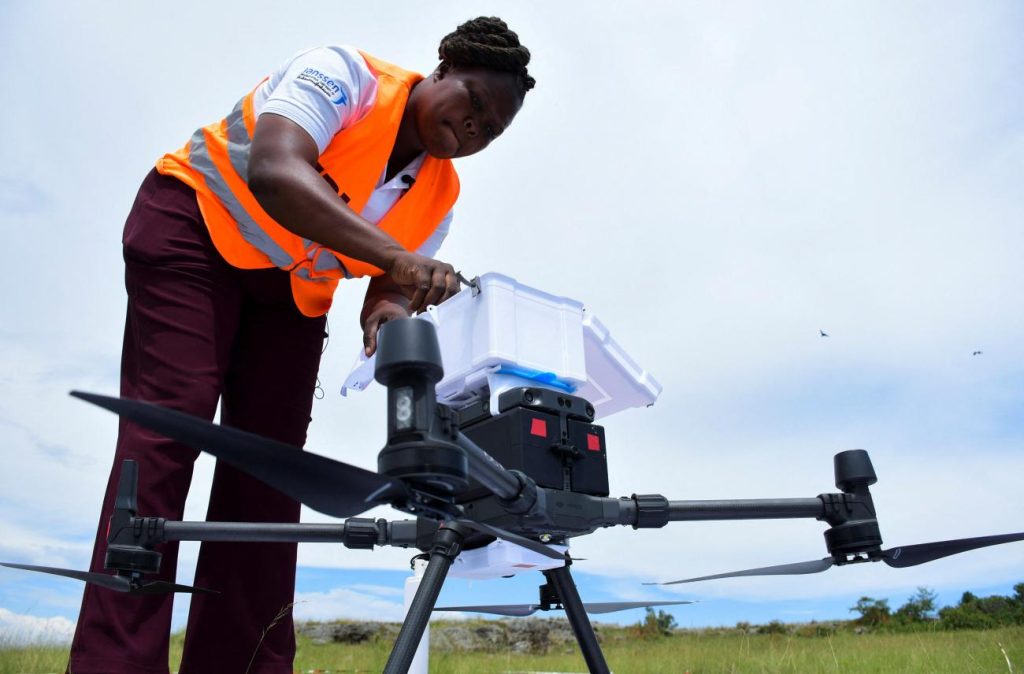
IremboGov: A Digital Government Platform Winning Global Recognition
Rwanda's digital identity and e-government platform, IremboGov, was named Best Government Service in the World at the GovTech Prize, announced during the World Governments Summit in Dubai — one of the most prestigious recognitions in public-sector digital innovation.
The platform now provides access to more than 240 public services through a single online portal. Monthly applications run between 300,000 and 500,000, with roughly 80% completed entirely online. Total applications processed grew from 5.9 million in 2022 to 8.4 million in 2023, a 42% annual increase.
The platform's digital identity layer also functions as the root credential activating mobile money access, where 5.8 million registered wallet holders carry transactional histories that fintech providers can draw on for credit scoring. According to Cenfri, IremboGov has saved citizens an estimated 1.4 billion hours collectively by eliminating queues and travel time — valued at roughly $507.6 million — while also enabling transparent collection of more than $300,000 a day in non-fiscal government revenue.
Why Rwanda's Model Is Drawing Attention Beyond Its Borders
What distinguishes Rwanda's approach is the degree of state coordination behind it. The government has used long-term land allocation and blended finance — mixing sovereign investment with development-finance institutions — to de-risk infrastructure projects for private investors. It has used strategic partnerships with a single technology provider to build capability rather than spreading thin. And it has invested heavily in a unified digital identity layer that other digitization efforts can build on top of.
Several Rwandan digital solutions are now being licensed or adapted for use in other countries, with Irembo publishing a 'Rwanda model' framework positioning its approach as a global blueprint for digital governance. The International Relations Review frames Kigali's strategy as a deliberate alternative to venture-capital-driven models: rather than waiting for private capital to build ecosystems organically, Rwanda's government has built the infrastructure first and is now recruiting companies, universities and capital to fill it.
The approach carries risk. A state-led model depends on continued public investment and political stability, and KIC's $2 billion price tag remains aspirational until tenants commit. Critics also note that productivity gains accrue unevenly to citizens with reliable internet access, a gap that remains wider in rural areas than in Kigali. Still, with a digitally fluent young population, a bilingual talent base, and a government willing to commit billions to a single sector, Rwanda has positioned itself as a small country attempting an outsized experiment in state-built digital transformation — one that other African governments are now studying closely.
Sources: Kigali Innovation City; Africa50; Mastercard Foundation; Ministry of ICT and Innovation; Zipline; TechCabal; WeeTracker; TechCrunch; Irembo; Cenfri; AllAfrica; International Relations Review



