Written By | Torch Media Africa
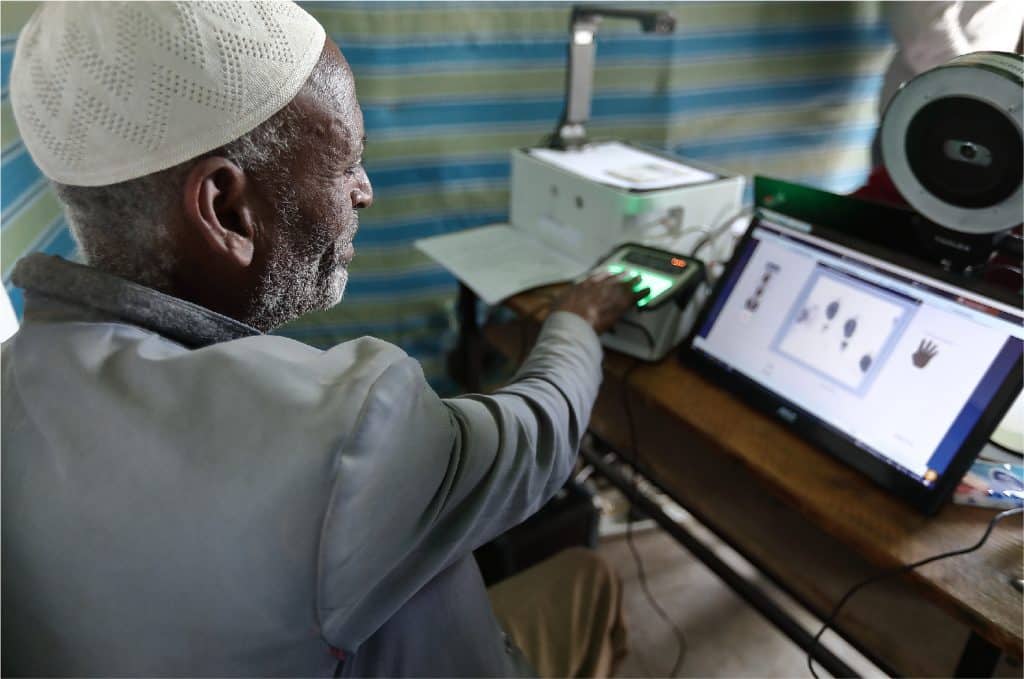
How a small francophone economy built one of Africa's most-cited digital identity systems and is now trying to turn it into a platform for financial inclusion and startup growth
Benin rarely tops the list when analysts discuss Africa's technology hubs — that conversation still gravitates toward Lagos, Nairobi and Cairo. Yet over the past two years, the small West African nation of roughly 14 million people has quietly built one of the continent's more coherent digital public infrastructure (DPI) programs, anchored by a national digital identity system that now processes the large majority of citizen-facing government services online. In 2026, Benin is trying to convert that identity backbone into broader economic gains: deeper financial inclusion through mobile money and licensed fintechs, a startup ecosystem seeded by state-backed incubation, and early agritech tools reaching smallholder farmers. The result is a case study in digital-government-first development — identity and interoperability built before, rather than after, the commercial layer on top of it.
A Digital Identity System Built for Scale
The centerpiece of Benin's digital transformation is the work of the Agence Nationale d'Identification des Personnes (ANIP), the country's national identity agency. In 2025 alone, ANIP issued 10.5 million digital civil status and identification documents, and by the government's own reporting, 75% of all identification procedures in the country are now handled through online or remote digital channels rather than in-person paper processes — a striking figure for a lower-middle-income economy. ANIP's director general, Aristide Adjinacou, has attributed the program's traction to a deliberate consolidation of governance structures: Benin merged four separate ICT agencies into a single body, the Information Systems and Digital Agency (ASIN), in 2022, while giving ANIP sole, unambiguous responsibility for identity management rather than splitting that mandate across ministries.
That consolidation and execution record has earned Benin international recognition. In mid-2026, Benin became the 16th African nation — and one of more than 32 countries worldwide — to join the "50-in-5" campaign, a global initiative backed by the United Nations Development Programme, the World Bank and private-sector partners that supports countries building inclusive, safe and interoperable digital public infrastructure. Benin's interoperability model is explicitly inspired by Estonia's X-Road architecture, and the country has since published a national DPI roadmap intended to end siloed, agency-by-agency digital government systems in favor of a single shared data-exchange layer. The next phase, according to ANIP, is a digital wallet that would extend the identity system into a tool for accessing public services and, eventually, financial products directly.
Government Investment: PAG 2 and the 2026 Digital Budget
Benin's digital push is backed by sustained public capital rather than a single flagship project. The government's second Government Action Programme (PAG 2), covering 2021–2026, allocates more than 369 billion CFA francs (roughly $600 million) to digital infrastructure and services as part of a broader push toward economic diversification and innovation. On top of that multi-year envelope, the 2026 national budget earmarks CFA 27.2 billion (about $47 million) specifically for digital transformation initiatives, targeting nationwide connectivity expansion, artificial intelligence integration, and digital-skills development — signaling that Benin's digital agenda has moved from pilot projects to a recurring budget line.
International partners have layered additional financing on top of domestic spending. The World Bank has approved a $137 million regional digital integration programme spanning Benin, Liberia and Sierra Leone, designed to expand broadband access, increase adoption of digital services, support more than 140 startups across the three countries, and encourage digital-sector employment. Separately, Benin's broader digital transformation program for the 2022–2026 period has focused on modernizing government IT infrastructure, interconnecting 187 public administration sites onto shared networks, reinforcing cybersecurity, and improving service delivery to both citizens and businesses — the connective tissue that makes the identity system's 75% digital-service-uptake figure operationally possible rather than merely aspirational.
Mobile Money and a Maturing Fintech Sector
Financial inclusion in Benin, as across much of the West African Economic and Monetary Union (WAEMU/UEMOA), is being driven primarily by mobile money rather than traditional banking. Mobile network operators MTN and Moov Africa remain the central players, offering mobile money platforms that let users send funds, pay bills and access basic financial services without a bank account. Regionally, the financial inclusion rate across the WAEMU zone has reached roughly 90%, a figure regulators attribute in part to a 2024 banking-law update that extended prudential oversight to payment institutions, electronic money institutions and fintechs specifically — formalizing a sector that had grown faster than its regulatory framework.
On top of that mobile money base, Benin has developed a modest but increasingly specialized fintech layer: an estimated 20 to 21 fintech startups now operate in the country, concentrated on digital payments, financial infrastructure and remittance flows. Notable names include MyFeda, FedaPay, Moneex, CashZone and PayPlus, several of which have secured approval from the Central Bank of West African States (BCEAO) — the regional monetary authority — to process cross-border payment flows within WAEMU's integrated monetary zone. That regional licensing matters commercially: it lets Benin-based fintechs serve customers and merchants across eight WAEMU member states from a single compliance base, rather than needing separate national approvals.
Connectivity: The ACE Cable and Coastal Bandwidth
Benin's international bandwidth runs through the Africa Coast to Europe (ACE) submarine cable system, in which the country holds an ownership stake through the Société Béninoise des Infrastructures Numériques du Bénin (SBIN), with the cable making landfall at Cotonou. That ownership position — rather than simply being a landing point for a cable owned by others — gives Benin more direct commercial leverage over wholesale bandwidth pricing, an important factor in keeping data costs down for the mobile money, e-government and streaming services increasingly reliant on the connection. The ACE system connects Benin to a chain of West and Central African coastal states and onward to Europe, complementing the broader regional infrastructure build-out that includes cables such as Equiano along the West African coast.
Sèmè City, Startups and Early Agritech
Benin's startup ecosystem remains small by continental standards but has a distinctive state-backed incubation anchor in Sèmè City, a World Bank-supported campus launched in 2017 to serve as the country's premier hub for research and startup incubation. Through its Next Impact scheme, Sèmè City offers young entrepreneurs aged 18 to 35 grants of up to CFA 30 million per project, paired with six months of structured coaching — a model aimed at closing what local tech commentators have called the "missing middle" of Benin's investment landscape, where seed-stage ideas struggle to reach institutional venture funding.
Agritech is emerging as one of the more concrete early use cases for this ecosystem, reflecting agriculture's continued dominance of Benin's economy and employment base. The startup AgroSfer is bringing digital tools directly to farmers' fields, with funding support from Germany's BMZ and the European Union, while Biolife Tech received undisclosed funding from the French-backed initiative Digital Africa in 2025 to scale a supply-chain application serving agricultural producers. These remain early-stage, donor-supported ventures rather than commercially self-sustaining companies at scale, but they represent a plausible bridge between Benin's digital identity and payments infrastructure and its still-largely-informal agricultural economy — the sector that employs the majority of the workforce and that a national wallet rollout would need to reach to have broad economic impact.
A Long-Term Vision Beyond Digital Government
Benin's digital agenda sits inside a wider economic reframing captured in its National Development Vision 2060, approved in 2025, which sets a direction for the country to move away from a low-value trading and commodity-export economy and toward a more productive mix of industry, modern agriculture, logistics, services, tourism, technology and human capital. Digital public infrastructure — identity, interoperable government data, mobile payments and connectivity — is positioned within that vision less as an end in itself than as the foundational layer that makes the rest of the diversification agenda administratively and financially possible: a farmer cannot access digital credit without a verifiable identity and a payment rail, and a government cannot efficiently target agricultural subsidies or health services without knowing, digitally and reliably, who its citizens are.
Outlook
Benin's experience offers a useful counterpoint to tech narratives centered on venture funding totals and unicorn valuations. Its progress has been driven overwhelmingly by public investment and donor co-financing rather than private capital, and its most-cited achievement — a national digital identity system with 75% digital service uptake — is an administrative rather than a commercial metric. Whether that foundation translates into a larger, self-sustaining private tech sector will depend on the success of the planned digital wallet rollout, continued WAEMU-wide fintech licensing that lets Benin-based companies scale regionally, and whether donor-backed agritech pilots like AgroSfer can find commercially viable paths to reach the millions of smallholder farmers who remain the country's largest economic constituency.



