Written By | Torch Media Africa
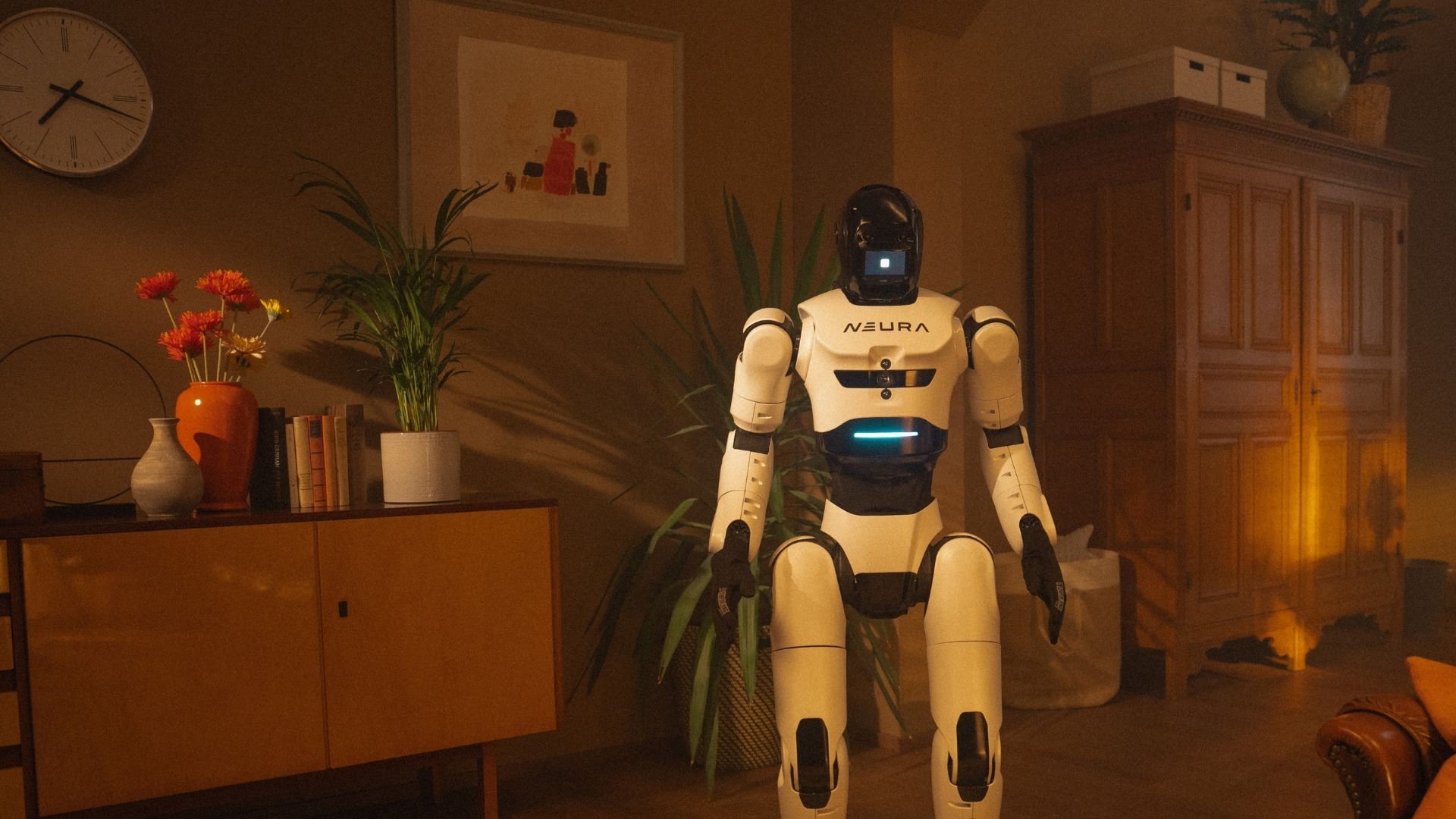
The June 10 deal values NEURA at roughly $7 billion and instantly makes it Europe's most-funded humanoid robot maker.
METZINGEN, GERMANY
In a quiet German town known for outlet shopping, not science fiction, a company most people have never heard of just pulled off the largest funding round in robotics history. NEURA Robotics raised up to $1.4 billion in Series C financing from Nvidia, Amazon, Qualcomm, stablecoin giant Tether, Bosch, Schaeffler, and the European Investment Bank.
The June 10 deal values NEURA at roughly $7 billion and instantly makes it Europe's most-funded humanoid robot maker. Founder David Reger's goal: several million robots by 2030 — in factories, hospitals, and eventually, your kitchen.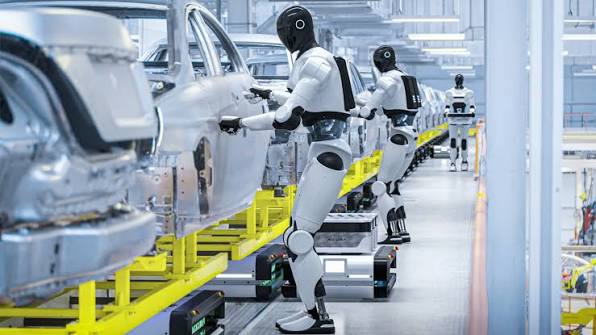
The Machine With Skin That Feels
NEURA's flagship robot, 4NE-1 ("for anyone"), is a 180cm, 80kg humanoid wrapped in touch-sensitive artificial skin. Unlike rivals that rely only on cameras, 4NE-1 can feel a human brush against it and react instantly — a safety breakthrough for machines working shoulder-to-shoulder with people.
Specs: 55 degrees of freedom, lifts 100kg, 360° perception, 6–8 hours on hot-swappable batteries, voice and emotion recognition. NEURA calls it "cognitive robotics" — machines that learn and adapt.
The company also launched MiPA (a household assistant) and the "Neuraverse," an app store where skills learned by one robot can be downloaded by millions.
A Billion-Dollar Backlog Before Mass Production
NEURA already has over $1 billion in orders — demand far outstripping capacity. The new $1.4 billion (structured in milestone-based tranches) will bankroll the leap from workshop to mass production.
Founder Reger has positioned NEURA as Europe's answer in a race that looked like a two-horse contest between Tesla/Optimus, Figure AI (backed by Microsoft/OpenAI), and China's Unitree. Now Europe — with Bosch, Schaeffler, and the EU's own investment bank — has entered the war for "physical AI."
Robotics companies have raised $55.8 billion so far in 2026. The smart money has moved from chatbots to AI that can pick things up.
From Garage Cobots to Humanoid Big Leagues
Founded in 2019, NEURA first built "cognitive cobots" — industrial arms with built-in sensing. Unlike American rivals who started with flashy bipeds, NEURA started with industrial reliability. That heritage matters to customers placing nine-figure orders.
Timing helps: Germany is short hundreds of thousands of workers, Japan's workforce is shrinking, and U.S. manufacturers have millions of unfilled roles. Investors aren't betting robots will steal jobs — they're betting there will be nobody left to take them.
Why Nvidia, Amazon — and Tether?
What This Means for You
If you work in a warehouse, factory or hospital, these robots are aimed at your workplace first — filling jobs employers say they cannot staff. If you run a business, humanoid labor-as-a-service will appear on your spreadsheets before 2030. And if you just live in the modern world: NEURA's MiPA robot is designed for the home.
The question of what happens to displaced workers is being deferred — as always — to later. Later is getting closer.
The Bottom Line
For 70 years, robots were bolted to floors behind cages. The $1.4 billion bet this week is that the fences are coming down — that AI will soon walk, grip, feel and learn, by the millions. Several million robots by 2030 is either a founder's fantasy or a date with history. An $1 billion order backlog says it might be the latter. Either way, the machines are no longer coming. They are funded.




