Written By | Staff Writer
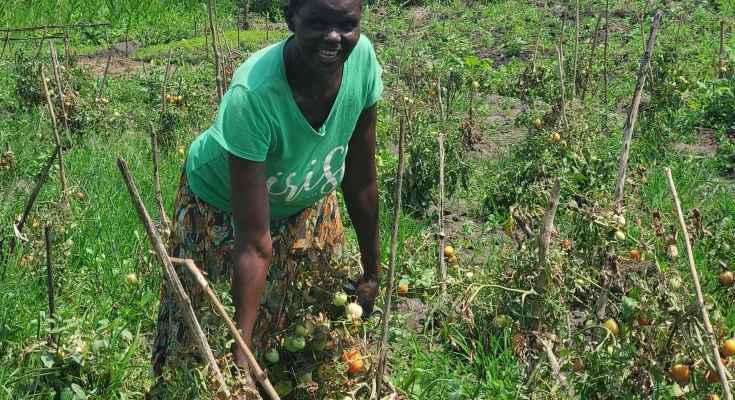
Across central and western Uganda, farmers have spent months counting losses from a prolonged dry spell, with coffee gardens in Masaka and Nyakyera scorched and cabbage and bean prices spiking in Rubanda.
Agriculture Desk
On Saturday evening, Nile Post reported that Uganda is pushing a government-backed agriculture insurance scheme aimed squarely at small-scale farmers, with more than ten insurers, including Jubilee Insurance and Lion Insurance, expected to deliver it. The pitch is simple. Farmers who lose crops to drought, floods, hailstorms or disease should not lose everything. The state pays half of the premium, and in drought-prone areas its share rises to 80 percent. Claims, the report says, should be paid within six weeks.
The announcement matters now because of the weather. Across central and western Uganda, farmers have spent months counting losses from a prolonged dry spell, with coffee gardens in Masaka and Nyakyera scorched and cabbage and bean prices spiking in Rubanda. The forecast then flips to the opposite risk: the national meteorological authority has warned of heavy, possibly flood-causing rains late in the season as El Niño peaks. A farmer can now be ruined by drought in September and by waterlogging in November. Insurance is one of the few tools designed for precisely that whiplash.
What was announced
The scheme was presented in Luweero, where Alice Kaboyo, Minister of State for the Luweero Triangle, told farmers the government is committed to supporting them through the programme and urged them to use it to limit losses. She also called for tree planting, arguing that environmental degradation deepens prolonged droughts. Eddie Mugerwa, secretary of the Luweero Farmers and Housing Cooperative Limited, which has more than 5,000 members, said insurance lets farmers protect their investments rather than lose everything when crops are destroyed, and encouraged members to sign up so that they do not quit farming after repeated poor seasons.
Notably, the Nile Post report does not give premium amounts in shillings, an enrolment process or deadlines. Those are the details a smallholder needs before deciding, and their absence is a reminder that this was a sensitisation event rather than a full product launch.
Not new, but newly pushed
The Uganda Agriculture Insurance Scheme (UAIS) is not a fresh invention. According to a presentation hosted by the Financial Protection Forum, it was established in July 2016 as a public-private partnership between government, farmers, financial institutions and the insurance sector. A consortium of insurers, the Agro Consortium, designs and provides the products, while the Insurance Regulatory Authority provides oversight and an administrator handles pricing, reinsurance placement and reporting. That presentation lists differentiated subsidy rates of 30 percent for large-scale farmers, 50 percent for small-scale farmers and 80 percent for farmers in disaster-prone areas, which lines up with the figures now being quoted to smallholders.
Scale has grown since the pilot years. A UNDP Uganda blog published in August 2026 says the scheme has covered more than one million farmers and paid out over Shs53.8 billion in claims, delivered by a consortium of 14 licensed insurers. UNDP, through its Financial Resilience in Agriculture initiative with support from the Gates Foundation, helped the Ministry of Finance secure a ten-year extension of the scheme. A March 2025 UNDP release set an ambition of reaching three million farmers by 2027, and reported that government had committed Shs5 billion in premium subsidy for the 2025/26 financial year, with plans to increase it and make the scheme exempt from taxes such as VAT and stamp duty. That document and the Forum slides differ on some counts, such as whether 13 or 14 insurers take part and how large the subsidy pot is meant to become, so readers should treat the figures as indicative until the Ministry of Finance publishes a consolidated update.
Why the maths is hard
The arithmetic of subsidised insurance is unforgiving. If the state pays half the premium for a farmer and four-fifths in the driest districts, then every additional farmer enrolled raises the bill to the Treasury. The same Forum presentation, which dates from an earlier phase, lists problems the scheme has already met: rising demand made the subsidy insufficient, a reinsurer withdrew after bad seasons, and sensitisation campaigns are expensive. It also cites weak IT infrastructure as a barrier to reaching farmers not yet covered. Going from one million to three million farmers on a Shs5 billion annual subsidy would imply a very thin subsidy per head, unless the pot grows substantially or premiums are priced more cheaply through better data.
That is where the UNDP argument about data and digital infrastructure comes in. Its August blog stresses that poor and vulnerable customers are often treated as too risky when they are in fact underserved, and that insurers need better data and digital channels, and a shift from standalone products to broader ecosystems. In practice, that means satellite-based yield estimates rather than field visits for every claim, mobile-money premium payments, and bundling insurance with seed, credit or extension. The Forum slides name a calculation agent, eLEAF, which suggests remote-sensing indices already sit at the heart of the scheme's payout trigger, though the Nile Post report does not say how the new campaign will work.
Why cooperatives are the natural channel
Individually, a farmer with two acres of beans is expensive to reach, expensive to sign up and difficult to assess. Cooperatives change that equation. The Luweero cooperative's 5,000-plus members can be enrolled together, share a payment point and be verified collectively. For insurers, aggregation lowers acquisition cost. For farmers, group enrolment builds trust, which UNDP identifies as one of the central hurdles in inclusive insurance alongside customised products and distribution channels.
There is also a credit connection. The Forum presentation notes that insurance is meant to de-risk lending so that financial institutions will extend credit to smallholders who lack collateral and face high loan interest. That link matters in 2026. The Bank of Uganda's own agricultural credit facility has been criticised for approving only a small share of smallholder applications by volume, and the Parish Development Model's revolving funds depend on borrowers repaying despite poor seasons. A farmer with an insurance policy is a safer borrower, and a savings group or SACCO that insists on cover can protect its loan book.
What farmers should ask before signing
Three practical questions follow from what has and has not been disclosed. First, what is the trigger: is payout based on an area-yield or weather index, or on an individual loss assessment? Index products pay quickly but can miss a farmer's actual loss, a problem known as basis risk. Second, what exactly is the premium once the subsidy is applied, and by which date must it be paid before planting? Third, how will the six-week claims promise be enforced, given that delayed payouts are the fastest way to destroy trust in any scheme?
Cooperative leaders can press insurers on these points in writing. District production officers, who are meant to be the interface between the Ministry of Agriculture and farmers, will need to be trained to explain the product, since extension coverage in Uganda is already thin.
The bigger picture
Uganda's agriculture sector grew 6.4 percent in the 2025/26 financial year, according to the minister's statement to Parliament this week, and employs most households. Yet its growth is exposed to a climate that is swinging harder between extremes. Fertiliser subsidies, irrigation pumps and early-maturing seed all address production. Insurance addresses the outcome when production fails anyway. It will not replace irrigation or better seed, but it can stop a single bad season from turning into a lost farm, a defaulted loan and a family pulled out of agriculture.
The test of the Luweero message will be what happens next: whether enrolment forms reach cooperatives before the next planting window, whether the subsidy budget rises in step with demand, and whether the first flood or drought claims are paid on time. If they are, a scheme that has quietly insured a million farmers could become one of the most consequential pieces of agricultural policy in the country. If not, it will remain a good idea that most farmers heard about but never used.



