ABUJA, Nigeria
The Development
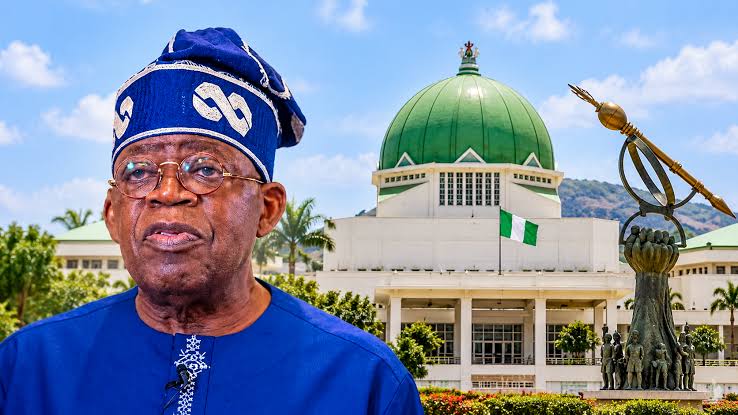
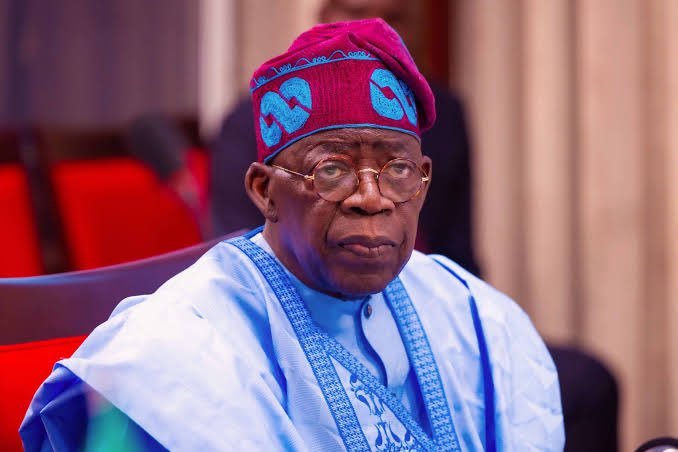
Nigeria is one presidential signature away from the biggest overhaul of its policing system since the return to civilian rule in 1999. President Bola Tinubu has received a constitutional amendment that would let the country's 36 states create their own police forces alongside the federal police. Every state legislature has approved it.
Tinubu's chief of staff, Femi Gbajabiamila, said in a statement on Wednesday, Nov. 18, that the bill had been formally delivered to the president by his special advisers on Senate and House of Representatives matters, Basheer Lado and Wasiu Olanrewaju-Smart. Earlier that day, the Senate resolved to direct the Clerk of the National Assembly, Kamoru Ogunlana, to transmit the bill for assent. Gbajabiamila said Tinubu would review the bill with the Attorney General of the Federation before signing it at a formal ceremony. No date has been announced.
The bill's arrival matters now because Nigeria's security crisis has outgrown its police. Banditry in the northwest, mass kidnappings, insurgency in the northeast and communal violence in the north-central states have overwhelmed a single, centrally commanded force. Supporters say state police could bring faster responses and better local intelligence. Critics fear it could hand governors a private army before the next general elections.
A Rare Unanimous Vote
Section 9(2) of the 1999 Constitution requires constitutional amendments to win the approval of at least two-thirds of the state Houses of Assembly, or 24 of the 36. On Monday, Nov. 16, Ogunlana announced that all 36 had approved the bill. He called it "100 per cent support from the state legislatures," according to Premium Times.
"Following the completion of the verification process by my Office, the Bill is set for transmission," Ogunlana said.
The bill's federal passage was less smooth. The Senate approved it on June 24 by a manual vote after the chamber's electronic voting system failed, ICIR reported. Senate Leader Opeyemi Bamidele later said 84 of the 109 senators had voted for it clause by clause, or 77.06%. The House of Representatives also approved the bill before it went to the states. Bamidele defended the process after critics said it had been rushed. Sen. Ali Ndume, who supports state police in principle, told The Sun in June: "I'm not comfortable with the President bringing anything and we just rush to pass it." Prof. Chidi Anselm Odinkalu, a human rights lawyer and former chair of the National Human Rights Commission, said the Senate "passed a bill for that in minutes, without publishing it or holding a public hearing."
Tinubu publicly backed state police in November 2025, according to ICIR. His support helps explain why governors and state legislators from across the political spectrum moved together on an idea that had stalled for years.
What the Amendment Would Do
The current constitution creates a single Nigeria Police Force under the Inspector General of Police, who answers to the federal government. Governors are designated the chief security officers of their states but have no direct operational control over police commissioners or officers.
The amendment would replace that system with two tiers. Based on reporting by ICIR, the BBC and the bill's published text as summarized by analysts:
- Federal Police Service: It would retain national security functions, including counterterrorism, organized crime, cybercrime, border security and policing of the Federal Capital Territory. The Inspector General would be appointed by the president on the advice of the National Police Council, subject to Senate confirmation.
- State Police Services: They would enforce state laws, maintain public order and investigate offenses within their states. Each would be led by a commissioner of police appointed by the governor on the recommendation of the National Police Council and confirmed by the state House of Assembly.
- Removal protections: A state commissioner could be removed only for stated cause, after a fair hearing, on the National Police Council's recommendation and by a two-thirds resolution of the state assembly. Kaduna Gov. Uba Sani summarized the safeguard in June: "You can appoint the commissioner of police, but you cannot sack him."
- State Police Service Commissions: Independent commissions would recommend commissioner candidates and oversee promotions, discipline and public complaints.
- Limits on governors: Governors could issue written general policy directions on public safety. They would be barred from ordering officers to arrest, detain, investigate or use force against particular people or groups unlawfully. Police could not be used to suppress lawful political activity or to enforce the law for partisan, ethnic, religious or personal ends.
- Federal intervention: The president could authorize temporary federal intervention in a state in cases including a serious breakdown of public order, serious rights abuses or partisan intimidation. The intervention would require written authorization and be subject to judicial review, the BBC reported.
Importantly, the amendment does not create any police force by itself. No state service may begin operating until a state law establishes it and that law is certified against national minimum standards for recruitment, training, firearms and use of force. Until then, the federal police continue to police every state.
The Next Legal Step
The amendment is a foundation. The operational detail will come from a separate national policing bill. Gbajabiamila, who chairs the Presidential Working Group on State Police, said the group held stakeholder engagements and nationwide consultations to produce a draft. That draft is now with the Federal Ministry of Justice for legislative drafting validation. The working group will review the validated version and present it, with its report, to the president. In its Wednesday resolution, the Senate urged Tinubu to send that bill to the National Assembly.
Gbajabiamila said Tinubu appreciated the work of the National Assembly, state governors, state lawmakers and others. He described it as "a shared commitment to addressing the country's security challenges."
The Case For
Supporters argue that the arithmetic of a single federal force no longer works in a country of more than 200 million people. Rights groups have long said the Nigeria Police Force is understaffed, poorly equipped, inadequately trained and vulnerable to corruption, the BBC reported. Officers are often posted far from home and have little knowledge of local languages or terrain. A governor confronting kidnappers on a state highway must currently request help through a federal chain of command.
The security pressure is constant. In the week of Nov. 6 to 12, Nigerian military operations rescued 125 kidnap victims, an effort the United States praised, according to AllAfrica. Defense Minister Christopher Musa said U.S. intelligence sharing, satellite imagery and training are helping Nigerian forces target insurgents. Separately, the Senate this week called for sanctions on officers of the Nigeria Security and Civil Defence Corps and compensation for the families of 37 suspected illegal miners who died in custody in Minna, according to The Nigeria Brief. The case is a reminder that security failures in Nigeria include abuse by those meant to provide protection.
The Case Against
The objections are as old as the debate. Critics fear governors, who already dominate state politics, could use police to intimidate opponents, suppress dissent and influence elections. "Will they be used as political thugs? Will they be used to witch-hunt opponents?" security expert Jackson Olalekan-Ojo asked in June, according to The Sun.
Funding is the second worry. Many states depend heavily on monthly federal allocations, and some have struggled to pay salaries. "If the federal government pays a policeman N100,000, will Ondo or Anambra be willing, or able, to pay the same?" security expert Patrick Agbambu asked. "You cannot arm a man and then owe him two or three months' salary. You will create anarchy." Olalekan-Ojo warned against a situation where "rich states are well policed while poor states are not."
The drafters attempted to address both concerns. The removal protections for commissioners, the independent commissions and the ban on partisan use of police target the abuse risk. The certification requirement aims to keep underfunded forces from operating. Whether those protections hold up in practice will depend on state assemblies that are often closely aligned with their governors, and on courts asked to police the line.

Analysis: Timing and the 2027 Elections
The timing is politically charged. Nigeria heads into general elections in 2027, and the electoral machinery is already moving. The Independent National Electoral Commission has acknowledged a trust deficit after the 2023 vote and has scheduled a nationwide mock election for Nov. 28, according to The Nigeria Brief. Disputes over party tickets, including the African Democratic Congress's court fight over former Vice President Atiku Abubakar's listing on INEC's portal, are already in the courts.
In practice, the certification requirements and the pending national policing bill make it unlikely that many states will field armed forces of their own before the elections. That may reassure critics in the short term. It also means the first real test of the system's safeguards could come during a post-election period, when political stakes in the states are highest.
The unanimous vote also hides differences in capacity. States with large internal revenues can afford to move quickly. Poorer states may find the cost prohibitive, which could produce exactly the uneven policing that critics fear.
What to Watch
- Assent: Tinubu's signature is expected but not yet scheduled. His review with the Attorney General may produce comments on how the amendment will be implemented.
- The national policing bill: Its content will determine minimum standards, funding arrangements and the certification process. These details will decide whether state police are viable.
- First movers: Watch which states pass establishment laws first, and how their assemblies handle confirmation of the first commissioners.
- Legal challenges: Expect litigation over the federal intervention clause and the limits on governors' directives once the first state forces begin operating.
For a country that has debated state police for more than two decades, the constitutional question is nearly settled. The harder questions of money, oversight and political restraint come next.
Published By | News Editor