FASHION
Cushman & Wakefield's new global survey puts New York's Upper Fifth Avenue back at the top of the world's priciest shopping streets, ahead of London's New Bond Street and Milan's Via Montenapoleone. Behind the number is a luxury land rush that is changing what a flagship store is for.
NEW YORK
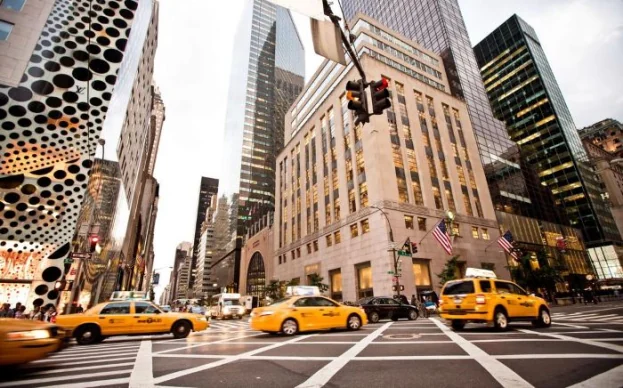
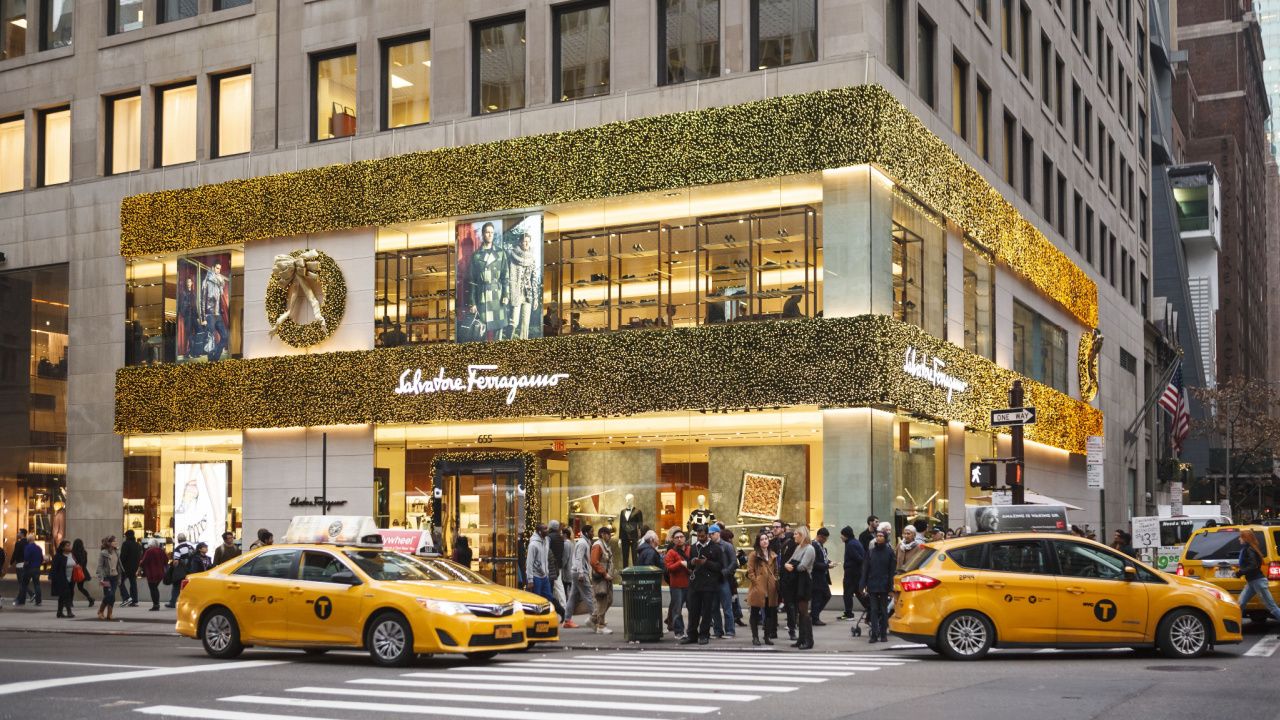
Window shoppers on Fifth Avenue this holiday season are walking down the most expensive retail street on Earth. According to "Main Streets Across the World 2026," the annual ranking from real estate firm Cushman & Wakefield released this week, Upper Fifth Avenue has returned to first place, with prime retail rents averaging $2,700 per square foot per year, up 35 percent from last year.
It is a sharp turnaround. Fifth Avenue ranked third in 2025, and this is its first time at the top since 2023. London's New Bond Street came second at $2,230 per square foot, unchanged from last year, and Milan's Via Montenapoleone came third at $2,160, also flat. For a sense of the climb: in 2022, when Fifth Avenue last returned to No. 1 after the pandemic, its average rent was about $2,000 per square foot.
A street the brands want to own
The jump reflects a buying spree that has made Fifth Avenue the most contested real estate in fashion. Over the past two years, luxury groups have invested nearly $4 billion in properties on the avenue, FashionUnited reported earlier this year. Kering, Gucci's parent company, paid close to $1 billion for 711–715 Fifth Avenue. Prada Group has acquired several buildings. Rolex is building a $250 million, 30-storey flagship, and Louis Vuitton, Swarovski and Chanel have all upgraded or opened stores on the strip.
"If a brand wants to have a certain stature, then they have to have a position on Fifth because it's a reputation thing," Charlie Koniver, a partner at Odyssey Real Estate Advisors, told FashionUnited. The point is that brands aren't only paying for foot traffic. They are paying for an address that tells shoppers they belong among the biggest names in fashion.
The flagship as a media channel
Cushman & Wakefield's executives say the role of the big store has changed. "Today's flagship store is more than a place to transact," said Alanna Loeffler, senior managing director and Americas retail platform lead, describing it as a brand-building platform that drives visibility and loyalty. Dr. Dominic Brown, the firm's head of international research, said that "competition for space in the world's most established retail destinations remains intense," and that physical stores "remain essential to brand identity and customer experience."
The numbers bear that out. Fashion retailers accounted for 50 percent of leasing transactions and 57 percent of the space taken across the streets surveyed. More than 80 percent of leasing involved retailers new to their streets, and international brands took about 90 percent of the space leased. Vacancy on many of the top streets is in the low single digits, and some have no space available at all.
Demand is high across the board. On the 30 top-ranked streets alone, Cushman & Wakefield counted more than 815,000 square feet of leasing activity and 153 new leases and store openings over the past year. With so little space coming free on the best blocks, a lease that does open up becomes a bidding war, and rents rise quickly as a result. Fashion still leads, but health and beauty, personal goods and food and beverage operators are now competing for the same corners.
Beyond the top three
The survey covered 147 leading retail locations worldwide. Overall growth was steadier than on Fifth Avenue: average rents rose 3.0 percent year over year in local currency, down from 4.3 percent in 2025. Rents rose on 49 percent of streets, fell on 19 percent and held steady on 32 percent. The Americas and Asia Pacific each grew 3.1 percent and Europe 2.9 percent, with Asia Pacific the only region where growth picked up.
Some of the most dramatic rises came outside the classic luxury streets. Miami's Brickell Boulevard Corridor rose 43 percent, Bucharest's Calea Victoriei 29 percent, Mumbai's Linking Road 28 percent and Austin's South Congress 20 percent. In London, Covent Garden and Regent Street each rose 13 percent. Beauty, food and drink and experiential concepts are increasingly sitting beside fashion in these mixed-use districts.

What's next for the avenue
The street itself is about to change. The "Future of Fifth" plan, a $400 million public-private partnership covering the stretch from Bryant Park to Central Park, would double sidewalk widths, cut traffic lanes from five to three, and add 20,000 square feet of planters and public seating, with groundbreaking slated for 2028. Wider sidewalks and more dwell time are exactly what brands paying $2,700 per square foot want, which helps explain why landlords and luxury houses alike are betting heavily on the avenue's next decade.
What this means for you
For shoppers, the rent boom shapes the experience on the shop floor. Brands paying record rents need their stores to justify the cost, so expect more spectacle: cafés, exhibitions, private salons, personalization services and holiday installations designed to be shared on social media. It can also mean fewer independent boutiques on prime blocks, as smaller labels move to side streets and up-and-coming districts. If you're a smaller brand or a retail entrepreneur, the survey's hottest growth areas, mixed-use corridors like Brickell and South Congress, are where the next opportunities are.
The bottom line
E-commerce was supposed to make the grand flagship obsolete. Instead, the world's most powerful fashion houses are paying more than ever to stand on one stretch of Manhattan. At $2,700 per square foot, Fifth Avenue's comeback is less about selling handbags than about showing off: for luxury, the address has become part of the brand.
Published By | Features Editor