Written By | International News Agencies
Libya's two rival governments are trading accusations after Ukraine said it used naval drones to sink a Russian warship at the Benghazi Naval Base
TRIPOLI, Libya
Libya's two rival governments are trading accusations after Ukraine said it used naval drones to sink a Russian warship at the Benghazi Naval Base, an attack that has turned the North African country's long-running political division into a front in the Russia-Ukraine war and left both Tripoli and Benghazi scrambling to defend a sovereignty neither fully controls.
Ukrainian President Volodymyr Zelenskyy said on Monday that seven domestically made naval drones struck the Russian corvette Merkury, which he described as one of Russia's newest ships, early on Sunday, Nov. 22. "Despite all the enemy's efforts to counter the attack, the Russian corvette Merkury was sunk," he wrote on X, calling it an "exemplary Ukrainian operation in response to Russia's war." He said a Ka-27 military helicopter aboard the ship was destroyed and that a drone also hit the dry cargo ship MV Angara, which is under U.S. and international sanctions for illegally transporting weapons for Russia, according to CBS News and The Associated Press.
The strike matters for Libya because it exposes what both of its governments have long preferred to leave unspoken: that the country hosts foreign military forces on both sides of its internal divide. The eastern administration, backed by military commander Khalifa Haftar, receives Russian arms and services Russian ships. Libyan officials told The Associated Press that Ukrainian drone specialists have operated from western Libya under a reported covert arrangement with the Tripoli-based government. The attack in Benghazi has pulled both arrangements into public view at once.
What happened in Benghazi
Residents of Benghazi heard loud explosions and saw fire at the naval base early Sunday, and civil defense crews extinguished the blaze, according to eastern authorities cited by CBS News. Eastern officials said the Merkury had docked to refuel and take on supplies while returning to Russia under a cooperation agreement with their administration.
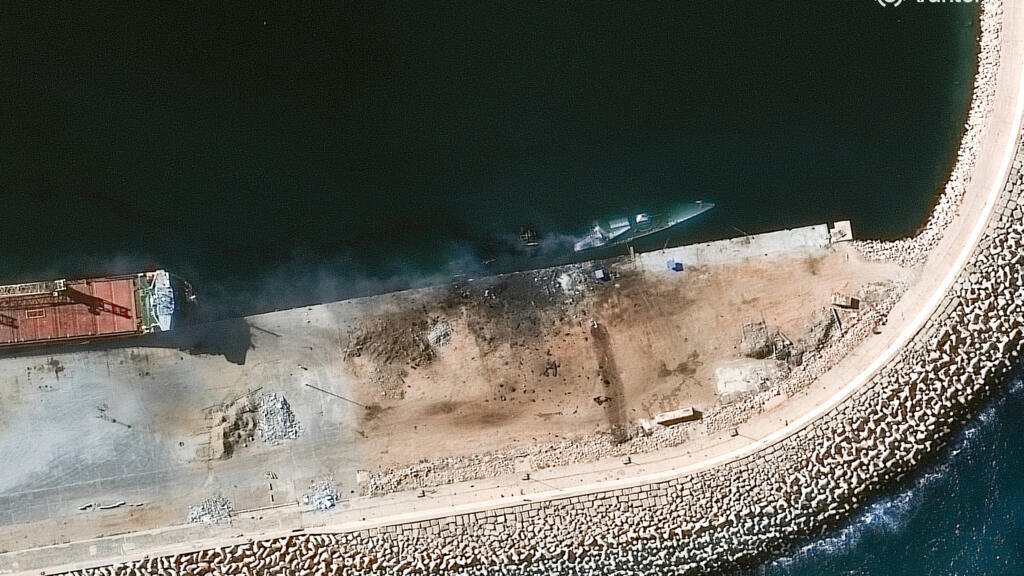
Accounts of the damage and casualties differ. Two Libyan military officials told The Associated Press that the corvette was severely damaged rather than sunk, and that at least four drones were intercepted while two struck the vessel. Satellite imagery from Vantor showed the ship capsized in port, according to Middle East Eye. A Libyan official said at least 10 people, including Libyan and Russian nationals, were wounded, Middle East Eye reported, while Al Jazeera, citing local authorities, reported that at least 10 Libyan and Russian crew members died. The eastern health ministry said all crew members of the Angara were rescued and were receiving treatment, according to Al Jazeera. The casualty figures had not been independently reconciled as of Tuesday.
Ukraine's Security Service, the SBU, called the operation "unique," saying the drones were launched from a "mothership" near the target and that Russian forces tried to intercept them with air, sea and land defenses. "The Defense Forces of Ukraine have once again demonstrated that the Russian military fleet and its logistics networks have no safe routes, even far beyond the Black Sea," the SBU said, according to the Kyiv Post. The SBU said the Merkury regularly escorted Russian naval convoys, including the Angara, which it accused Moscow of using to move military equipment. Benghazi lies roughly 1,500 miles from the front line in Ukraine.
The Kremlin made no immediate detailed comment on the Libya strike, saying the defense ministry would provide information later. Spokesman Dmitry Peskov said Russia had noted Zelenskyy's statement and called Ukraine's attacks a "very dangerous trend," according to International Business Times and Al Jazeera.
Two governments, one complaint, opposite targets
Libya has been divided since the 2011 NATO-backed uprising that toppled Muammar Gaddafi. The internationally recognized Government of National Unity, led by Prime Minister Abdul Hamid Dbeibah, is based in Tripoli and controls much of the west. A rival eastern administration led by Prime Minister Osama Hammad is backed by Haftar's Libyan National Army, which controls the east and south.
The attack produced rare common ground: both governments condemned it. Yet each used the moment to point at the other.
Tripoli's Ministry of Foreign Affairs and International Cooperation said on Monday that it "categorically condemns the conduct of any foreign military operations within Libyan territory" and demanded "official clarifications regarding the nature and scope" of Ukraine's claimed operations, according to AFP. It said Libya's sovereignty and territorial integrity were "not subject to compromise" and that the Russia-Ukraine war gave neither side the right to bring its fighting into Libya. It also warned against Libyan ports and facilities serving as bases or logistics hubs for foreign forces outside state control, a remark that reads as aimed at Russia's presence in the east.
The eastern administration called the strike a violation of Libyan sovereignty, said it would open its own investigation jointly with Russia, and reserved the right to respond "by all necessary means," according to The Associated Press. Hammad asked the U.N. General Assembly and Security Council to investigate, including reports of "Ukrainian personnel, experts or military units" in western Libya around Misrata and Zawiya, AFP reported. Two eastern officials told The Associated Press that an initial inquiry found several drones were launched from a base run by Ukrainian forces in western Libya. Tripoli has not confirmed that claim, and it remains unverified.
Saddam Haftar, deputy commander-in-chief of the eastern forces and Khalifa Haftar's son, said: "We firmly reject the use of our territory or territorial waters as an arena for settling scores," adding that Libya's security "is a national responsibility that leaves no room for political posturing," according to Al Jazeera.
The U.N. Support Mission in Libya expressed "serious concern" and called for "an immediate, independent and transparent investigation." In a post on X, it said: "Libya cannot afford, and must not become a battleground for foreign conflicts."
Why Russia is in eastern Libya
Russia's interest in Haftar's territory has grown since the fall of Bashar al-Assad in Syria in 2024 made Moscow's Syrian bases less viable. Citing the Atlantic Council, Al Jazeera reported that Russia's footprint in Syria has shrunk to about 1,000 troops from roughly 10,000 in earlier years, and that an estimated 1,800 Russian troops, including the Africa Corps that succeeded the Wagner Group, are now in Libya. Russia has planned or funded projects at six Haftar-controlled bases — Al-Jufra, Al-Khadim, Al-Qardabiyah, Brak al-Shati, Maaten al-Sarra and Tamanhint — and uses eastern Libya as a logistics hub for operations across Africa, including in Sudan and the Sahel.
Moscow still lacks a permanent southern Mediterranean port. According to the Atlantic Council, as cited by Al Jazeera, eastern authorities have avoided granting one because it would damage their improving ties with the United States, Türkiye and European partners. Analysts say Washington is leading efforts to reunify Libya's two militaries, partly to counter Russian influence, and is focusing on Saddam Haftar, 35.
"Russia enjoys good relations with the Libyan National Army and its commander Haftar," Hamish Kinnear of the consultancy Verisk Maplecroft told AFP. He said the "successful targeting of a Russian warship berthed in LNA-controlled waters is a blow" to both Russia and Haftar's forces.
Ukraine's long-range campaign
The Benghazi strike came a day after drones hit the sanctioned Russia-linked cargo ship Sparta II in the Gulf of Finland. Finland's military said the strike was likely Ukrainian; Kyiv has neither confirmed nor denied involvement, according to CBS News. In March, Russia blamed Ukrainian sea drones launched from Libya for an attack on the LNG carrier Arctic Metagaz, an attack Kyiv has not claimed. Libyan officials told The Associated Press earlier this year that Ukrainian forces were based mainly at a Misrata air base, with some presence in Tripoli and Zawiya, under a deal endorsed by Western governments.
Zelenskyy referred to the strikes in a video address to the NATO Parliamentary Assembly in Berlin on Monday, the Kyiv Post reported. Ukraine has described such operations far from the front as part of a strategy of "long-range sanctions" against Russia's military logistics and the shadow fleet it uses to evade Western oil sanctions, Al Jazeera reported.
Analysis: sovereignty as a weapon
For Libya's leaders, the attack is both a humiliation and an opportunity. Neither government can credibly claim to control who uses Libyan territory: the east hosts Russian forces and ships, and the west, according to Libyan officials, has hosted Ukrainian drone teams. By demanding international investigations aimed at each other's foreign partners, both administrations are using the language of sovereignty to score points in their own rivalry.
That dynamic carries real risk. The eastern government's warning that it could respond "by all necessary means," combined with any Russian retaliation, raises the prospect of a proxy confrontation on Libyan soil — precisely what UNSMIL warned against. Jalel Harchaoui of the Royal United Services Institute told The Associated Press that the key questions are how Russia retaliates and how the Haftar family responds. The answer will also test Washington's effort to court Saddam Haftar and bring the two militaries together, an effort that depends on the east keeping some distance from Moscow.
The strike also complicates Russia's broader African strategy. If Benghazi is no longer a safe stopover, the logistics chain that supports Russian operations in Sudan and the Sahel becomes more exposed, and Haftar faces pressure either to deepen protection for Russian assets or to limit their visibility.
What to watch
Key indicators in the coming days include whether Russia's defense ministry issues a formal account of the Merkury's fate and any casualties; whether the U.N. Security Council takes up Hammad's request; whether Tripoli receives the "official clarifications" it demanded from Kyiv; and whether the joint Russian-eastern Libyan investigation produces claims about launch sites in western Libya. Any move to restrict Russian port calls in the east, or to expose foreign personnel in the west, would signal how far each Libyan camp is willing to go to keep the country from becoming a second theater of a war that is not its own.