Written By | Health News Agencies
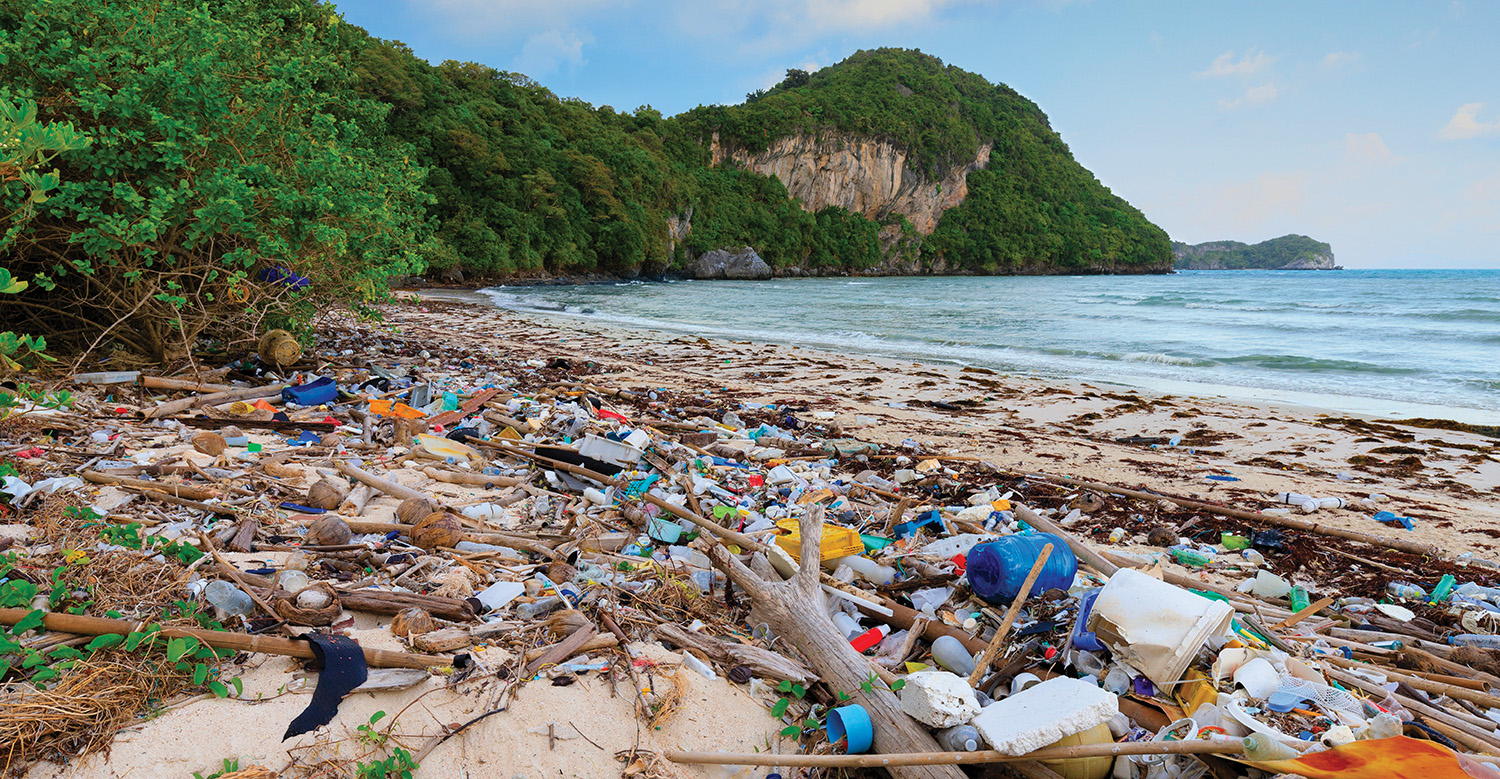
The first major global review in 14 years finds "irrefutable" evidence that chemicals in plastics, cosmetics, toys and pesticides disrupt human hormones, with exposure starting before birth
GENEVA
They are in the water bottle on your desk. In the receipt from your morning coffee. In your shampoo, your child's toys, the lining of food cans, and the clothes on your back. And according to the most comprehensive scientific review in more than a decade, they are quietly tampering with the chemical messages that run your body.
On Tuesday, November 17, 2026, the United Nations Environment Programme (UNEP) and the World Health Organization (WHO) released The State of the Science on Endocrine Disrupting Chemicals 2026, a sweeping assessment of so-called hormone-disrupting chemicals. It is the first major global update since 2012, and its conclusions are blunt.
These chemicals, the report says, are a "global and growing threat" to human and environmental health. Their health costs top an estimated $1.1 trillion a year worldwide. And the rules meant to protect people are "fragmented and insufficient."
"The evidence is so strong that it's irrefutable at this point," said Laura Vandenberg, a lead author and professor of environmental health sciences at the University of Massachusetts Amherst.
What Are Endocrine Disruptors?
Your endocrine system is your body's hormonal messaging network. Glands release hormones such as oestrogen, testosterone, thyroid hormone and insulin, which travel through the blood carrying instructions: grow, burn energy, store fat, make sperm, build a baby's brain.
Endocrine-disrupting chemicals, or EDCs, are substances that interfere with those messages. Some mimic natural hormones, tricking the body into responding when it shouldn't. Others block hormones from doing their job, or change how they are made and broken down.
The usual suspects include bisphenol A (BPA), found in some hard plastics and can linings; phthalates, used to make plastics soft and flexible and often found in fragrances; parabens, preservatives in cosmetics and personal care products; and polychlorinated biphenyls (PCBs), industrial "legacy" chemicals that are banned in many places but persist in the environment.
They are everywhere: in plastics used for packaging, toys and medical devices, in pesticides, pharmaceuticals, household goods, electronics, building materials, textiles and makeup.
The scale of the problem is dizzying. More than 350,000 chemicals and chemical mixtures are registered for production and use around the world. Only a small fraction have ever been tested for whether they disrupt hormones. Around 1,000 EDCs have been identified so far, but scientists warn many more could be hiding in plain sight.
Exposure Starts Before Birth
Perhaps the most alarming finding is about timing. The report concludes that exposure to these chemicals can begin before a baby is even born. EDCs have been detected in human blood, in breast milk and in umbilical cord blood. Exposure during these early windows, when organs and the brain are being built, can disrupt hormones with lasting effects on brain development, growth and reproductive health.
"What makes EDCs particularly concerning is that they can disrupt hormones that regulate many essential functions," said Sheila Aggarwal-Khan, director of UNEP's Industry and Economy Division.
Children are especially exposed. Beyond what crosses the placenta or arrives in breast milk, youngsters can absorb chemicals by mouthing toys or through skin contact. People are also exposed by swallowing contaminated food and water, by breathing in dust and fumes, through the skin, and through contact with medical devices.
The Health Toll
The 2026 report pulls together thousands of studies and more than a decade of research. Its scientists sorted the evidence by strength.
The strongest links are to reproductive problems, including declines in sperm, and to certain neurological effects. Evidence for harm to brain development, cognition and behaviour from exposure in the womb and early childhood is described as strong.
There is growing confidence in links to type 2 diabetes and asthma, two conditions that have climbed sharply around the globe. The report also points to connections with thyroid problems, obesity, some cancers, immune function, and heart and blood vessel disease. Newer areas of concern include metabolic liver disease and possible effects on the kidneys, though scientists say gaps remain there.
Crucially, the authors argue that the rapid rise of many of these diseases is unlikely to be explained mainly by changes in our genes. Genes don't change that fast. Our environment does.
Wildlife is paying a price, too. In fish, birds, amphibians and mammals, the report links EDC exposure to impaired reproduction, development and behaviour.
The Trillion-Dollar Bill
The report "conservatively" estimates that the health-related costs of exposure to these chemicals exceed $1.1 trillion every year worldwide, counting medical treatment and lost productivity.
And that figure leaves a lot out. It does not include the cost of contaminated drinking water, loss of biodiversity, damage to food production, or human rights impacts. The real bill, in other words, is likely far higher.
The "Whack-a-Mole" Problem
If the danger is so well documented, why hasn't it been fixed? Part of the answer, scientists say, is that regulation is a game of whack-a-mole. When one chemical, such as BPA, is restricted, manufacturers often swap in a substitute that is structurally similar or has not been properly tested. Then scientists have to start the evidence-gathering process all over again.
Vandenberg described exactly that "whack-a-mole problem," and asked the question at the heart of the report: "In many, many cases we know enough to act. Why haven't we acted?"
Another problem is that real life is a chemical cocktail. Humans and animals are exposed to mixtures of many substances at once, yet many regulatory systems still assess chemicals one at a time. Experts worry about "synergistic" effects, where combinations do more harm than any single chemical alone. And for most EDCs, there is no known safe level. Some act at extremely low concentrations.
Ake Bergman, a retired professor of environmental chemistry who worked on the 2002 and 2012 editions of the report, said the complexity makes regulation difficult for politicians.
Workers bear some of the heaviest burdens. The report's authors highlight people in the chemical and recycling industries, especially in countries with weak rules. One 2024 study by the International Pollutants Elimination Network (IPEN), using silicone wristbands to track exposure, found that plastic waste and recycling workers in Thailand and Kenya were exposed to more than 20 hazardous chemicals. Even office workers in the comparison group were exposed to at least 11.
There Is Good News
Here is the hopeful part: action works. The report notes that the harmful effects of some legacy EDCs have been reversed after regulators reduced environmental contamination. When the chemicals go away, health and wildlife can recover.
"Solutions do exist. Some safer alternatives are available," UNEP and WHO wrote in the report's foreword.
The report and a companion synthesis, From Evidence to Action: Addressing Endocrine Disrupting Chemicals Across Sectors, lay out a to-do list. It calls on governments to strengthen regulation and phase out the most problematic chemicals, to identify risks earlier and improve monitoring, to move from assessing single substances to assessing mixtures, and to put special protections in place for pregnant women, infants and children. It calls for coordinated action across food packaging, cosmetics, toys, textiles, healthcare, agriculture, pharmaceuticals and waste.
It also has a message for business. Aggarwal-Khan said companies that design products can change the chemicals in them, and those that test early and disclose ingredients will be ahead of regulation.
"Protecting health means preventing harmful exposures before they occur," said Bruce Gordon, acting director of WHO's Department of Environment, Climate Change, One Health and Migration. "We need coordinated action across sectors to reduce exposure and protect human health throughout life."
Industry Pushes Back
The chemical and plastics industries are not convinced that sweeping new rules are the answer.
The International Council of Chemical Associations called for "science-based" regulation that protects health and the environment while still enabling beneficial products and innovation. The group contributed 1.5 million euros (about $1.65 million) toward chemical management efforts, provided technical expertise and created a public database of plastic additives.
In the United States, the American Chemistry Council says additives give plastics vital properties such as flexibility, rigidity, UV stability and durability. Kimberly Wise White, the council's vice president of regulatory and scientific affairs, said the industry considers safe chemical use paramount. The council points to existing laws, including the U.S. Toxic Substances Control Act and the European Union's REACH regulation, as the most effective way to regulate plastic additives.
The industry also opposes adding chemical restrictions to a global treaty to end plastic pollution, arguing such chemicals should be handled under existing international conventions and national laws. Treaty talks are due to resume early next year.
Expert Perspective
Scientists both inside and outside the report say waiting for perfect evidence is a trap.
"While more science is always needed, we don't need more science to act," said co-author Tracey Woodruff, a professor at Stanford University. She called for halting the expansion of plastic production, reducing exposure, and banning the worst chemicals.
Bethanie Carney Almroth, the UN Special Rapporteur on toxics and human rights and a professor of ecotoxicology at the University of Gothenburg, said: "This report makes clear that new regulations are needed, new testing paradigms must be adopted." She added: "We need to reverse responses from reactive to proactive."
Frederic Leusch, a professor of environmental toxicology at Griffith University in Australia who was not involved in the report, said the hazard is serious enough that exposure should be cut even without knowing the exact thresholds at which harm begins.
Bjorn Beeler, international coordinator of IPEN, went further, warning of a "toxic tidal wave" that no one is prepared for as plastic production is projected to rise sharply.
The report was launched at the first International Conference of the Global Framework on Chemicals, under way in Geneva from November 16 to 20.
What This Means for You
The report itself is aimed at governments and companies, not shoppers, and its authors stress that big change has to come from policy. Vandenberg notes that chemicals often disappear from products when consumers stop buying them, but that broad protection requires rules. You cannot shop your way out of a problem this size.
Still, environmental health experts commonly suggest some simple steps that can reduce everyday exposure:
If you work in recycling, manufacturing or agriculture, ask your employer about protective equipment and exposure monitoring.
The Bottom Line
Fourteen years after the last global warning, the verdict is in, and it is harsher. Chemicals designed to make modern life convenient are seeping into our bodies before we are even born, and they are linked to some of the fastest-rising diseases of our time.
The bill is already more than a trillion dollars a year, and rising. The scientists' message is no longer "we need to study this." It is "we need to act." Whether governments, and the companies that make our products, will listen is the next big test.