Written By | International News Agencies
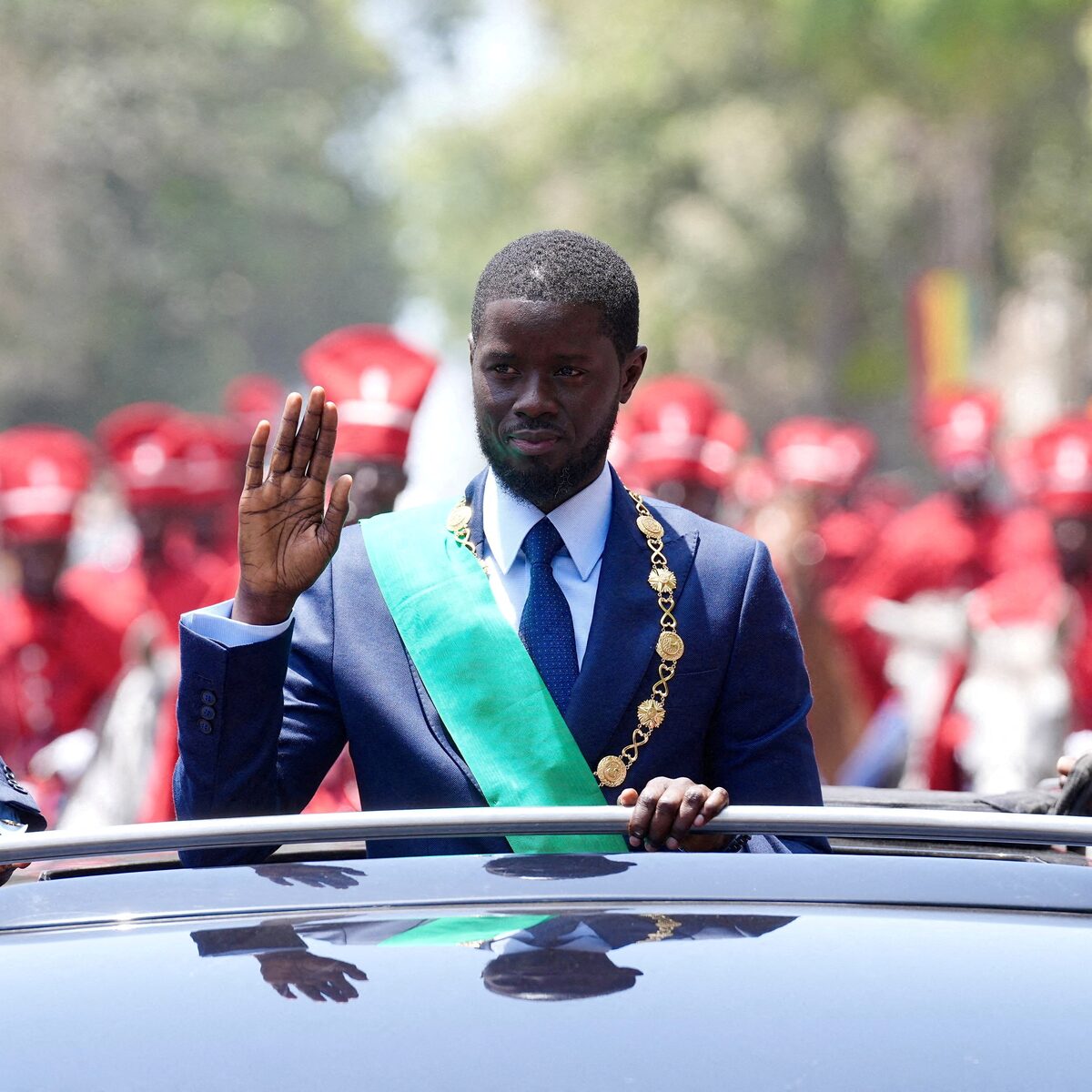
Senegal President Bassirou Diomaye Faye
DAKAR, Senegal
Senegal's ruling party lawmakers on Tuesday opened formal proceedings to force President Bassirou Diomaye Faye to withdraw the decree he used last week to impose a budget that parliament had rejected, widening a constitutional confrontation that now threatens the country's pending $2.2 billion International Monetary Fund program and could culminate in the dissolution of the National Assembly as early as Dec. 2.
The joint session of the Assembly's finance and laws committees, convened at 10 a.m. at the legislature's new building, examined a resolution filed Nov. 20 by the Pastef Les Patriotes parliamentary group. The text demands the "withdrawal without delay" of Decree No. 2026-2416 and describes it as a "usurpation of legislative power," according to the Senegalese outlet Points Chauds. No decision had been announced when the meeting opened, and no date had been set for a plenary vote.
The stakes extend well beyond procedure. Senegal is a country whose finance minister told lawmakers last week that it is "teetering on the brink of disaster" on a day-to-day basis, and whose path out of a debt crisis runs through an IMF board that has made a completed budget framework a condition of approval. The dispute also marks the clearest institutional rupture yet between the two men who brought Pastef to power in 2024: Faye and his former prime minister, Ousmane Sonko, who now leads the National Assembly.
From partners to rivals
Faye and Sonko rose together as the faces of an anti-establishment movement. Sonko, the party's founder and leader, was barred from the 2024 presidential race, and Faye ran in his place and won. In a snap legislative election in November 2024, Pastef took 130 of the National Assembly's 165 seats, giving the new government a commanding majority.
That partnership has since come apart. Faye dismissed Sonko as prime minister on May 22, 2026, and appointed Ahmadou Al Aminou Lô to the post on May 25, according to IntelliNews. Sonko was then elected speaker of the National Assembly, turning the legislature he controls into a counterweight to the presidency. On July 25, Faye launched a separate political vehicle, Kiiraay–Les Patriotes Républicains.
The split became formal on Nov. 17, when Pastef's national council said Faye and 31 others, including ministers and senior officials, had automatically lost their party membership under Article 6 of the party's statutes. Armed Forces Minister Yankhoba Dieme dismissed the expulsion as a "non-event" in remarks to the state broadcaster RTS.
How the budget fight unfolded
The confrontation centers on the revised 2026 finance law, known in French as the loi de finances rectificative. On Nov. 3, the Assembly rejected the bill through a procedural motion that blocked substantive debate, according to IntelliNews.
The revised budget would have reset the government's economic assumptions sharply. It cut the 2026 growth forecast to 2.7% from roughly 5% and widened the deficit target to 7.6% of gross domestic product from 5.4%, according to Reuters. It also tripled energy subsidies to 790.3 billion CFA francs, or about $1.36 billion.
Two days later, on Nov. 5, the finance ministry said a parliamentary committee had asked it to withdraw the 2027 budget bill, arguing that the rejection of the revised 2026 budget had undermined the new bill's baseline assumptions. The ministry called the committee's actions "obstructionist tactics." The committee replied that it had acted in a spirit of institutional dialogue and that only the government could withdraw or maintain a bill.
On Nov. 18, lawmakers voted down the first part of the 2027 budget, which covers revenue, spending authorizations and borrowing. The draft projected a deficit of 1,351.7 billion CFA francs, about $2.26 billion, or 4.7% of GDP. Sonko said a vote on the second part was therefore unnecessary, Reuters reported. Speaking in the plenary, Finance Minister Cheikh Diba warned that "some social protection programs" could face delays or funding constraints if the bill failed.
The following day, Nov. 19, Faye signed the decree bringing the revised 2026 budget into force. His office said he acted as guardian of the constitution and guarantor of the regular functioning of the state, but it did not elaborate or release budget figures, Reuters reported.
A dispute over two articles of the constitution
The legal argument turns on Article 68 of Senegal's constitution, which gives the Assembly "sixty days at most" to vote on finance bills and provides that a bill not definitively voted within that period is put into force by decree. The government's position, set out by Diba, is that a rejection is not a definitive vote, so the 60-day clock ran out and the decree was lawful. The decree gives Sept. 18 as the bill's filing date, a date the National Assembly itself had also announced, according to IntelliNews.
Pastef calls that reading a misinterpretation. Its lawmakers argue that the provision is designed to cover parliamentary silence, not an explicit rejection. Legal scholars are divided. Professor Babacar Guèye has argued that Article 68 applies only to the initial annual budget, not to a mid-year revision, while Babacar Ba of the Forum du Justiciable disputes that view. Electoral expert Ndiaga Sylla has argued that the bill was filed on Oct. 13, meaning the 60 days had not expired, though that conflicts with the Assembly's own September announcement.
Tuesday's resolution goes beyond legal objection. It asks for an end to all spending based on the decree, reminds accounting officers, budget controllers and tax and customs agents that they remain subject to legality checks, demands justification for any borrowing above the ceilings set in the original 2026 finance law, and promises a "thorough" review of the eventual settlement law, according to Points Chauds. The warning to civil servants signals that Pastef intends to contest not only the decree but also the execution of the budget it authorizes. Majority officials have ruled out an appeal to the Supreme Court and promised a "political response" instead.
The presidency has hinted at further options of its own. A day after the decree, presidency spokesman Abdoulaye Tine said on a Dakar radio program that Faye had "other possibilities ... notably Article 52," the constitution's emergency-powers clause for a "grave and immediate" threat to the state, The Rio Times reported. Under that article, the Assembly cannot be dissolved while exceptional powers are in force.
The Dec. 2 threshold
Dissolution itself is governed by Article 87, which allows the president to dissolve the Assembly by decree after consulting the prime minister and the Assembly's president, but not during the first two years of a legislature. The current legislature opened on Dec. 2, 2024, so that bar lifts around Dec. 2, 2026. A dissolution decree would trigger elections 60 to 90 days after its publication. As of Nov. 20, the presidency had not announced any dissolution, according to The Rio Times.
That date gives both camps a reason to move quickly. A dissolution would let Faye test whether his new movement can win a mandate independent of Sonko, at the risk of handing Pastef a campaign framed around the president's use of decrees. Leeuwner Esterhuysen, a senior economist at Oxford Economics Africa, told Reuters earlier this month that there were still ways to resolve the standoff amicably, including addressing Pastef's demands for greater transparency, but that "the longer it goes on, the more likely it becomes" that the two sides would turn to more extreme options, such as a Sonko-backed no-confidence vote or a dissolution.
The debt crisis behind the politics
The budget battle is unfolding against one of Africa's most acute sovereign debt crises. In 2024, the new government discovered debts that the previous administration had misreported, which analysts estimate at about $13 billion. The IMF estimated total public-sector debt at 132% of GDP at the end of 2024.
On Sept. 1, Senegal and the IMF reached a staff-level agreement on a 36-month Extended Credit Facility worth about $2.2 billion, subject to approval by IMF management and its executive board. On Nov. 12, IMF spokesperson Julie Kozack said board approval requires three things: a completed budget framework, corrective measures addressing the debt misreporting and financing assurances from partners. She stressed that the authorities must implement policies "using Senegal's own legal and institutional framework," a phrase that now carries particular weight as the legality of the decree is contested.
Pressure from markets is mounting. On Oct. 29, Moody's downgraded Senegal's foreign-currency ratings to Ca from Caa2, citing likely substantial losses for external private creditors in an estimated 35% to 65% range. International bondholders have appointed Alvarez & Marsal as financial adviser, and the government's debt-treatment plan excludes CFA franc-denominated debt, according to IntelliNews. The government has agreed to restructure under the G20 Common Framework, a decision Sonko has criticized.
Sonko has framed Pastef's opposition as a question of budget "sincerity," arguing that deputies were excluded from the IMF negotiations and then asked to approve the commitments that resulted. That lets Pastef present its votes as a defense of parliamentary oversight, while the presidency portrays them as obstruction that endangers social programs and the IMF deal.
Analysis: a test for Senegal's institutions
Senegal has long been cited as one of West Africa's most stable democracies, and its 2024 transfer of power was widely seen as a vindication of that reputation. The current standoff is a different kind of test. Neither side has resorted to extra-constitutional measures; both are wielding constitutional texts against each other. But the accumulation of moves — a decree enacting a rejected budget, an expulsion of the head of state from his own party, a parliamentary warning to civil servants and a public hint at emergency powers — shows how quickly institutional checks can turn into instruments of a personal rivalry.
The economic stakes compound the political ones: an IMF board that wants policies implemented within Senegal's "own legal and institutional framework" now faces a budget whose legal basis the parliamentary majority rejects.
What to watch
The first marker is whether the joint committee advances the Pastef resolution to a plenary vote, and how quickly. The second is Dec. 2, when the constitutional bar on dissolution lifts and Faye gains the option of sending voters to the polls within 60 to 90 days. The third is the IMF: any scheduling of a board meeting, or a further statement on the budget framework, would signal whether the Fund regards the decree as sufficient. Finally, observers will watch whether Faye again invokes Article 68 for the 2027 budget, which IntelliNews notes remains possible if its legal conditions are met. Each of those steps could either open a path to negotiation or lock Senegal's two most powerful politicians into a contest that only an election can settle.