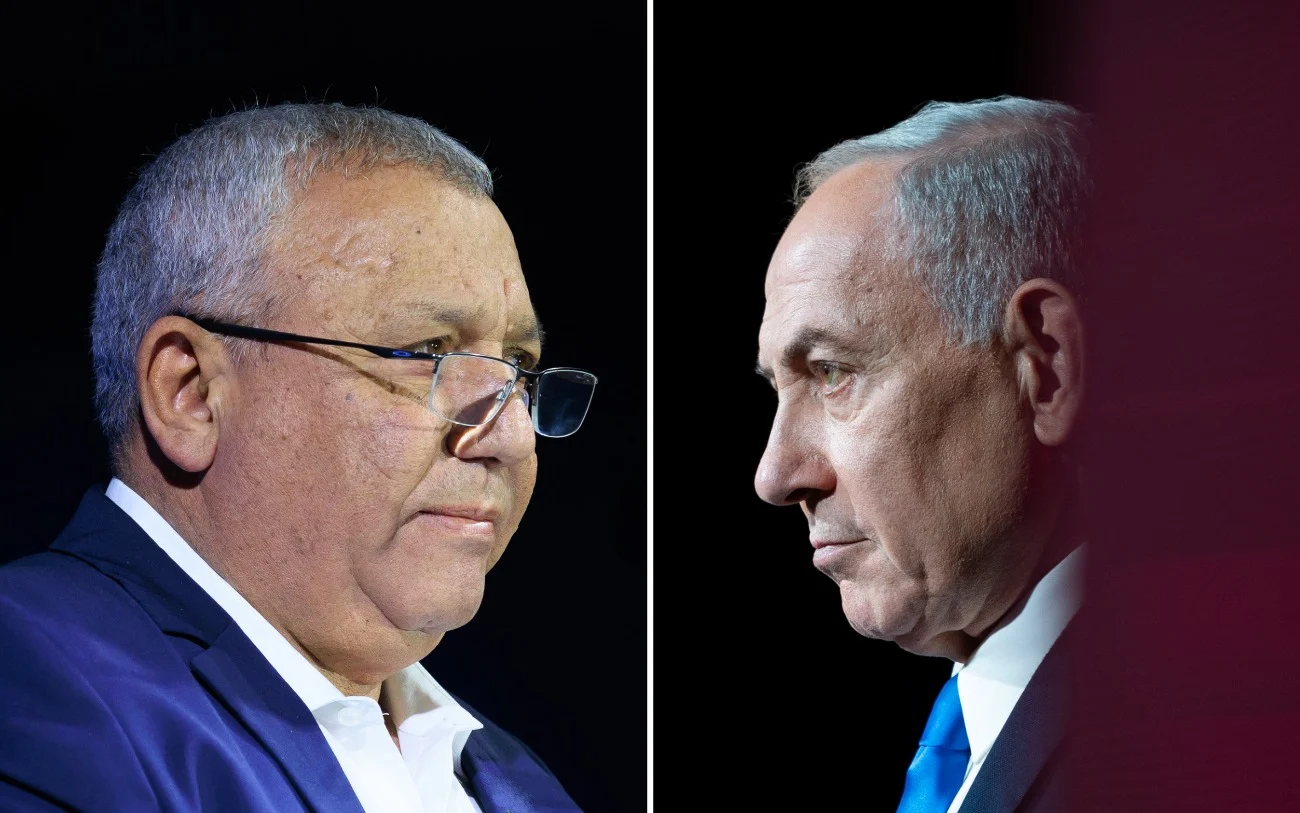
Israel’s prime minister-designate opens a new round of negotiations with the party he set out to unseat, while Likud publishes conditions his own allies call unacceptable and Naftali Bennett vows Netanyahu will not lead the next government.
Daily World Politics | Sunday, November 22, 2026
Overview
Less than four weeks after an election that left no camp with a governing majority, Israel’s coalition drama took an unexpected turn this weekend. Gadi Eisenkot, the former army chief of staff whom President Isaac Herzog tasked with forming the next government, instructed his Yashar party’s negotiators on Saturday to invite Prime Minister Benjamin Netanyahu’s Likud to what the party called “a marathon series of talks.” The first session was scheduled for Sunday, November 22, at 1:00 p.m. at a hotel in Herzliya, which Ynet identified as the Dan Accadia.
Yashar framed the move as a “genuine commitment to forming the broadest possible government,” and said Eisenkot intended to “leave no stone unturned.” But the outreach comes with considerable tension attached. On the same day, Likud published a list of conditions for any national unity government that would exclude Arab parties, rule out a Palestinian state and require an end to political “boycotts” of Netanyahu. Hours later, Naftali Bennett, a key partner in Eisenkot’s bloc, declared that he was committed to ensuring Netanyahu would not be the next prime minister. The result is a negotiation in which both sides say they want unity, but on terms that look difficult to reconcile.
Background: A Hung Knesset
Israelis voted on October 27, 2026, in an election shaped by the long war that followed the October 7, 2023 attacks, the regional confrontation with Iran, and lingering anger over the Netanyahu government’s judicial overhaul. The outcome was a fractured 120-seat Knesset. According to figures reported by Euronews and the Times of Israel, Netanyahu’s bloc won 53 seats, a total that includes the 13 seats held by the ultra-Orthodox (Haredi) parties. Eisenkot’s non-Arab opposition bloc, which includes Yashar, Bennett’s B’Yachad, Avigdor Liberman’s Yisrael Beytenu and Yair Golan’s Democrats, won 48. Arab-led parties won a record 19 seats, with the Times of Israel reporting 8 for Ra’am and 11 for the Joint List.
Those numbers explain the deadlock. Counting the Arab parties, the anti-Netanyahu side commands a majority; the Jerusalem Post put the figure at 67. That was enough for Eisenkot to receive the most recommendations when Herzog consulted party leaders, and therefore the first mandate to form a government. But several of Eisenkot’s own partners, notably Liberman, have long refused to rely on Arab parties for a governing majority, and without them Eisenkot is well short of 61.
Eisenkot has already scored one significant parliamentary victory. On November 17 the Knesset ousted Likud’s Amir Ohana as speaker and elected Yashar’s Matan Kahana, a vote in which Arab-party support proved decisive. Likud reacted furiously. The episode demonstrated that an anti-Netanyahu majority can be assembled on specific votes, but it also sharpened the question of whether such a majority can sustain a government.
Under Israeli law, a designated candidate has 28 days to form a coalition, extendable by up to 14 more. Sources differ slightly on the exact deadline: ARY News, citing AFP, reported the initial period ends on December 6, while Euronews and ABC News referred more generally to early December. With an extension, the mandate could run to around December 20.
Key Developments
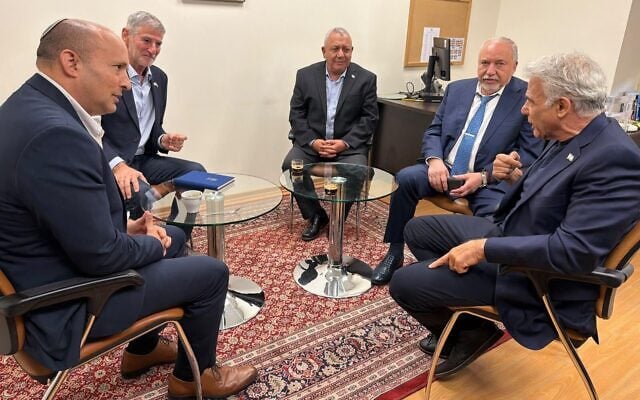
Sunday’s meeting is not the first contact between the two parties. Likud and Yashar held an initial round on November 15, which ended with a joint statement describing the talks as “businesslike,” according to the Jerusalem Post. Likud’s negotiating team is led by MK Ofir Katz and attorney Michael Rabello, while Yashar is represented by MK Chili Tropper and Yoav Horowitz.
The atmosphere soured over the following week. On Friday, November 20, Eisenkot wrote on social media that there was a “wide gap between rhetoric and actions” in Likud’s approach, while adding that he did not intend to drag the process out. Netanyahu, for his part, had called a week earlier for talks “without preconditions,” Ynet reported.
Then, on Saturday, Likud released its own conditions. The published list calls for an end to “all personal attacks and incitement” and to political boycotts against Netanyahu, his government and his partners. It proposes a joint declaration establishing a unity government of all parties that support Israel’s existence as the nation-state of the Jewish people, a formulation that would exclude the Arab parties. It also sets out policy principles: opposition to Palestinian statehood, retention of “security zones” in Syria, Lebanon and Gaza, and a broad agreement with Haredi leaders over the military-service status of yeshiva students. The Jerusalem Post’s version of the list also referred to preserving “the achievements of the war” and to an investigation into the events of October 7, as well as issues touching the judiciary, law enforcement and organised crime.
The most consequential question, who would serve as prime minister, is where reporting diverges. The Federal, citing Hebrew-language media, reported that Netanyahu is demanding a full four-year term with no rotation. The Times of Israel, however, noted that the published conditions did not specify that Netanyahu must remain prime minister, and Ynet reported that while Likud will not give up the premiership, that demand does not appear in the written list. The Federal also reported unpublished demands, including a political rather than state commission of inquiry into October 7, retention of the judicial overhaul, a Haredi draft law and a renewed offensive against Iran; Likud has publicly rejected several of those characterisations. Readers should treat those reports as unconfirmed.
On Sunday morning, before the talks, Netanyahu met his far-right partners, National Security Minister Itamar Ben-Gvir and Finance Minister Bezalel Smotrich, in what Ynet described as coordination of the bloc’s moves. Smotrich publicly urged a broad national unity government, addressing Eisenkot’s camp with the line, “Your brothers are right here.”
Reactions Inside the Opposition
Eisenkot’s outreach exposes the divisions within his own coalition-in-waiting. Bennett on Saturday backed a unity government “led by Eisenkot,” but said he was “committed to ensuring that Netanyahu will not be the next prime minister” and that his party would not join Netanyahu or his bloc “under any circumstances,” according to the Jerusalem Post and the Times of Israel. Bennett set out his own conditions, including a state commission of inquiry into October 7, an eight-year term limit for prime ministers and what he called a “revolution for those who serve,” a reference to military-service burden-sharing. His position was complicated by reports of a two-hour meeting with Netanyahu earlier in the week, which Likud described as a security briefing and which some in Eisenkot’s camp viewed as a betrayal. Ynet reported that Bennett’s representatives would not take part in Sunday’s session, although the Jerusalem Post said a Bennett aide had attended the first round on November 15.
Liberman, meanwhile, remains the main obstacle to a government resting on Arab votes. He has argued that Netanyahu “can be replaced only from the right, not from the left,” and favours bringing the Haredi parties Shas and United Torah Judaism into a coalition. On the left, Golan of the Democrats has rejected the unity track outright, warning on Sunday that he would not join a “fake unity government that would save Netanyahu.”
The Arab parties, excluded by Likud’s conditions, are pressing the opposite case. Joint List chair Yousef Jabareen said on Saturday that “there is a clear and unequivocal parliamentary majority against Netanyahu.” Ra’am leader Mansour Abbas was quoted by Channel 12 as predicting that a government headed by Eisenkot will be formed.
The Haredi parties are the other swing factor. The Times of Israel, citing the ultra-Orthodox outlet Kikar HaShabbat, reported that United Torah Judaism’s rabbis rejected a proposal involving a 3 percent exemption quota for yeshiva students and are awaiting a new offer from Eisenkot. Shas has shown reluctance to break with Likud, The Federal reported.
What’s Next
Eisenkot appears to be running two tracks at once. The first is the unity talks with Likud, which Yashar insists are serious and which give him political cover with centrist and right-leaning voters who want an end to polarisation. The second is a fallback: Eisenkot has said that if efforts to form a broad government fail, he will establish what he calls an emergency government. According to the Times of Israel and AFP-based reporting, he intends to bring a government to a Knesset vote before his mandate expires, even without a guaranteed majority, with a narrower core cabinet that could later be widened.
For Netanyahu, the unity talks offer a possible path to remain in power, or at least to shape the next government, despite losing his majority. Likud’s conditions are designed to keep his bloc intact, sideline the Arab parties and lock in his security doctrine. For Eisenkot, accepting those terms would mean alienating Bennett, Golan and the Arab parties whose votes delivered him the speakership.
The coming two weeks will determine whether Israel gets a broad but uneasy unity government, a fragile minority government dependent on outside support, or a deadlock that could eventually push the country toward yet another election. The December deadline, possibly extended into the second half of the month, now sets the pace. Whatever emerges will inherit an unresolved war footing in Gaza and Lebanon, the confrontation with Iran, and a society deeply divided over the October 7 inquiry and the role of the courts.
Note on sources: reporting differs on several points, including the exact mandate deadline, whether Likud formally demands that Netanyahu serve a full term without rotation, and whether Bennett’s team participates in the talks. Those discrepancies are noted above rather than resolved.
Published By | News Editor