Revenge attacks after the killing of BNP activists, troop deployments in seven districts and a deadlocked fight over the ousted leader’s passport are testing Prime Minister Tarique Rahman’s nine-month-old government.
World Politics
Overview
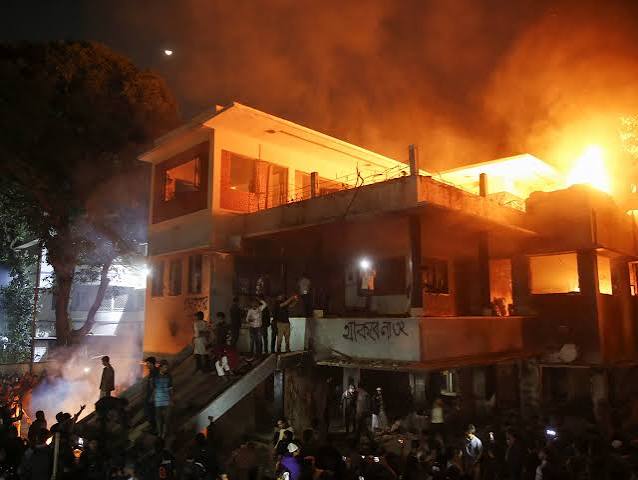
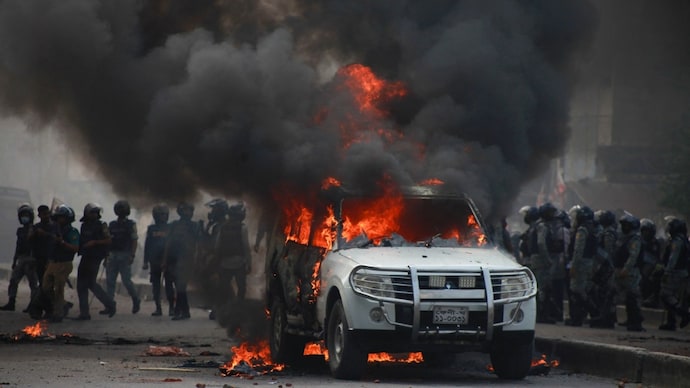
Bangladesh is facing its most serious wave of partisan violence since February’s general election. Between Friday afternoon and midnight on November 20, attackers set fire to homes belonging to leaders and supporters of the banned Awami League in Bendar Char village in the Kalia sub-district of Narail, in the country’s southwest. The Press Trust of India and several South Asian outlets reported that nearly 30 houses were torched, although local officials have offered widely different figures. The arson followed the killing of local activists of the governing Bangladesh Nationalist Party (BNP) two days earlier, and it has been accompanied by vandalism, clashes and bus burnings in other districts.
The unrest is unfolding against a highly charged backdrop. Sheikh Hasina, the former prime minister who fled to India in August 2024 and has since been sentenced to death in absentia, has repeatedly said she will return to Bangladesh in December. Her party, which remains banned, has staged protest programmes, and the government has deployed paramilitary border guards across seven districts. The question now is whether the authorities can contain a cycle of retaliation that risks reopening the wounds of 2024.
Background: From Uprising to Exile
Hasina governed Bangladesh for 15 consecutive years until a student-led uprising in July and August 2024 forced her from office. She fled to India on August 5, 2024, and an interim government led by Nobel laureate Muhammad Yunus took over. A United Nations assessment estimated that about 1,400 people were killed during the crackdown on the protests.
On November 17, 2025, Bangladesh’s International Crimes Tribunal sentenced Hasina to death in absentia, alongside former home minister Asaduzzaman Khan Kamal, for crimes against humanity linked to that crackdown. Hasina denies the charges and calls the proceedings politically motivated. According to The Week, she and other Awami League leaders face nearly 600 criminal cases. In May 2025 the interim government banned the Awami League’s activities under the Anti-Terrorism Act, pending the conclusion of the tribunal’s case against the party, which meant it could not contest the next election.
That election was held on February 12, 2026. The BNP won a landslide, taking 209 of 300 contested seats with roughly half the popular vote, while Jamaat-e-Islami won 68 seats and the student-founded National Citizen Party (NCP) won 6, according to results compiled on Wikipedia’s election page. BNP leader Tarique Rahman, the son of former prime minister Khaleda Zia, became prime minister. India, which had been Hasina’s closest foreign partner, said it wanted to engage constructively with the new government, but has not handed her over despite Dhaka’s extradition requests.
Key Developments: The Narail Attacks
The immediate trigger came on Wednesday, November 18, when a BNP motorcycle procession in Kalia was attacked and two local BNP-affiliated leaders were killed. BNP figures blamed Awami League supporters. Reports differ on the toll: Dainik Jagran, the Daily Pioneer and Social News XYZ said two BNP leaders died in the procession attack, while PTI reported three BNP members killed across Narail and neighbouring Faridpur during the week.
Two days later, on Friday, crowds attacked homes in Bendar Char. Those targeted reportedly included the houses of former Awami League MP B.M. Kabirul Haque Mukti, former Kalia mayor Mushfiqur Rahman Liton and local Awami League general secretary Krishnapada Ghosh. The Daily Pioneer reported that shops at nearby Bardia Bazar were also set alight. Firefighters arrived around 8 p.m., according to the Daily Pioneer and Daily Excelsior, after trees were felled across access roads; Social News XYZ reported that the first call came in around 4 p.m.
The scale of the destruction is disputed. PTI, the Daily Excelsior and Dainik Jagran reported nearly 30 houses torched. The Daily Pioneer reported that fire service officials estimated 25 to 30 and administrators 15 to 20. A fire officer quoted by bdnews24 said more than 50 residential structures belonging to at least 20 to 25 households were gutted. The local Upazila Nirbahi Officer put the number at five or six houses, and the district police chief spoke of three or four vandalised. The Awami League, for its part, claims that more than 200 homes of its members in Narail have been attacked, looted or demolished; that figure has not been independently verified.
Narail police superintendent Mohammad Al Mamun Sikder said relatives and supporters of the slain BNP leaders had attacked the homes of Awami League members allegedly connected to the killings, that additional forces had been deployed and that the situation was under control. The Daily Pioneer reported that two suspects had been arrested over the BNP deaths. The superintendent also rejected social media claims that Hindu families had been deliberately targeted, saying old footage and AI-generated videos were circulating. Kalia’s Upazila Nirbahi Officer, Md Jinnatul Islam, said responsibility had not been established and that an investigation was under way.
The violence has not been confined to Narail. PTI reported that the homes of three former Awami League lawmakers were vandalised in Patuakhali, that police fired rubber bullets and tear gas during BNP-Awami League clashes in Bera, Pabna, on Saturday, and that a bus helper was burned to death in Pirojpur after unidentified people set buses alight. The Awami League had called a week of protests culminating in a nationwide shutdown on November 19, which PTI said was accompanied by arson, crude bomb attacks and clashes. In response, the Home Ministry deployed 95 platoons of Border Guard Bangladesh across Dhaka, Narayanganj, Gazipur, Gopalganj, Mymensingh, Faridpur and Cox’s Bazar, with drones and body cameras used for monitoring.

Hasina’s Promised Return
Hovering over all of this is Hasina’s pledge to come home. In an email to the Associated Press reported on November 5, she said she did not need “the blessing of a foreign power” to return and that her decision to come back in December had not changed. She has framed the move in stark terms, saying that if death is her destiny she would rather die in her own country. Earlier this year she told Reuters that she might be arrested or even killed on her return but still had to go.
In early November, Hasina formally applied for a new passport and national identity card, writing to the Bangladesh High Commission in New Delhi to ask that the request be processed expeditiously; her documents had been revoked by the interim government. Al Jazeera reported on November 9 that Home Minister Salahuddin Ahmed said the foreign and law ministries were reviewing whether she had any legal basis to apply. By November 10 the request had been rejected. Junior Foreign Minister Humaiun Kobir was blunt, saying Bangladesh does not give passports to terrorists who kill thousands of people and flee, and that Dhaka would pursue extradition from India instead. Prosecutor Md Aminul Islam said Hasina had no option but to face the execution of the verdict. Her aides have said she intends to surrender to a court and that a date will be announced once formalities are complete.
Reactions
The BNP has denied organising the Narail attacks. Its Kalia sub-district general secretary, S.M. Wahiduzzaman, called the allegations baseless, according to the Daily Pioneer. Senior BNP leader Ruhul Kabir Rizvi, a political adviser to the prime minister, said earlier this month that Hasina was deluding herself if she believed she could return. The Awami League has accused named BNP figures, including Rizvi and a local BNP MP, of involvement in the attacks and demanded an independent investigation; those accusations are unproven.
Analysts are sceptical that Hasina will actually set foot in Bangladesh next month. Faiz Sobhan of the Bangladesh Enterprise Institute told Al Jazeera that an actual return seems inconceivable, and former US diplomat Jon Danilowicz said there was zero chance of a December return. Her supporters insist otherwise. In the sources reviewed for this article, no Indian government statement on the Narail violence and no statements from Jamaat-e-Islami, the NCP or international rights groups on these specific attacks could be found.
What’s Next
Hasina’s announced return remains unscheduled, and without a passport or Indian cooperation, the only formal route home described in reporting is extradition to face her sentence, which she is unlikely to choose. Yet the mere prospect of her return is mobilising both her supporters and her opponents. Each Awami League protest programme brings the risk of clashes, and each killing invites retaliation, as Narail has shown.
For Tarique Rahman’s government, the test is whether it can enforce the law even-handedly when the victims are members of a banned party associated with the 2024 crackdown and the alleged perpetrators may be its own supporters. How the authorities handle the Narail investigation, the arrests over the BNP killings and the continuing border-guard deployments will shape perceptions of Bangladesh’s post-Hasina democracy at home and abroad, including in New Delhi, which must still decide what to do with the exile it is sheltering.
Note on sources: casualty figures, the number of houses destroyed and the identity of attackers vary significantly between official, party and media accounts. These discrepancies are noted above rather than resolved.
Published By | News Editor