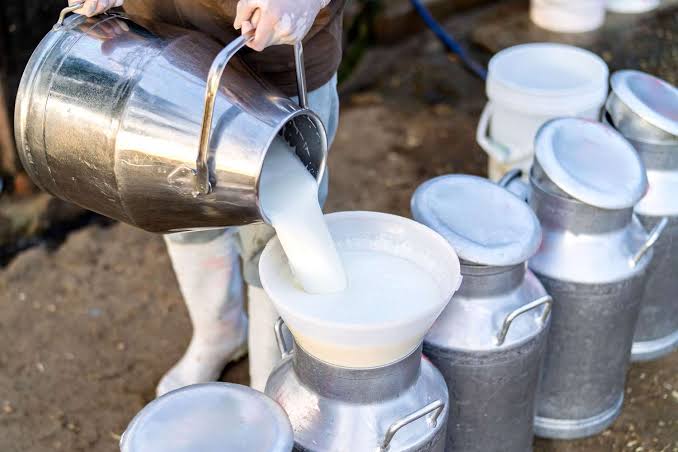
Kenya, Uganda, Tanzania and Rwanda are producing more milk than ever, yet shelves empty every dry season. The binding constraint is cold chains, collection and feed, not cows. Zimbabwe offers a Southern African counterpoint.
The paradox on the supermarket shelf
On 16 November 2026, President William Ruto told the Third Global Parliamentary Summit on Hunger and Malnutrition that Kenya had become Africa's largest milk producer. Figures published in September by the State Department for Livestock Development put annual output at 5.4 billion litres, up from 4.6 billion, which would push Kenya past Egypt. Two days later, the Kenya National Bureau of Statistics (KNBS) published its Leading Economic Indicators. They showed that milk delivered to formal processors fell from 79.1 million litres in August to 74.8 million litres in September. Cumulative formal intake for January to September was 750.2 million litres, 2% below the same period of 2025.
Both statements can be true at once, and that is the story of East African dairy in 2026. The region has built a large production base, but most of the milk never enters a cooled, measured, processed supply chain. As a result, a dry spell still shows up as empty shelves in Nairobi and Kigali. In Uganda and Tanzania it shows up as processing plants running at a fraction of their capacity. This article argues that dairy's next phase of transformation depends less on herd size than on the 'pipes': collection centres, coolers, year-round feed, transparent farm-gate pricing and predictable regional trade rules.
Kenya: record output, falling formal intake
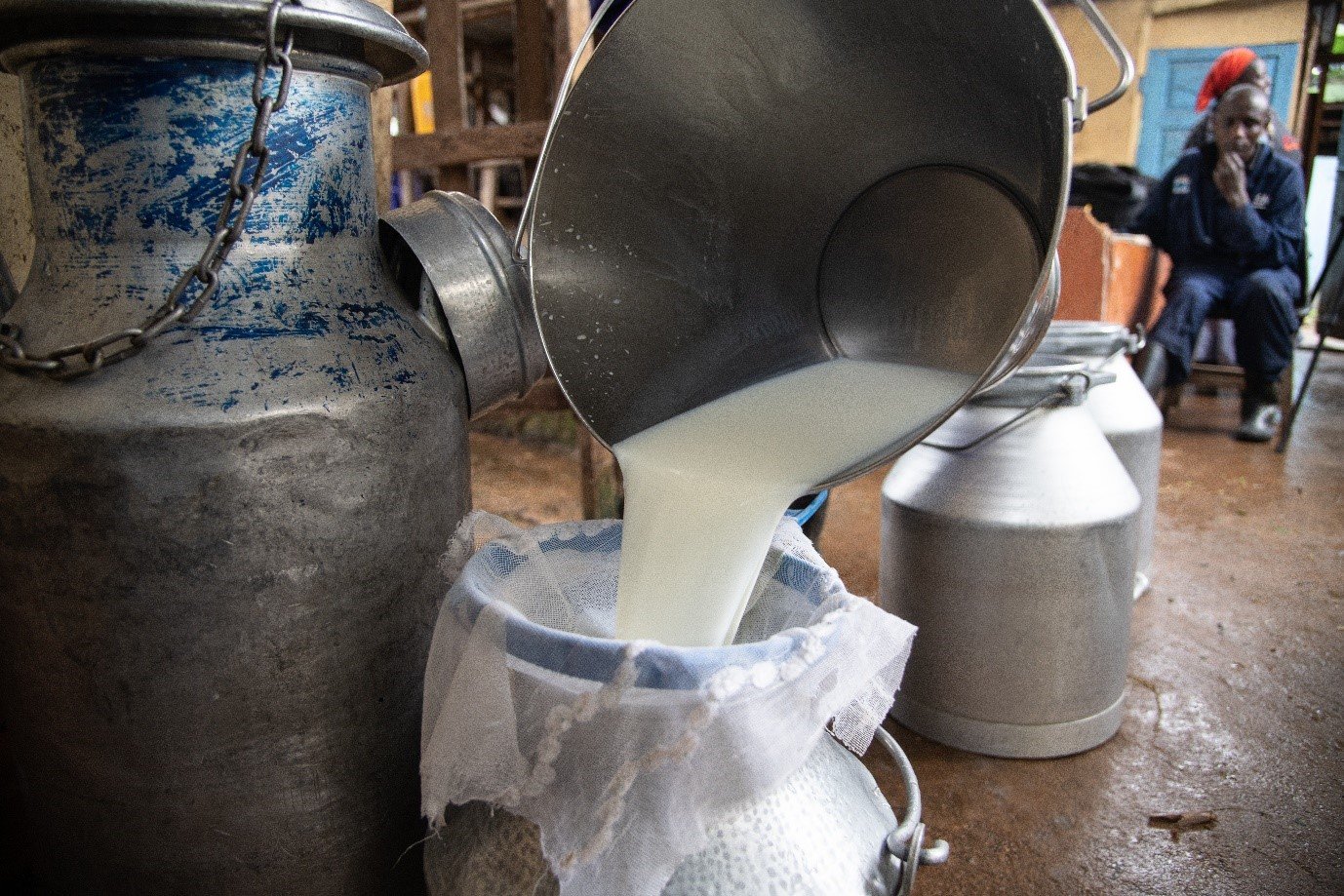
The Kenya Dairy Board (KDB) reported that formal deliveries fell 3.7%, from 84.4 million litres in June to 81.3 million in July 2026. Prolonged dry, cold weather had cut pasture and fodder. Preliminary figures showed supplies to the state-linked New Kenya Cooperative Creameries (New KCC) falling about 5% in July and August. Nation reported New KCC-branded milk missing from shelves in parts of the North Rift and Lodwar. Only an estimated 15–20% of national production passes through formal processors that the KDB monitors. The rest is sold raw through informal traders, hawkers and direct-to-consumer channels.
That informal share is the heart of the paradox. Kenyans.co.ke and KDB reports noted that when milk gets scarce, farmers sell directly to consumers for better returns than factories offer, which shrinks formal supply further. The government has answered with price policy. In January 2024 Ruto ordered New KCC to pay KSh50 per litre. The price later reached KSh60. At Kapsabet on 18 October 2026 he announced KSh65 per litre from October, plus a KSh2-per-litre quarterly bonus. He also announced a plan to make New KCC factories autonomous and farmer-owned, after what Nation reported was KSh8 billion injected into the processor over three years. As of mid-November, no source had confirmed that payments at the new rate had been made.
Kenya has also turned to its neighbour. On 5 September 2026, Trade Cabinet Secretary Lee Kinyanjui said: "Locally we are not able to meet our demand, so we are actually importing from our neighbouring countries like Uganda." The imports draw on a Mutual Recognition Agreement signed on the sidelines of the 46th COMESA Policy Organs meeting. It covers staples and shortage-prone goods, including milk, moving through Malaba. Supply-side support includes government procurement of milk coolers and subsidised sexed semen for herd improvement. The KDB expected supply to ease with the October–December rains.
Uganda: the export champion with idle factories
Uganda's dairy story is usually told as a success. In his June 2026 State of the Nation address, President Yoweri Museveni said production had grown from 200 million litres in 1986 to 5.4 billion litres. He put dairy export earnings at about US$285 million a year. Kenyan reporting describes Uganda as a net exporter that has moved from raw milk into pasteurised milk, milk powder and butter oil, supplied from Ankole, Mbarara, greater Masaka and Ntungamo. One market analysis says Kenya takes 89% of Ugandan milk exports, worth about US$45 million. The headline figures need care, though. UN Comtrade records only US$83.09 million in 2024 for the broader category of dairy, eggs, honey and edible animal products, so the official and trade-database numbers clearly measure different things.
The more revealing data comes from the factory floor. During an inspection of plants in Mbarara and Kiruhura on 31 October and 1 November 2026, Trade Minister Sanjay Tana said the region's dairy plants have a combined installed capacity of 2.5 million litres per day. In the wet season they receive only about 1 million litres a day. That falls to about 600,000 litres in dry spells and to as little as 200,000 litres in severe drought. Even Uganda's milk heartland is therefore running at roughly 8–40% utilisation depending on the weather. Tana blamed "traditional livestock management practices and the slow adoption of modern farming technologies". The ministry promised improved pasture seed, solar-powered water pumping, silage promotion and irrigation support. Shyam Kotecha of Pearl Dairy Farms (LATO) said a consistent supply of raw milk is "absolutely key to maximising factory utilisation."
Capital is still arriving. In June 2026, Ugandan press reported that Egyptian investors were eyeing Nakaseke for a Shs3 trillion mega dairy plant aimed at exports, and State House statements backed Egyptian investment in a related Ngoma dairy project. Without year-round milk, more steel and stainless tanks risk adding idle capacity rather than exports.
Tanzania: production up, processing stuck
Tanzania shows the same mismatch even more sharply. Officials give different production figures. The Livestock and Fisheries Minister said output reached 4.2 billion litres in 2025/26, up from 3 billion in 2019/20. Tanzania Dairy Board (TDB) Registrar Prof. George Msalya gave 4.01 billion litres in 2026, up from 3.9 billion in 2025. On either figure, the processing gap is stark. The country's 187 processing plants have combined installed capacity above 1 million litres a day but process only about 287,000 litres. Only 101.48 million litres had been processed by April 2026, roughly 2–3% of national output.
Import substitution is happening, but slowly. Import permits fell from 630, covering 11.55 million litres worth TSh22.96 billion in 2024/25, to 609 permits covering 10.09 million litres worth TSh21.62 billion in 2025/26. The TDB's 2025–2035 roadmap is costed at US$200.72 million (about TSh520 billion). It targets 17,200 improved dairy cattle, 150 new milk collection centres and output of 5 billion litres a year by 2035. Per-capita consumption was 70.5 litres in 2025/26, still well below the international benchmarks officials cite. The 150 collection centres may matter more than the extra cattle, because cooling and collection are the main reasons milk stays out of the formal system.
Rwanda: the price signal problem
Rwanda's 2026 shortage was partly about rainfall and partly about price. A September New Times report described Kigali milk shops left almost empty in the dry season, with one shop holding at about Rwf900 per litre through August. Processor Inyange priced pasteurised whole milk at Rwf800 per litre at its milk zones and said distributor prices had not changed since March 2026. Farmers were the squeezed link. The regulated farm-gate price had stayed at about Rwf400 per litre for roughly two years, while farmers said they needed at least Rwf600 to cover feed and other costs. The government responded by announcing it would stop setting the farm-gate price and let farmers, buyers and processors negotiate, staying on as regulator. Talks were meant to conclude by the end of August 2026, but no final negotiated price had been published by the time of writing.
The Ministry of Agriculture and Animal Resources (MINAGRI) aims to raise daily production from about 2.9 million litres to 6.8 million litres by 2029 through better genetics and nutrition. The 2026 episode is a reminder that genetics alone will not deliver that target if the price does not cover the cost of feeding high-yield cows through the dry season.

A Southern African counterpoint: Zimbabwe's formal-sector rebuild
Zimbabwe works at a far smaller scale, but its industry is overwhelmingly formal and measured, which makes it a useful contrast. Commercial milk output rose 7% to 40 million litres in January–April 2026, from 38 million a year earlier. Monthly output ran at 10.6, 9.4, 10.2 and 10.1 million litres. In 2025, commercial production was about 122 million litres, and household production brought the national total to about 155 million. The 2026 target is 134 million litres commercial, and the longer-term goal is more than 200 million litres by 2030. National demand is estimated at about 130–131 million litres, so self-sufficiency is within reach on paper.
The constraint is processing rather than milk: dairy imports surged 72% to US$8.7 million in the first four months of 2026, which analysts linked to a processing deficit. One trade publication reported nine-month output of 94.98 million litres (+7%). Only a single source carries that figure, so it should be treated as provisional. The Zimbabwean lesson for East Africa is that formal measurement and contracted supply make planning possible, but processing capacity must keep pace with on-farm gains.
The global backdrop: cheaper imported dairy
International prices are moving against local processors that hope to substitute imports. The FAO Dairy Price Index averaged 117.8 points in October 2026, 1.1% below September and 16.9% below October 2025. Butter and cheese prices fell on ample supply, while milk powder prices rose. For East African processors with high fixed costs and low utilisation, cheaper imported butter and cheese make value-added lines harder to justify. Firmer powder prices, on the other hand, improve the case for regional drying capacity. That capacity can turn surplus wet-season milk into a storable product and smooth the dry-season gap.
What would close the aggregation gap
Across the four East African cases, the pattern is consistent. Production statistics are rising, but formal intake and processing utilisation are low and swing with the weather. The policy priorities follow from that:
- Cold chain before capacity: fund village-level collection and cooling centres, as Kenya's cooler procurement and Tanzania's 150-centre plan propose, before licensing more large plants. Plants in Ankole and Tanzania are already idle much of the year.
- Dry-season feed systems: silage, fodder banks and small-scale irrigation, as Uganda's trade ministry now proposes, decide whether yields hold up between rains. This links dairy policy directly to water and climate-adaptation budgets.
- Credible price discovery: Kenya's KSh65 directive and Rwanda's move to negotiated prices pull in opposite directions. Either way, farmers need prices that are published, paid on time and linked to quality. Otherwise the informal market will keep outbidding factories in scarce months.
- Rules-based regional trade: Uganda's surplus and Kenya's deficit are complementary. Predictable application of COMESA and EAC arrangements at Malaba would serve both better than ad hoc import permissions announced during shortages.
- Better data: the gap between Uganda's US$285 million claim and Comtrade's US$83 million, and between Tanzania's 4.01 and 4.2 billion litre estimates, shows that dairy policy is still made on contested numbers. Monthly intake data such as KNBS and KDB now publish should become standard across the EAC.
Conclusion
East Africa no longer has a milk shortage in the aggregate. Kenya and Uganda each claim around 5.4 billion litres a year, and Tanzania more than 4 billion. What the region has is a shortage of milk that is cooled, collected, priced and processed reliably enough to supply a supermarket shelf or an export contract all year. Plants in Mbarara receive 200,000 litres on a bad day against 2.5 million of capacity. Tanzanian factories process less than 30% of what they could. Kenyan processors took in 2% less milk in the first nine months of 2026 even as national output reportedly hit a record. Until investment shifts from headline output to the infrastructure between cow and carton, every dry season will reopen the same crisis.
Published By | Business News Editor