MAPUTO, Mozambique
Venâncio Mondlane, the opposition politician who never accepted his defeat in Mozambique's 2024 presidential election and who led five months of street protests against it, went on trial Tuesday before the Supreme Court in Maputo on five criminal charges, including instigation of and incitement to terrorism. The case is the most consequential political trial in Mozambique in years. It will test whether the country's courts can handle a challenge to a ruling party that has held power for more than half a century without deepening the crisis that followed the vote, in which civil society groups say more than 400 people were killed.
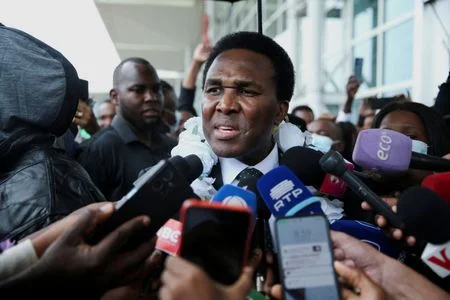
Mondlane arrived at the court at about 10 a.m. local time, greeted by several dozen supporters, according to the Portuguese news agency Lusa. "As you can see, I arrive calm, confident in the work of my legal team," he told reporters, adding that he had come with "great peace of mind." Outside, police restricted access to the building and closed several nearby streets. Lusa described a "subdued normality" in central Maputo, with little movement and reduced transport services into the city center.
How Mozambique got here
The case traces back to the general election of Oct. 9, 2024. The Constitutional Council confirmed Daniel Chapo, the candidate of Frelimo, as the winner. Frelimo has governed Mozambique since independence from Portugal in 1975. Mondlane, who ran with the backing of the Podemos party, rejected the result as fraudulent and has never recognized it. Chapo was sworn in in January 2025.
Mondlane used live social media broadcasts to call his supporters onto the streets. What followed was the worst unrest in the country in decades. Protests, strikes and shutdowns ran from October 2024 to March 2025. The Decide electoral platform, a Mozambican monitoring group, recorded about 7,200 people detained over those five months and 411 deaths in clashes with police, Lusa reported. Hundreds of businesses and public buildings were looted or vandalized.
Mondlane later founded his own party, the National Alliance for a Free and Autonomous Mozambique, known as Anamola. Because he finished second in the presidential vote, he took a seat on the Council of State, the president's advisory body, in September 2025. Membership gives him constitutional immunity, which is why the case is being heard by the Supreme Court rather than a lower court.
That immunity was suspended by the Council of State on June 10 in Deliberation No. 1/CE/PR/2026, Portuguese broadcaster RTP reported. The decision became public only in late August, after Mondlane announced on Aug. 25 that he had been notified of the trial. He called the deliberation "null," arguing that the council "has no legal competence to suspend the immunity of its members."

The charges and the prosecution's case
Prosecutors have charged Mondlane, as both direct and moral perpetrator, with public glorification of crime, incitement to collective disobedience, public instigation to commit a crime, instigation of terrorism and incitement to terrorism. Reports of the indictment say a conviction could bring more than 20 years in prison.
According to Lusa, the prosecution's evidence includes videos, telephone intercepts and bank records. Prosecutors cite Mondlane's online calls for protests, strikes, shutdowns and mobilization, and argue that he used social media to spread what he called "a revolution." They allege he ordered followers to block roads and pressured citizens to stay home in order to spread fear and intimidation, and that he is responsible for plunging the country into "chaos."
Mondlane denies all the charges. Over the past year he has insisted his campaign was a public service. "On the contrary, I rendered a great service to this nation," he has said. He told Deutsche Welle that he never called for violence and that the protests were meant to press for investigations into killings of members of his movement. On Tuesday he framed the trial as a milestone in its own right: "It is the first time in 30 years of democracy" that the question of electoral fraud has been pursued this far, he said.
Who is in the courtroom
A panel of five Supreme Court judges is hearing the case in the court's criminal section, with daily sessions from 10 a.m. to 3:30 p.m. Two deputy attorneys-general represent the prosecution. One lawyer represents an assisting party, and two lawyers represent Mondlane. The court has listed 12 prosecution witnesses, 20 defense witnesses, four witnesses for the assisting party, and two experts from the mobile operators Vodacom and Tmcel. The phone-company experts suggest that call and data records will feature in the evidence.
Albino Forquilha, a Podemos leader and Mondlane's former ally, is expected to testify. His testimony would put on public display the split between Mondlane and the party that carried his 2024 candidacy.

A public trial with limits on the public
The rules on coverage became a political argument before a word of testimony was heard. On Sept. 21, the court's criminal section refused a defense request for live audiovisual broadcast and barred journalists from recording sound and images. On Oct. 12, it rejected Mondlane's challenge and said those rulings could not be appealed. The court said broadcasting could endanger participants, influence witnesses and disrupt the proceedings. At a Nov. 13 press conference, court spokesperson Pedro Nhatitima said live coverage could expose witnesses to threats after they testify.
The court is recording the hearings itself, with audio and video transcribed into written records. Nhatitima said it is the first trial in Mozambique to use such a system, which was installed with European Union support. "It is the first trial, and I think we should make a point of recording that," he said.
Physical access is tight. The courtroom seats 45 people. According to the court's seating plan, 10 seats go to named media organizations, including the state broadcasters TVM and Rádio Moçambique. Four rotating seats go to other national outlets, one to foreign correspondents, and 10 to members of the public, all subject to registration. Fifteen seats go to the defendant's side, and others are reserved for the government information office, the bar association, the Centre for Public Integrity and the Centre for Democracy and Human Rights. Nhatitima said "our courtroom does not have the capacity to accommodate a large number of people." Mondlane criticized the arrangement on Tuesday, urging the press to use legal means to defend press freedom and the public's right to information.
The legal fight over 'terrorism'
The terrorism counts are the center of the case and its most contested element. Baltazar Fael, a Mozambican lawyer, told DW that a terrorism charge requires proof of a plausible link between Mondlane's words and specific acts. He also said the case's timing and speed could suggest political pressure. Chief Justice Adelino Muchanga has said the court will decide on the facts.
Anamola has called for an "independent and transparent process." The party's acting leader, James Njiji, said in October that Mondlane was "being tried for crimes he did not commit." He added: "What is truly strange is how you can accuse a Mozambican individual of inciting terrorism."
The prosecution's framing also matters beyond this one defendant. Mozambique has spent years fighting an Islamist insurgency in Cabo Delgado province, where "terrorism" refers to armed attacks on civilians. Applying the same legal category to livestreamed calls for street protests sets a precedent that opposition figures, journalists and rights groups will study closely, whatever the verdict.
Signals ahead of the trial
The state sent mixed signals in the weeks before the opening. In October, the Supreme Court ordered banks to unfreeze Mondlane's accounts, which a Maputo court had frozen in November 2024. The court said the conditions for keeping the freeze no longer existed. Njiji welcomed the move but said the freeze, which had lasted nearly two years, had been "no easy matter."
Mozambique's police general command urged calm before Tuesday's session and promised a "preventive and proportionate" approach. It is a pointed phrase, given that security forces were accused of using excessive force during the 2024–25 protests. Outside the court, one supporter wore a T-shirt reading "To judge Venâncio is to judge the people."

What is at stake
For Chapo's government, the trial carries risk whatever the outcome. A conviction on the terrorism counts would remove the opposition's most effective mobilizer from politics for years. It could also revive the protests the authorities spent five months trying to contain, and turn Mondlane into a political prisoner in the eyes of his supporters. An acquittal, or a conviction only on lesser charges, would weaken the official account that the unrest was a criminal conspiracy rather than a protest against a disputed election.
For Mondlane, the courtroom is also a platform. He has repeatedly cast the case as a trial of the 2024 election itself. Tuesday's remarks about pursuing the "fraud issue" further than ever before signal that the defense will try to put the conduct of the vote before the judges. How far the court lets him do so will be one of the first indicators of how the case will run.
For Mozambique's judiciary, the trial is a credibility test. The court has promised it will be faster than the "hidden debts" case, which began in August 2021 and ended with a verdict in December 2022. It has also given no estimate of how long the trial will last. "The only thing I can assure you is that we will achieve a significant reduction in the time taken," Nhatitima said.
What to watch
The opening sessions are expected to deal with procedural questions before evidence is heard. Key early markers include whether the defense renews its challenge to the suspension of Mondlane's immunity, how the court handles the 36 listed witnesses and two telecom experts, and whether Forquilha's testimony exposes the opposition's divisions. Outside the courtroom, observers will watch whether Anamola keeps its supporters off the streets. Mozambique's foreign partners, including the European Union, which paid for the courtroom's recording equipment, are expected to follow how the court handles the case.
The verdict, whenever it comes, will shape whether Mozambique's post-election crisis ends in a courtroom or returns to the streets.
Published By | News Editor