Economic & Social Transformation
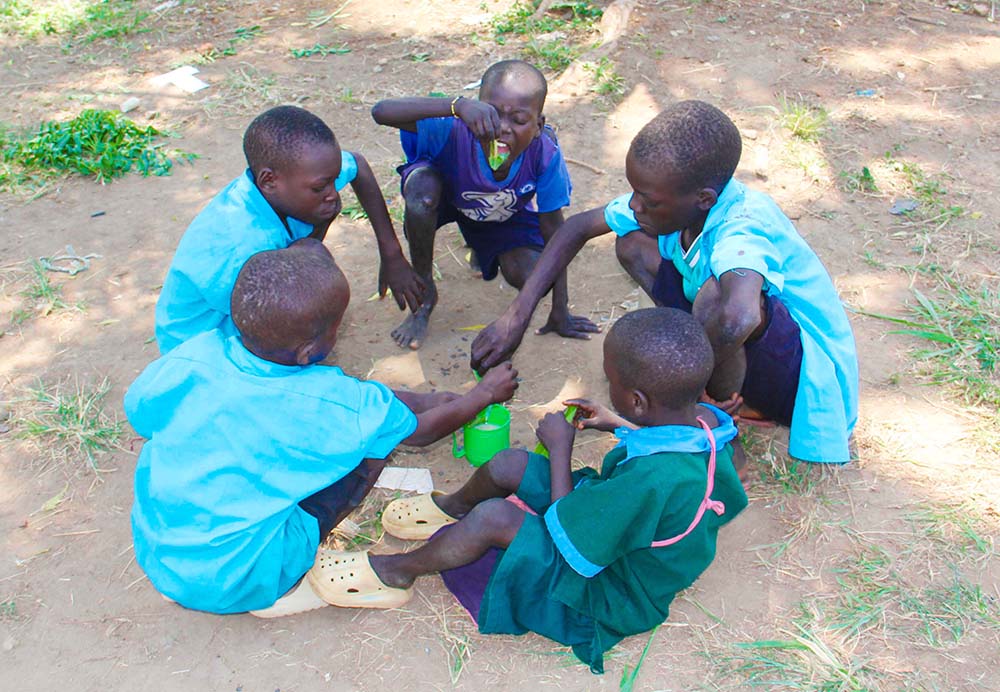
Across Africa, the most widely delivered social programme is not a cash transfer or a health insurance scheme. It is a plate of food served at school. According to figures from the School Meals Coalition, which draws on the World Food Programme's State of School Feeding Worldwide data, the number of African children receiving school meals rose by more than 30 percent in two years, from about 66 million to 87 million, with most of the increase paid for from national budgets rather than donor grants. Kenya's appointment in October 2026 as the fourth co-chair of the 113-country coalition, alongside Brazil, Finland and France, put an African government at the head of the global agenda for the first time.
That expansion is a real development story. School meals sit at the junction of education, nutrition, agriculture and social protection: they keep children in classrooms, improve concentration, and, when food is bought locally, create a predictable market for smallholder farmers. But 2026 is also revealing the hard arithmetic underneath the headline numbers. Per-meal allocations are thin, budgets lag behind political promises, parental contributions are patchy, and the withdrawal of some donor funding has exposed how fragile the transition to domestic ownership remains. This article examines that tension through seven national experiences.
Ghana: scale and a higher grant, but at GH¢2 a meal
Ghana runs one of the continent's most established programmes. The government says more than 4.5 million pupils now receive a hot meal each school day, and the 2026 budget allocated GH¢1.982 billion to the Ghana School Feeding Programme. The per-meal grant has risen from GH¢1.50 in 2024 to GH¢2, and officials report that caterer arrears from 2024 were cleared while monitoring was expanded from 4,419 schools in 2025 to 8,270 this year.
These are meaningful improvements, and clearing arrears matters because unpaid caterers are the most common reason meals stop. Yet GH¢2 buys little in a market where food inflation has repeatedly outrun budget assumptions, and caterers routinely complain that portion sizes and protein content suffer. Ghana also illustrates the donor cliff: a WFP-supported school meals project in northern Ghana, backed by US funding, reached the end of its funding cycle in June 2026, and WFP used a mission to the region to plan a handover. The lesson is that national coverage figures can mask regional pockets where external money had been filling gaps in the poorest districts.
Nigeria: the largest ambition, the widest gap
Nigeria's National Home-Grown School Feeding Programme, relaunched in 2025 under the 'Renewed Hope' banner, carries the continent's biggest target. In September 2025 the federal government announced plans to scale coverage to 50 million primary pupils by 2026, later extending to out-of-school children. The programme manager at the National Social Investment Programme Agency (NSIPA) suggested a realistic cost of ₦500 to ₦1,000 per child per meal.
The arithmetic is daunting. The 2025 budget set aside ₦100 billion for the programme, while one commentary estimated that 50 million children fed at ₦500 would cost about ₦25 billion per school day. Over a 190-day school year, that implies more than ₦4.7 trillion, nearly fifty times the 2025 allocation. A 2024 working paper from the London School of Hygiene & Tropical Medicine still listed the federal costing at ₦100 per child per day. No confirmed 2026 appropriation line matching the 50-million target was found during research for this article, and the programme's history of procurement and payment irregularities makes independent verification of coverage essential. Nigeria's case shows that a target set far ahead of funding can undermine credibility rather than build it.
Kenya: global leadership, domestic shortfall
Kenya's position is paradoxical. President William Ruto said on 16 November 2026 that the country aims to reach 10 million learners by 2030 and is linking school meals to local farm production, and Kenya has committed to universal coverage by the same year. Yet Treasury Cabinet Secretary John Mbadi proposed KSh3.0 billion for the national School Feeding Programme in the FY2026/27 budget, roughly flat on 2025/26 and below the KSh3.6 billion of 2024/25.
Officials and parliamentary reports put the annual need at about KSh7.8 billion, implying a shortfall of roughly KSh4.8 billion, and the Daily Nation reported that more than 46,000 vulnerable learners went without meals after funding fell short. The National Council for Nomadic Education told MPs in April 2026 that it needed about KSh8.3 billion a year but had been allocated only KSh1.7 billion. A People Daily analysis estimated that feeding 10 million learners for 200 days would require at least KSh40 billion annually. City-level models such as Nairobi's 'Dishi na County' central-kitchen programme show what is possible, but the national budget line has not yet moved in step with the 2030 goal.
Rwanda: co-financing with parents
Rwanda has taken the most explicit cost-sharing route. The comprehensive school feeding programme covers about 4.5 million learners in some 4,950 schools, and the New Times reported a projected rise in the government contribution from Rwf94 billion to Rwf135 billion for 2025/26, about a 40 percent increase; a November 2026 report cites a total of Rwf137 billion. Parents are expected to contribute per term, and the #DusangireLunch campaign with Umwalimu SACCO and MTN Mobile Money has mobilised additional community money.
Compliance is the weak point. Nationally, parents paid 79.3 percent of their expected contribution in Term III of 2025/26, while Kigali managed only 64 percent, leaving a reported shortfall of Rwf626 million in the capital alone. Rwanda's model is fiscally disciplined, but it shifts risk to households precisely when food prices are high, and the poorest families are the least able to pay.
Ethiopia and Benin: urban models and handovers
In Ethiopia, Addis Ababa's city-funded programme feeds about 840,000 students two meals a day from pre-primary through secondary school. An Ethiopian Public Health Institute policy brief found allocations of about 32 birr per child per day in 2024–25 barely meet the national cost benchmark, and a WFP/TANGO study noted that, although government spending rose to about US$83.6 million in 2023, there is no dedicated national budget line. UNICEF launched a central-kitchen urban meal model in Dire Dawa in July 2026, and WFP and USDA have scheduled their own school feeding handover in Ethiopia for 2030.
Benin offers a completed handover. WFP transferred its national school canteen programme (PNASI) to the new National Agency for Food and Nutrition (ANAN) in September 2024, after reaching 5,709 public primary schools and more than 1.4 million children since 2017. WFP reporting indicates the consolidation was still under way through 2025, with WFP continuing to manage around 400 schools. Benin's experience shows that institutional transfer can be done, but it takes years and requires a dedicated agency with its own budget.

The donor shock and the case for domestic ownership
The urgency of domestic financing sharpened in May 2025, when the US Department of Agriculture terminated 11 of 13 Catholic Relief Services projects under the McGovern-Dole school feeding programme, affecting about 780,000 children in 11 countries. In Lesotho alone, roughly 36,000 children lost meals provided under the programme, though the government, which budgets about M240 million a year for school feeding, said its own scheme would continue. A fiscal 2026 US budget plan proposed eliminating McGovern-Dole entirely; whether Congress ultimately funded it could not be confirmed for this article.
For African finance ministries, the message is that external school-meal funding can disappear within a single budget cycle. The countries most insulated are those, like Ghana, Rwanda and Benin, that already run meals through national agencies with their own budget lines.
What would make school meals sustainable
Four policy levers stand out. First, realistic unit costs: programmes should publish per-meal costs indexed to food inflation instead of fixed nominal grants that erode within a year. Second, dedicated financing: the School Meals Coalition has modelled health taxes on tobacco, alcohol and sugary drinks as a funding source for Burundi, Kenya and Uganda, and some governments are exploring debt-for-school-feeding swaps. Third, home-grown procurement with prompt payment, so that farmers and caterers can plan; arrears are the silent killer of school meal systems. Fourth, transparent coverage data, with independent verification of the number of children actually fed and the number of days meals were served.
School meals are among the cheapest ways to build human capital and stabilise rural demand at the same time. Africa has already shown it can scale them, adding some 20 million children in two years. The next test is less glamorous: putting enough money behind each plate, paying on time, and keeping the meals coming when the headlines move on.
Published By | Business News Editor