Written By | International News Agencies
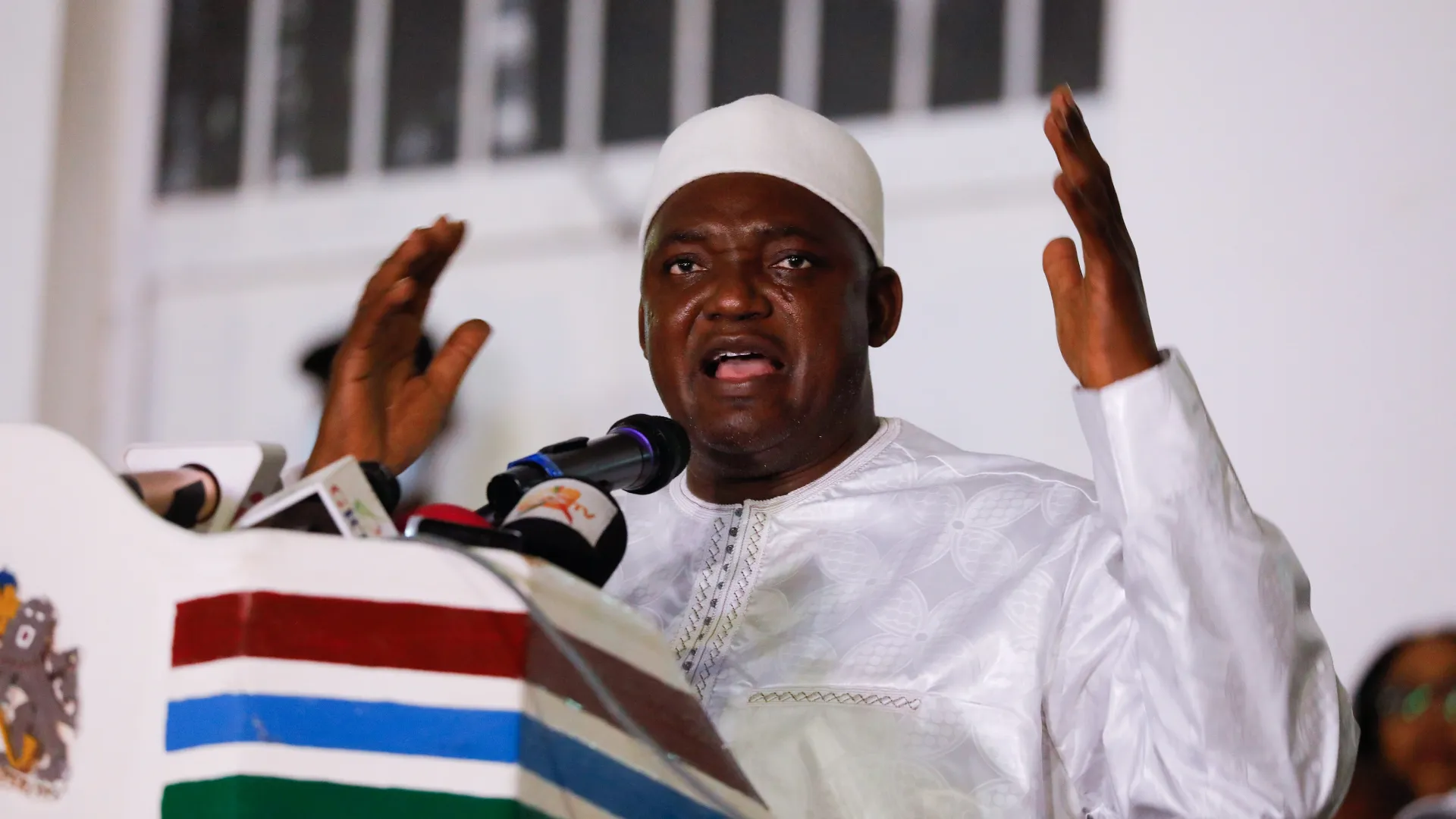
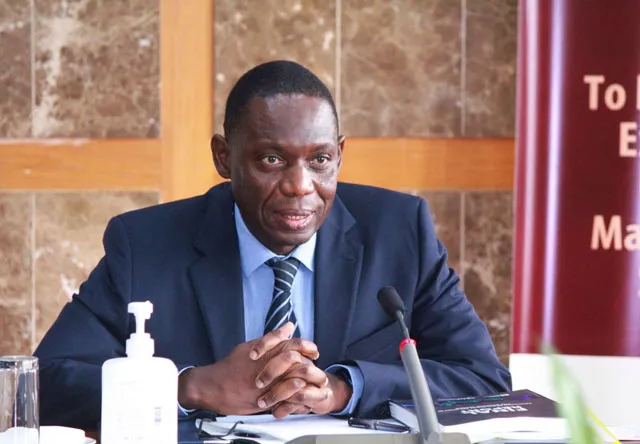
Talib Ahmed Bensouda, the flag bearer of the opposition grouping Coalition 2026
World Politics
President Adama Barrow began the final stretch of his bid for a third term this week with a double-digit lead in a new opinion poll, but the same survey found that most Gambians believe his government has failed to deliver on its promises and that the economy is in poor shape. With 17 days left before the Dec. 5 election, the contest may turn less on Barrow's popularity than on whether his opponents can avoid dividing the vote against him.
The race matters beyond the borders of mainland Africa's smallest country. The Gambia became a symbol of democratic renewal when voters ended Yahya Jammeh's 22-year rule in the December 2016 election, and regional forces intervened to ensure that he left power. Nearly a decade later, the man who carried that promise is seeking to extend his tenure under a constitution that still has no presidential term limit, the very reform his government was once expected to deliver.
A Campaign Opens With a Peace Pledge
The official campaign began Monday and runs for 18 days, until Dec. 3. It opened at the Sir Dawda Kairaba Jawara International Conference Centre, where candidates signed an 11-article peace pact organized by the Independent Electoral Commission and International IDEA, a democracy-support organization. The accord commits signatories to reject violence, hate speech, tribal bigotry and intimidation, to avoid misusing state resources and to pursue disputes through the commission and the courts.
"We will respect this spirit of peace pact that brought us together, and we encourage all candidates to do the same," Barrow said, according to Kerr Fatou, a Gambian news outlet.
His principal rival sounded a more skeptical note. Ousainou Darboe, the 2021 runner-up and leader of the United Democratic Party, said he was disappointed that such an accord was considered necessary and warned that it must reflect genuine commitment. "Why can't we see ourselves as competitors, not rivals?" he asked, The Voice newspaper reported.
Talib Ahmed Bensouda, the flag bearer of the opposition grouping Coalition 2026, said, "Democracy must not become a threat to peace it is meant to protect." Isatou Touray, an independent and the only woman in the race, voiced concern about "growing tribal sentiments."
The commission cleared nine candidates by the close of nominations on Nov. 14. It issued 27 nomination forms; 11 aspirants withdrew before filing, 16 submitted papers and seven were rejected. Reasons made public by the commission included a false school certificate and dual citizenship in the case of Bakusa Dukureh of the Gambia Labour Party and a date-of-birth discrepancy in the case of Kebba Bojang of the National Democratic Party.
The field then began to shrink. Ansu Sanneh of the National Builders Party told Reuters on Monday that he had withdrawn and joined Bensouda's UNITE party, leaving eight active contenders. Eight candidates signed the pact. The others are Modou Lamin Sima, Ebrima Tabora Manneh, Lamin J. Darboe and Almameh Gibba.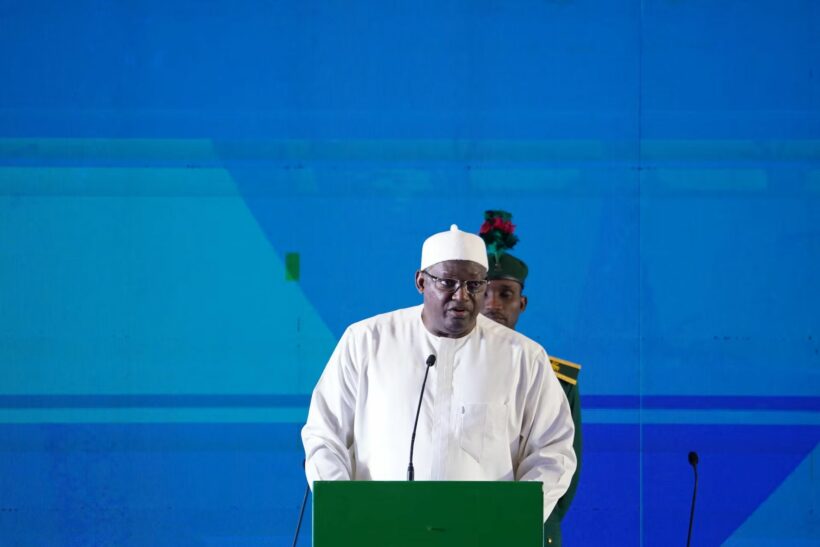
What the New Poll Shows
The Centre for Policy, Research and Strategic Studies, known as CePRass, released its pre-election survey on Monday. Conducted face to face from Oct. 17 to Nov. 1 among 1,180 holders of valid voter cards, with a margin of error of about 3 percentage points, it put Barrow at 37.9%, Darboe at 24.2% and Bensouda at 11.3%. Another 11.6% were undecided.
Barrow's 13.7-point lead over Darboe is substantial, and 48% of respondents expect him to win. But the poll's underlying numbers are less comfortable for an incumbent. About 80% rated the national economy badly, and 52% said the government was ineffective or very ineffective at delivering on its promises, against 30% who rated it positively. The cost of living was the top concern, named by 43%. Electricity was a major factor for 66%, and 52% said they experience outages daily or several times a week.
The survey also pointed to fragile confidence in the process itself. Only 49% expressed a lot or some confidence in the electoral commission, 67% considered vote buying common or very common, and 86% were concerned about election-related violence and intimidation.
Polls in The Gambia deserve caution. CePRass's own November 2021 survey put Barrow at 41%, about 12 points below the 53.23% he went on to win, The Rio Times noted. An August survey by the civic group Gambia Participates had shown a closer race, with Barrow at 32%, Darboe at 25%, Bensouda at 19% and 17% undecided, although the two polls are not directly comparable. The Point, reporting the results, stressed that they should not be read as a forecast.
The Arithmetic of a Divided Opposition
The Gambia's electoral rules make opposition fragmentation especially costly. The president is elected in a single round, and the candidate with the most votes wins outright; a second ballot is held only in the event of a tie for first place. There is no runoff in which opponents of an incumbent can consolidate.
On the CePRass numbers, Darboe and Bensouda together reach 35.5%, just 2.4 points behind Barrow and within the poll's margin of error. That sum is only an illustration, since supporters of one challenger would not automatically move to the other. It nonetheless explains why the opposition's failure to unite may be the campaign's defining feature.
Efforts at unity have produced rivalry instead. Coalition 2026 named Bensouda, then the mayor of Kanifing, as its flag bearer in August, after rival contenders withdrew and another party left the talks amid disputes over fairness and leadership arrangements. Darboe, 2021's distant second with 27.72% of the vote, is running separately. Sanneh's defection gives Bensouda a modest boost, but it does not alter the basic split between Darboe's long-established party and a younger movement seeking to overtake it.
The Unfinished Constitution
The term-limit question hangs over the race. The Gambia's current constitution sets five-year terms without capping how many a president may serve. A draft that would have imposed a two-term limit failed in the National Assembly in 2020. After his 2021 re-election, Barrow pledged a new constitution with term limits, but none has been enacted.
Barrow blames the opposition for that failure and has vowed to revisit the issue if he is re-elected and his National People's Party wins enough seats in legislative elections scheduled for next year, Reuters reported. Darboe, who served as Barrow's vice president before the two fell out, has accused him of obstructing reform to prolong his hold on power, a charge Barrow's supporters reject.
Blackouts and Bread-and-Butter Anger
The sharpest warning to the government came in September, when prolonged power cuts during the hottest months brought crowds into the streets of Banjul and nearby cities. Protesters burned tires and erected barricades, some demanding Barrow's resignation, and police fired tear gas. Blackouts lasted up to 48 hours in some areas, Al Jazeera reported.
Barrow called the outages a "national security issue" and promised a 24-megawatt generating unit by the end of October, along with a 50-megawatt solar plant. Inspector General of Police Seedy Mukhtar Touray responded to the unrest with a sweeping restriction. "From this very moment, nobody is allowed to protest without an approved permit," he said, according to Reuters. Eleven people were arrested in connection with vandalism.
The episode gave the opposition a ready-made argument about competence, the quality voters ranked highest in the CePRass survey, at 39%. Bensouda has criticized the government's dependence on energy imports and linked youth frustration to a lack of opportunity and irregular migration to Europe.
Analysis: Incumbency Against Discontent
Barrow's position reflects a familiar paradox in African politics: an incumbent can be widely criticized and still hold the strongest position in a fragmented field. His advantages include a national party machine, the visibility of office and an opposition that cannot agree on a single challenger. Respondents in the CePRass poll also rated the balance of state-owned media coverage negatively by 67% to 20%, a concern his rivals are likely to press.
Yet a plurality built on 38% support is not a secure foundation, particularly with 11.6% of respondents undecided. Turnout will be critical. In 2021, 89.34% of 962,157 registered voters cast ballots. This year's register stands at 1,146,474, and the 28% of respondents who named TikTok as a source of political information point to an electorate that party machines may find harder to reach.
The credibility of the outcome will depend on the process. The Economic Community of West African States is deploying an 80-member observation mission, with 20 long-term and 60 short-term observers, led by Ulisses Correia e Silva, a former prime minister of Cabo Verde. Gambians will again vote with marbles dropped into candidates' drums, a distinctive system that makes counting simple and fast. In 2021, the winner was declared the day after the vote.
What to Watch
The next two weeks will reveal whether further withdrawals consolidate the opposition, whether rejected aspirants challenge the commission's decisions, and whether the peace pact holds as rallies move across the country. Reliable electricity will be a daily test of Barrow's September promises. If Barrow wins, attention will shift quickly to next year's legislative elections and to whether he keeps his pledge to return to term limits, the unfinished business of The Gambia's democratic transition.