World Politics
The deaths of two Rheinmetall Italia employees maintaining Gulf air defences are a painful new cost of the Iran war for Rome and pull Europe deeper into a conflict it has tried to keep at arm's length.
Introduction
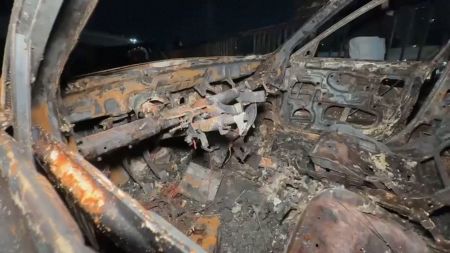
Two Italian defence technicians were killed on Thursday, November 26, 2026, when drones struck what Kuwait's Ministry of Defence described only as a "vital site" inside the emirate. The men were employees of Rheinmetall Italia, the Italian arm of the German arms maker, and, according to Italian reports, were working on air-defence equipment that Italy has helped deploy to protect Gulf states since the early weeks of the war with Iran. Kuwait said security forces had detected "several hostile drones" and called the strike "unlawful Iranian aggression." Italy's foreign minister, Antonio Tajani, said the drone was Iranian-made. Iran's armed forces denied any operation in the region and described the incident as a false flag.
The attack is a grim milestone for Italy in the US-Israeli war with Iran, which began at the end of February. It came during one of the most violent weeks in the region in months, with tankers struck near the Strait of Hormuz, Houthi missiles and drones hitting Saudi energy infrastructure, and stalled diplomacy between Washington and Tehran. For Italy, which has tried to balance close ties to Washington with a cautious approach to the war, the deaths turn an abstract security commitment into a domestic political question.
What Happened
Kuwait's Ministry of Defence said its forces detected several hostile drones on Thursday and that one attack struck a site it declined to identify, describing it only as vital. It did not disclose the extent of the damage. In its first account, the ministry said four people had been wounded by falling debris: two Italian nationals, a Kuwaiti and a Pakistani. Within hours, Italian media, beginning with the news agency ANSA, reported that the two Italians had died, and Kuwait's defence ministry and Italian officials later confirmed the deaths. Accounts differ on the sequence of confirmation: Australia's ABC, relying on wire reports, said Kuwait's ministry confirmed the fatalities, while Israel's Ynet reported that ANSA was first and a source quoted by Reuters confirmed it.
Tajani gave the most detailed public description of the site. He said the technicians had been working at an air-defence surveillance station and that, following what he called a powerful explosion, both Italians had died according to information coming from Kuwait. He also referred to the injured Kuwaiti as a captain in the Kuwaiti army. The Italian daily La Repubblica, as cited by Ynet, reported that the men were operating anti-drone defence systems as part of an Italian contribution deployed since March to protect Gulf states and, indirectly, energy supplies to Italy. Italian and Gulf reporting identified the men as Rheinmetall Italia employees who maintained Skyguard radar antennas, a short-range air-defence system the company produces. Their names and ages had not been widely published at the time of writing.
The attack had immediate knock-on effects. Euronews, as cited by Ynet, reported that warnings about Kuwaiti airspace forced aircraft flying from Europe to Gulf destinations via Iraq to change course. Kuwait said its armed forces had been placed on high alert.
Attribution and Iran's Denial
Kuwait and Italy were quick to point at Tehran. Kuwait's defence ministry used the phrase "unlawful Iranian aggression," and Tajani said the drone had been made in Iran. Prime Minister Giorgia Meloni and Tajani both expressed condolences to the families. European Commission President Ursula von der Leyen, according to Gulf News, called for more pressure on Iran in response.
Tehran rejected the accusation. Iranian armed forces spokesman Abolfazl Shekarchi denied any Iranian operation in the region, and Iranian outlets framed the attack as a false-flag operation. Foreign Minister Abbas Araghchi, according to a 10 Things news summary, offered to cooperate with Italy on establishing the origin of the drone. That combination of denial and offered cooperation fits a pattern seen earlier in the war: when a drone strike on Kuwait's airport killed one person and injured dozens on June 3, the Islamic Revolutionary Guard Corps denied responsibility and blamed a malfunctioning Patriot battery, even though footage released by the Kuwait News Agency appeared to show a Shahed-136 drone. No independent investigation into Thursday's attack had been published at the time of writing, and the attribution should be read as the position of the Kuwaiti and Italian governments.
Background: Kuwait on the Front Line
Kuwait has been a target since the first days of the war. On February 28, Iranian strikes hit Kuwait's international airport and Ali Al Salem air base, and on March 1 Camp Buehring, a US Army installation, was attacked. On March 15 the Italian garrison at Ali Al Salem was struck by a drone and missiles, destroying an Italian MQ-9 Reaper drone but injuring no Italian personnel. An Indian worker was killed on March 30, and Kuwait Petroleum Corporation facilities were hit in early April. Strikes continued even after a short-lived US-Iran ceasefire around April 7 to 8, with further attacks in June and July. Running casualty tallies for the war in Kuwait vary between versions of public compilations, and no authoritative updated total was available.
Italy's role has grown alongside the conflict. In March, Meloni announced that Italy would send air-defence assistance to Gulf countries, and Defence Minister Guido Crosetto spoke of reinforcing air defences for partners in the region. Tens of thousands of Italian citizens live and work in the Gulf, and Rome's foreign ministry has run a crisis task force for them since the war began. Until Thursday, Italian officials had repeatedly been able to report that no Italians had been hurt in attacks on bases hosting Italian personnel.
The wider war has settled into a grinding pattern of naval pressure and proxy escalation. The US has maintained a naval blockade of Iran for about 130 consecutive days, according to Gulf News, and a third US aircraft carrier has entered the region. The Strait of Hormuz has been effectively closed to normal traffic by Iranian attacks on shipping. In the days before the Kuwait strike, the UK Maritime Trade Operations centre reported tankers struck by unidentified projectiles, including one about 18 nautical miles east of Khasab, while the IRGC navy claimed that tankers using an "unauthorized route" had hit mines; those claims were not independently verified. Iran's army also claimed to have downed two US drones, which Washington did not confirm.
A Week of Escalation Across the Gulf
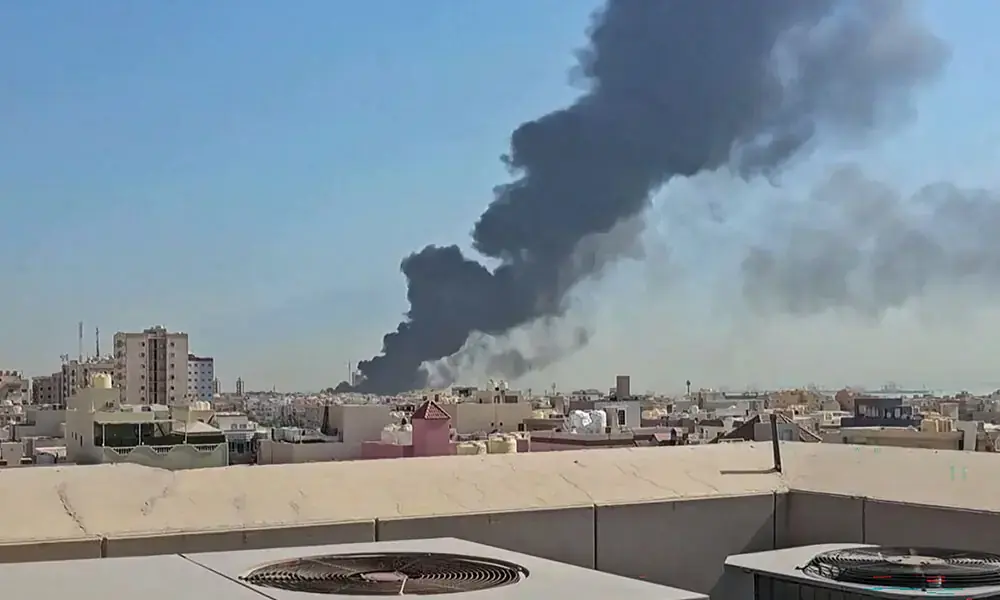
The Kuwait attack did not happen in isolation. On the same days, the Houthis, who have been at war with Saudi Arabia since the summer, claimed a strike on Ras Tanura, the kingdom's largest refinery. The Saudi-led coalition said it destroyed four drones over the site and did not acknowledge a hit, though satellite imagery showed a smoke plume and a shipping source said loadings were suspended. A separate attack on the Jazan refinery killed a Nepali worker and caused a fire and temporary shutdown, according to the Saudi Press Agency. The coalition also reported intercepting ballistic missiles aimed at Riyadh, a week after a Houthi drone injured 11 people at the Public Investment Fund tower in the capital.
Energy markets have reacted. Brent crude settled at $94.61 a barrel on Wednesday, up 3.5 percent, and traded around $96 on Thursday afternoon, according to a market summary in AND Magazine's morning brief. OPEC+ is due to meet on November 29. Saudi Arabia, Turkey and Pakistan, partners in a defence pact signed in August, were meeting in Islamabad to discuss Yemen.
Diplomacy remains stuck. US envoy Jared Kushner has said he has met Iranian officials and that President Donald Trump keeps all options on the table, while Iran's chief negotiator, Mohammad Bagher Ghalibaf, has set out seven conditions for talks, including lifting the naval blockade, releasing frozen funds, removing sanctions and ending the war in Lebanon. Qatar is mediating. Meanwhile, Israeli officials have said Israel is ready to strike Iran even without US support, and Kushner has publicly suggested that Prime Minister Benjamin Netanyahu is lobbying Trump for a renewed offensive.
Reactions and Political Fallout in Italy
For Meloni's government, the deaths create pressure from two directions. Critics of Italy's Gulf deployment are likely to ask why civilian contractors were exposed at a site that had already been targeted, and whether Italy's air-defence contribution has turned its nationals into targets. Hawks, and allies in Washington, are likely to argue that the attack demonstrates exactly why Gulf air defences need reinforcing. Tajani's quick statement that the drone was Iranian-made, and von der Leyen's call for more pressure on Tehran, suggest the immediate European response will lean toward the second view.
The incident also touches Germany. Rheinmetall is Europe's largest ammunition maker and a central player in European rearmament, and its Italian subsidiary's presence in Kuwait underlines how far European defence industry personnel are now embedded in a war that European governments have officially kept at a distance. At the time of writing, no detailed statements from Rheinmetall, NATO or the US government on the deaths had been published in the sources reviewed.
What's Next
Several questions will shape the coming days. The first is whether an independent or joint Italian-Kuwaiti investigation can establish the drone's origin; Araghchi's offer of cooperation gives Rome an opening to test Tehran, but Iran's record of denials makes a conclusive answer unlikely to be accepted on both sides. The second is how Italy responds diplomatically, including whether it summons Iran's ambassador, pushes for new EU sanctions, or reviews the protection of its personnel and contractors in the Gulf. The third is whether the attack feeds into the US debate over escalation: with the war reported to have cost the Pentagon more than $48 billion and Trump saying it is funded through January, the deaths of allied nationals add to pressure on Washington either to force a negotiated outcome or to widen the campaign.
Above all, the strike shows how a conflict fought largely through blockades, drones and proxies continues to produce casualties far from the main battlefields. Two Italian technicians maintaining radar antennas in Kuwait were not combatants in any conventional sense, yet they became the war's latest victims. Whether Thursday's attack proves to be a turning point for Europe's posture toward Iran, or another grim entry in a long list of Gulf incidents, will depend on what Rome and Brussels choose to do next.
Published By | News Editor