Written By | Bosco Bakwatanisa
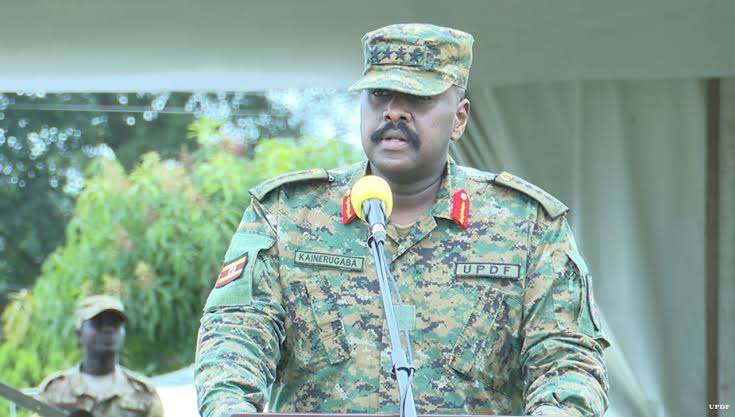
The army says it will hand the eastern Congolese town to the FARDC within two weeks, days after DR Congo summoned Uganda's envoy over the army chief's posts backing a rebel push on Walikale
POLITICS AND SECURITY
The Uganda People's Defence Forces (UPDF) will begin withdrawing its troops from Lubero town in North Kivu province, eastern Democratic Republic of Congo, within the next two weeks and hand security there to the Congolese armed forces (FARDC), the army announced on Friday, November 27, 2026.
The statement, issued by Colonel Chris Magezi, Acting Director of Defence Public Information, said: "The UPDF withdrawal from the town located in the North Kivu province will start in the next two weeks." It did not give troop numbers or a handover date, and it did not say whether other Ugandan positions in eastern Congo would be affected.
The announcement comes at a tense moment between Kampala and Kinshasa. Three days earlier, on November 24, DR Congo's Foreign Affairs Ministry summoned the head of mission at Uganda's embassy over a series of posts on X by General Muhoozi Kainerugaba, Uganda's Chief of Defence Forces and the son of President Yoweri Museveni.
What Muhoozi said, and why Kinshasa objected
In the posts, Gen. Muhoozi appeared to endorse an advance by the Front for the Refoundation of the Nation (FRN), a group linked to former Congolese president Joseph Kabila, toward Walikale, a mineral-rich territory in North Kivu. "We approve the FRN's capture of Walikale. UPDF will not oppose them," he wrote, according to Nile Post. He added: "If FRN wastes a lot of time, we shall capture Walikale ourselves."
Congo's Foreign Affairs Ministry described the remarks as particularly serious and said they had caused a major diplomatic and media incident. It asked Uganda to clarify whether the statements reflected its official position and to prevent similar remarks in future. As of November 26, Uganda had not issued a formal public response to the protest, Nile Post reported. Daily Express separately reported that Gen. Muhoozi's X account became inaccessible in late November after the controversial posts.
The army's Friday statement did not refer to the diplomatic row, and no official link between the two events has been stated. But the sequence — a formal protest from Kinshasa, followed within days by an announced pull-back from a Congolese town — is likely to be read closely in both capitals.
Why Uganda is in Lubero
Ugandan troops have been in eastern Congo since November 30, 2021, under Operation Shujja (also spelled Shujaa), a joint UPDF–FARDC offensive against the Allied Democratic Forces (ADF). The operation was launched after a wave of deadly ADF-linked attacks in Uganda in 2021, including suicide bombings in Kampala. A Status of Forces Agreement signed in January 2022 governs the deployment.
The campaign began in the Beni and Irumu areas and has since spread across parts of North Kivu and Ituri. As pressure mounted, ADF fighters moved west and north, including into Lubero territory. The UPDF deployed to Lubero town in January 2025 to pursue those remnants and, according to Uganda, to protect the Kasindi–Beni–Butembo road. A UN Group of Experts report covering 2024 had documented ADF cells moving into the territory.
The ADF has not been defeated. The UN reported that ADF attacks in Lubero territory between November 13 and 19, 2025 killed at least 89 people, including at least 17 civilians at a health centre in Byambwe. A January 2026 report by the Congo Research Group and Ebuteli said the group had adapted by relocating and questioned the operation's ability to stop its spread. The UN has also reported that ADF cells continue to operate in Lubero and that attacks increasingly reach areas farther west in Ituri.
A withdrawal long signalled — and reversed
This is not the first time Uganda has spoken of leaving. On March 25, 2026, Gen. Muhoozi posted that Uganda was "ready to withdraw from all our positions from Lubero to Mahagi," in coordination with Kinshasa, while saying issues remained to be resolved in Ituri province. A month later, in April, he told The EastAfrican that the UPDF would stay in Lubero and that the next step was an "advance to Kisangani" against ADF leader Musa Baluku.
Friday's statement is narrower than the March declaration. It covers Lubero town only, not the wider Lubero-to-Mahagi belt, and Daily Express reports that it does not end Operation Shujja. No timetable has been given for other deployments in North Kivu or Ituri.
The main players
Gen. Muhoozi Kainerugaba is both Uganda's top soldier and an increasingly open political actor. He chairs the Patriotic League of Uganda (PLU), whose supporters are mobilising behind his declared bid for the presidency in 2031, and his social media posts have repeatedly drawn diplomatic and domestic controversy. Earlier this month, AFP reported that a closed-door meeting of the ruling NRM's Central Executive Committee on November 10 abandoned a vote on positioning him as President Museveni's successor; the party's Secretary-General Richard Todwong said reports that the committee rejected him were inaccurate.
Col. Chris Magezi, as acting army spokesperson, has become the institutional voice of the UPDF on the withdrawal. On the Congolese side, the FARDC takes over responsibility for Lubero, while the Foreign Affairs Ministry has made clear it expects Kampala to account for its army chief's public statements.
In the background sit the armed groups: the ADF, the original target of Operation Shujja; the FRN, whose push on Walikale prompted the row; and the wider instability of North Kivu, where the security situation has deteriorated with the advance of the M23 rebel movement.
Why it matters
For Uganda, the Congo deployment has been framed as a matter of national security: keeping the ADF away from its border and out of its cities. Any reduction in its footprint will be judged by whether ADF attacks — in Congo or inside Uganda — rise in its wake. The deployment also underpins economic interests along the Kasindi–Beni–Butembo trade corridor that links western Uganda to eastern Congo.
For relations with Kinshasa, the episode tests the joint-operation framework itself. A 2025 UN report noted that Congo had raised concerns over whether some Ugandan deployments were formally authorised and fell within the agreed framework. Public statements by Uganda's army chief appearing to approve armed groups seizing Congolese territory sharpen those concerns.
Domestically, the episode adds to questions about how Uganda's foreign and security policy is communicated — through formal government channels or through the personal social media accounts of its most senior general, who is also a presidential aspirant.
What to watch next
The first test is practical: whether the handover to the FARDC begins on schedule and whether it is orderly. Second is whether Kampala issues a formal response to Kinshasa's protest, and whether it clarifies its position on the FRN and Walikale. Third is whether the Lubero pull-back proves to be a one-off or the first step in a broader drawdown from the Lubero-to-Mahagi belt. Finally, ADF activity in Lubero and Ituri over the coming weeks will show whether the security gains claimed under Operation Shujja hold once Ugandan troops step back.