Written By | Business Experts
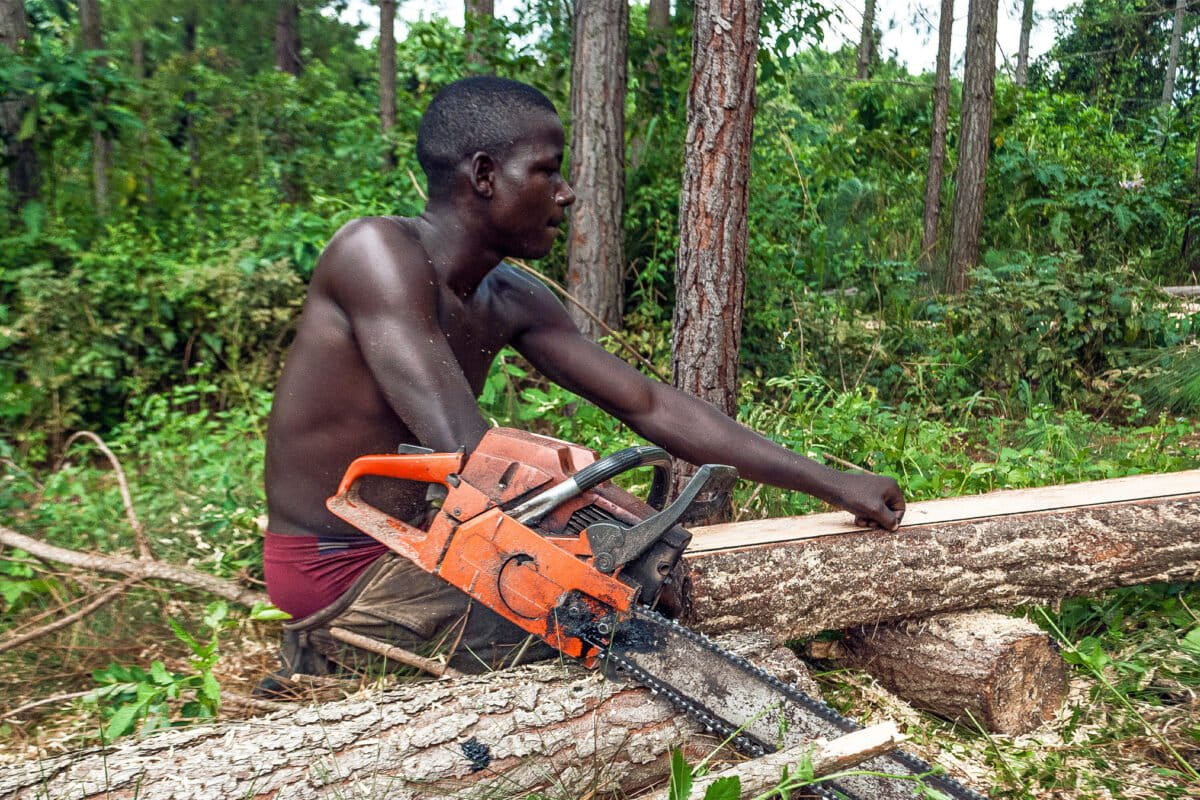
Cameroon, Gabon, the two Congos and their CEMAC neighbours are trying to turn the world's second-largest rainforest into an industrial base.
Economic & Social Transformation
A deadline that has to hold this time
Central Africa has set itself a firm date. On 23 February 2024, in Bangui, the six member states of the Central African Economic and Monetary Community (CEMAC) — Cameroon, Gabon, the Republic of Congo, Equatorial Guinea, Chad and the Central African Republic — and the Democratic Republic of Congo agreed in principle to phase out exports of unprocessed logs, with 1 January 2028 as the final deadline. A regional ban had first been scheduled for January 2023. It slipped because most members were not ready.
The reasoning is the same one Africa now applies to cobalt, cocoa and cashew. A log shipped whole to Asia takes the sawing, drying, veneering and furniture-making with it, along with the jobs and margins those steps create. CEMAC projections cited by the Environmental Investigation Agency (EIA) suggest that full local processing could create more than 60,000 jobs across the region and raise public revenues by around 25%. With just over a year left, the region is learning that banning raw exports is the easy part. Building the industry that replaces them is much harder.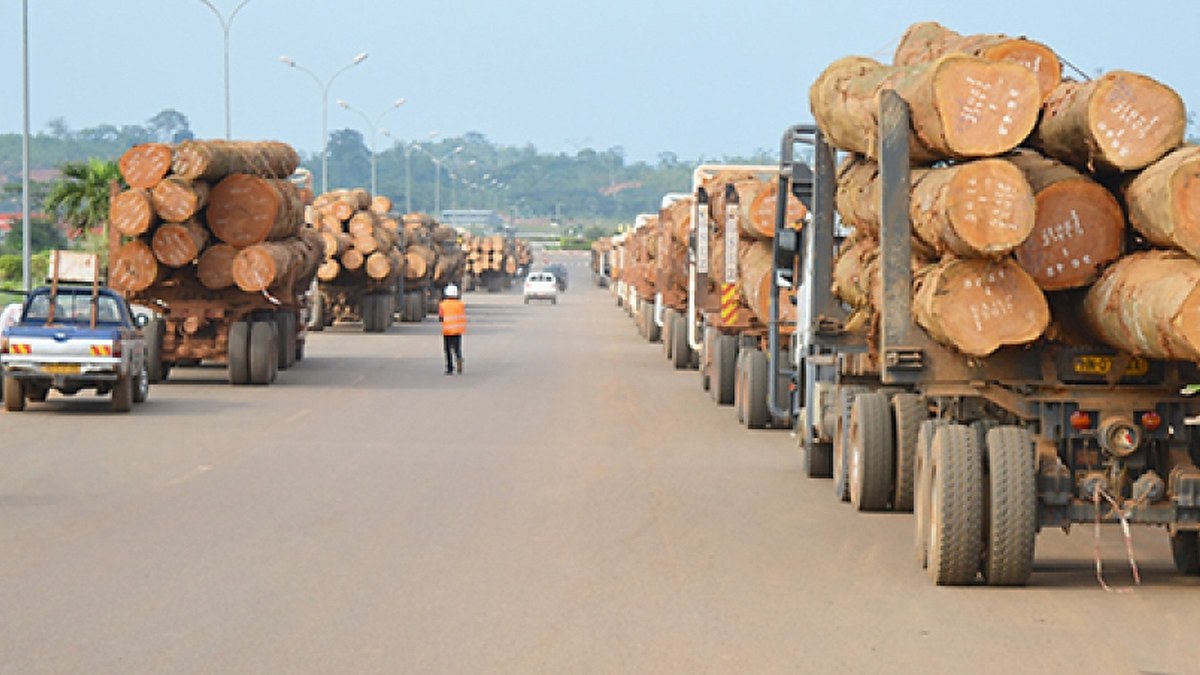
Cameroon: using tax to change behaviour
Cameroon has relied mainly on fiscal pressure. Between 2017 and 2024, the standard export duty on logs rose from 17.5% to 75% of free-on-board value, an increase of roughly 350%. Logs entering industrial free zones are taxed at 60%. On 28 April 2026, Forestry and Wildlife Minister Jules Doret Ndongo signed an order adding 15 species to the 76 already barred from export as logs, bringing the total to 91. Another 23 'promotion species' can still leave as logs, but only with an additional export tax. In his 12 October 2026 circular on the 2027 budget, President Paul Biya instructed the government to extend the list again. He did not say which species would be added or when.
Trade data from the National Institute of Statistics (INS) show that raw shipments are falling. Log exports dropped to 349,611 cubic metres in 2025 from 475,401 in 2024, a 26.5% decline. That is far below the 958,323 cubic metres shipped in 2021. Their value fell from CFA47.4 billion to CFA39 billion. Fiscal policy has a cost too. The Ministry of Finance's 2027–2029 planning document reports that timber export duties fell by CFA7.9 billion in 2025, a 21.3% drop, which it attributes directly to the rising log taxes.
The difficulty is that processed exports fell as well. Sawn timber shipments dropped 14.9% to 762,007 cubic metres, and their value fell 12.5% from CFA180.3 billion to CFA157.7 billion. If the ban were simply pushing wood into local mills, sawnwood should have risen as logs fell. Instead both contracted. That points to weak demand and to processing capacity that is not growing fast enough to absorb the diverted wood. The Cameroon Timber Industry Association notes that taxes on sawnwood also rose by 165% between 2016 and 2023, which dulls the incentive to process. Since 2023, wood-processing equipment has been exempt from import duties, and two industrial zones have been set aside for the sector. So far, the trade figures cannot show how much new processing these measures have produced.
Gabon: the proof of concept and its price
Gabon is the region's reference case. It banned raw-log exports in 2010 and built the Nkok Special Economic Zone, developed with Arise IIP, around the policy. The industrial result is real. Between 2010 and 2023, the number of wood-processing units in the country rose from 85 to 217. Processed-wood exports grew 53% between 2018 and 2022, from 898,432 to 1,378,692 cubic metres. Container shipments from Nkok's mills rose from 6,746 to 17,541 TEU over the same period. Sector employment grew from about 8,400 jobs in 2010 to about 30,000 by 2022. Gabon supplies about 90% of the world's okoumé, the light hardwood used in plywood and veneer, and in June 2025 the sector's turnover exceeded CFA74 billion, making timber the economy's second pillar after oil.
The transition was also costly, and that is what the 2028 laggards need to understand. EIA notes that Gabon's tax revenues from the sector initially fell by around 80% after the 2010 ban, as the government gave up log-export receipts before mills could generate replacement income. Gabon is also now exposed to a downturn its mills cannot escape. Export volumes have slipped from 3.8 million cubic metres in 2023 to 3.7 million in 2024 and 3.4 million in 2025. Export revenue fell 23.7% in 2025, and the French group Rougier reported a 20% fall in sales. The Bank of Central African States (BEAC) expects national output to fall to around 3.1 million cubic metres in 2026, and CEMAC forest exports as a whole to drop by 7.3%. Three forces are at work: the Chinese property slump, which has hit demand for veneer and sawnwood; low-cost Brazilian pine; and the mechanical effect of the ban itself. The International Technical Tropical Timber Association (ATIBT) expects the weak conditions to last until at least mid-2027. Within that decline, the mix is moving the right way. Gabon's plywood output rose 2.9% in 2025 while overall production fell 8.2%.
The Republic of Congo and DRC: rules on paper, loopholes in practice
The Republic of Congo declared an end to log exports from 1 January 2023, but enforcement is weak. In January 2026, officials and civil society met in Ouesso, in Sangha department, at a meeting organised by the Centre d'Actions pour le Développement (CAD). Its monitoring missions in Kouilou, Pointe-Noire and Sangha found that no legal text defines 'processed' wood. Companies were 'squaring' logs, cutting them into rough beams, and declaring them processed. Authorities were still issuing special permits that let some firms export raw timber. Some local officials said they first learned of the CEMAC directive at the meeting itself, and admitted they found it hard to act against powerful operators. Some departments also reported falling customs revenue since 2023, and companies warned of layoffs. These are the same short-term costs Gabon absorbed, but without Gabon's industrial base to show for them.
The DRC, which holds about 60% of the Congo Basin rainforest, has a different policy question. It has kept a moratorium on new industrial logging concessions since 2002. In mid-2026, draft legislation that could have lifted it was reported to be well advanced. A coalition of 70 Congolese and international organisations wrote to the Prime Minister on 3 July. On 7 July, Environment Minister Marie Nyange Ndambo said on national television that the moratorium would not be lifted. The coalition is now pushing to keep any lifting provision out of the Forest Code revision. For Kinshasa, the 2028 ban and the moratorium point the same way: less volume and more value per tree. The open question is whether that value comes from processing, community forestry or carbon finance. The minister has mentioned carbon markets, and civil society insists that carbon value should not be the only test.
Why prices and traceability matter in 2027
Markets are giving mixed signals. According to the French Treasury's Central Africa brief, reported by Agence Ecofin, CEMAC forest-product export prices rose 2.9% between the fourth quarter of 2025 and the first quarter of 2026, with raw-log prices up 23.5% quarter on quarter. Processed products rose much less. High log prices help exporters, but they also raise the short-term cost of not exporting logs. That tension explains why earlier deadlines slipped.
Traceability pressure from buyers is the second force. Gabon committed in October 2023 to bring its entire forest sector into a national stump-to-port traceability system (SNTBG). Cameroon has joined Gabon-hosted workshops with the US Forest Service on illegal timber trade. European buyers are preparing for the EU Deforestation Regulation, which requires geolocated proof of legal, deforestation-free origin. Processed products made in audited mills are easier to certify than logs bought through intermediaries, which gives local industry an advantage it can market. Donors are adding modest support, such as a €2 million agreement between ATIBT and the French Facility for Global Environment (FFEM) for a Congo Basin forest programme.
What would make the 2028 ban work
The evidence from Gabon, Cameroon and Congo points to a short list of conditions for turning a ban into an industry.
A legal definition of processing. Congo's squaring loophole shows that a ban without technical thresholds for processing invites relabelling. CEMAC should harmonise definitions so firms cannot exploit differences between neighbours.
Rebalanced taxation. Taxing logs at 75% while sawnwood taxes also rise sharply sends a mixed signal. Duties should fall as the degree of processing rises, with the steepest relief for veneer, plywood, joinery and furniture.
Funding the transition gap. Gabon's 80% revenue drop shows governments need bridge financing, from development banks, BEAC-coordinated instruments or budget support, so the ban is not reversed in its first difficult year.
Power, ports and skills before the deadline. Mills need reliable electricity, kiln capacity, container logistics and trained technicians. Nkok worked because those were concentrated in one place. Cameroon's two wood zones and Congo's Pointe-Noire hinterland need the same package.
Independent monitoring. The Ouesso recommendations call for a coordinating body under the presidency or prime minister and civil-society monitoring with real-time alerts. That is cheaper than lost revenue from special permits.
Conclusion
Central Africa's timber policy is a test of whether resource nationalism can be paired with credible industrial policy. Gabon's 15-year record shows it can be done: more mills, more jobs, higher-value products. It also shows the costs, including a deep early revenue loss and continued dependence on volatile Chinese demand. Cameroon's 2025 numbers are a warning that pushing logs out of the export mix does not automatically pull sawmills in. With 13 months left, the governments that will benefit are those that set clear definitions, adjust tax schedules and fund the gap. Those that rely on the deadline alone will see either another postponement or a ban that exists only on paper.