Written By | International News Agencies
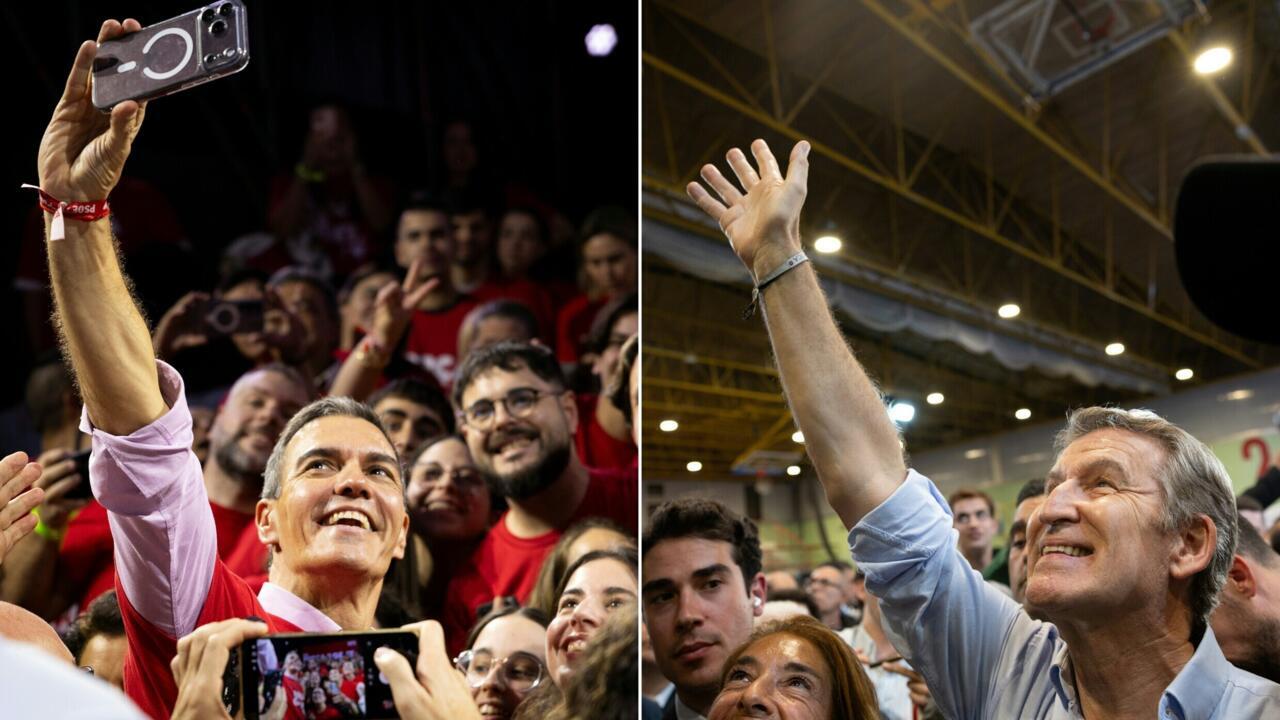
Spain's snap general election on Sunday, November 29, could hand power to Alberto Núñez Feijóo's Popular Party and Vox, or give Pedro Sánchez one more improbable escape
World Politics
Overview
Spain's voters go to the polls on Sunday, November 29, in a snap general election that will decide whether Prime Minister Pedro Sánchez, the Socialist leader who has survived one political near-death experience after another since 2018, gets a third full term, or whether the country swings to a right-wing government led by the Popular Party's Alberto Núñez Feijóo, likely dependent on the hard-right Vox. All 350 seats in the Congress of Deputies and 209 of the 267 seats in the Senate are up for election, according to Bloomberg's pre-election reporting. A party or bloc needs 176 seats in the Congress to command an absolute majority.
The campaign formally closed on Friday night with four large rallies that captured the shape of the contest: Sánchez in Madrid pleading for turnout, Feijóo in Seville promising that this time the PP would not only win but govern, Vox's Santiago Abascal in a Valencia bullring framing the vote as existential, and former Barcelona mayor Ada Colau rallying the new left-wing alliance Frente Amplio in the Madrid district of Villaverde. Saturday is the legally mandated "day of reflection," on which campaigning is banned, and Spanish law has barred the publication of new opinion polls during the final five days before the vote.
Background: How Spain Got Here
The election was not due until 2027. Sánchez called it early in October after a defeat that crystallised his government's weakness in parliament. In late September his cabinet approved two emergency housing decrees, including an extended suspension of evictions for vulnerable households and limits on purchases by large investment funds, after a wave of anger over evictions and soaring rents. When the Congress refused to ratify the decrees on October 2, Sánchez dissolved the Cortes on October 5 and set the vote for November 29, turning a legislative setback into a gamble on a direct mandate.
The defeat was the latest symptom of a fragile arrangement. After the inconclusive July 2023 election, in which the PP finished first with 137 seats to the Socialists' 121, Sánchez returned to power by stitching together a coalition with the left-wing Sumar platform and securing the votes of a patchwork of Catalan, Basque and Galician parties, including Junts, ERC, EH Bildu, the PNV and the BNG. That majority proved unreliable on everything from budgets to housing. MercoPress noted that the legislature passed without an approved budget, and that the government's record had been shadowed by corruption cases involving former Socialist officials and by deadly rail accidents at Adamuz and Urda, which became campaign issues in their own right.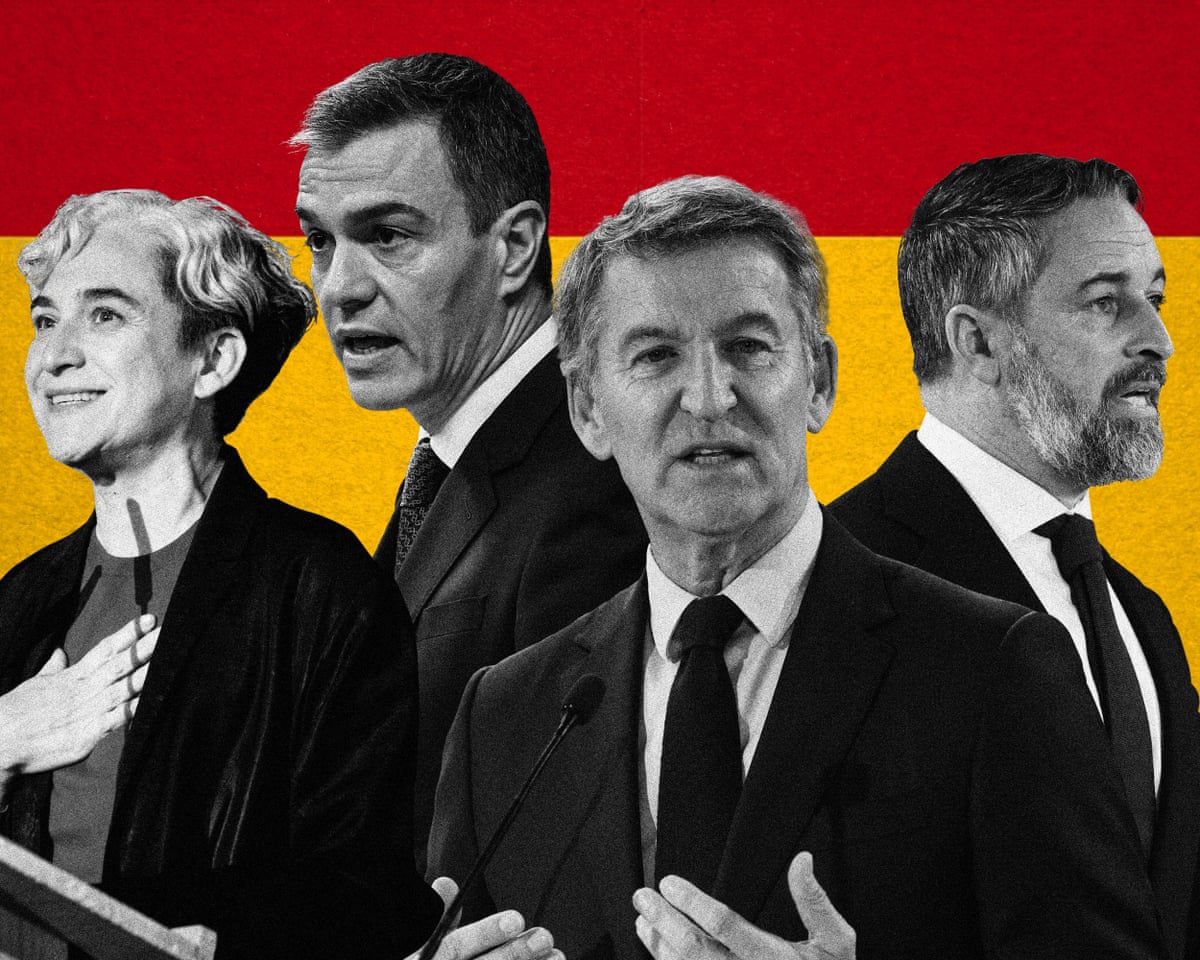
The Contenders
Sánchez, 54, has campaigned under the slogan "The strength of the people," asking voters to deliver a "progressive majority" that would let him continue governing with partners to his left. He has tried to turn the election into a referendum on the alternative, warning that a PP government would depend on Vox and roll back social rights, while his opponents have tried to make it a referendum on him, his allies' legal troubles and the state of public services.
Feijóo, the former Galician regional president who won the most votes in 2023 but could not assemble a majority, has presented himself as the competent manager Spain needs. Bloomberg reported his closing argument as a pledge that "governing means managing." He has promised a large housing programme, with one outlet reporting a pledge of a million homes over four years, and during the campaign's televised debate he said he would step down if he failed to form a government, according to the EFE news agency as cited by MercoPress.
Abascal's Vox has pushed a harder line built around "national priority" in access to public benefits and what it calls "remigration," and it stands to be the kingmaker if the PP falls short of 176 seats on its own, which every published poll suggests it will.
On the left, the landscape has shifted since 2023. Frente Amplio, headed by Ada Colau and backed by Second Deputy Prime Minister Yolanda Díaz, who appeared at its closing rally, is the main force to the Socialists' left. Podemos, led by Irene Montero, is running separately and closed its campaign in Madrid's Moratalaz district alongside its founder Pablo Iglesias. The regional parties that propped up Sánchez's last government will again be central to any arithmetic on the left.
What the Polls Say
The last polls before the blackout were published on November 23. They pointed to a race that has tightened but still favours the right. Bloomberg reported that Sánchez was catching up but that the PP and Vox together would win far more seats than the Socialists and their allies. The 40dB survey for El País and Cadena SER, according to MercoPress, put the combined PP and Vox total above 190 seats, comfortably over the 176 needed. The state-run CIS pollster, whose methods have been repeatedly criticised by the opposition as favourable to the government, showed a Socialist recovery, though the sources reviewed for this article did not give its figures. When the election was called in October, 40dB had the PP on 31.6 percent, Vox on 18.4 percent and the Socialists on 27.4 percent.
Sources describe the race differently. One outlet characterised Feijóo as only "slightly ahead," while Bloomberg's headline described Sánchez as seeking an "unlikely win." Readers should treat seat projections cautiously: Spain's electoral system allocates seats by province using the D'Hondt method, which rewards the leading parties in small rural constituencies and can magnify small shifts in the vote. In 2023, polls widely predicted a PP-Vox majority that never materialised, and that memory is central to the Socialists' hopes.
The Final Rallies
The campaign's closing night was a show of mobilisation. Sánchez filled the Caja Mágica sports complex in Madrid, with the party claiming around 13,000 attendees and other reports citing over 12,000. Film director Pedro Almodóvar read a poem from the stage. Sánchez's message was turnout, above all. "Vote, vote, vote, so we can win, govern, and move forward for four more years," he told supporters, according to Bloomberg, adding that "the progressive majority is in sight," as reported by MercoPress.
Feijóo closed in Seville's Pabellón de la Navegación alongside Andalusian regional president Juanma Moreno, whose absolute majority in Spain's most populous region is the PP's model of broad appeal. The PP said about 9,000 people attended. Reaching out to disaffected Socialist voters, Feijóo said, "I am not asking you to stop feeling left-wing," before promising: "This time, yes, we will not only win, we will govern." He ended with a line meant to signal readiness: "On Sunday we vote, on Monday we start."
Abascal spoke in Valencia's bullring, where Vox claimed 14,000 attendees (another report put it at 13,000). "This is an existential election for Spain," he said, urging supporters, "don't vote with fear, vote with courage." Colau, addressing roughly 4,000 people inside La Nave de Villaverde with about 1,000 more outside, insisted that "Frente Amplio will never give up." A remark Feijóo made to Colau during Thursday's debate, telling her to keep quiet, was seized upon by both the Socialists and Frente Amplio in their final appeals to women voters.
Key Issues
Housing has dominated the campaign, as it dominated the events that triggered it. Rents in Madrid, Barcelona, Valencia and the Balearic Islands have outpaced wages for years, and both main parties have competed with large construction pledges. Corruption is the right's main line of attack, focused on investigations touching former Socialist officials and figures close to the government. Pensions, jobs and the quality of public services, migration, the response to the deadly DANA floods in Valencia in 2024, the Democratic Memory Law and the safety of the high-speed rail network after this year's accidents have also featured prominently.
Election Night and What Comes Next
Polling stations on the mainland, the Balearic Islands, Ceuta and Melilla close at 8 p.m. local time, with the Canary Islands closing an hour later. The Central Electoral Board's practice is that provisional results are not published while Canary Island polls remain open, so official figures begin to flow from around 9 p.m. Analysts warn that the early count can mislead. In 2023, the Socialists led the PP by seven seats with 10 percent of the vote counted, only to end the night well behind once results from large urban polling stations, especially in Madrid, came in.
The possible outcomes are relatively clear. If the PP and Vox together pass 176 seats, Feijóo is likely to become prime minister, either at the head of a coalition including Vox, which would be the first time the hard right has entered Spain's national government since the return of democracy, or in a minority government relying on Vox's support. That would align Spain with a broader shift to the right across Europe and would be a significant blow to the European centre-left, for which Sánchez has been one of the most prominent standard-bearers. If the right falls short, Sánchez would again try to assemble a broad coalition with Frente Amplio, Podemos and the regional parties, a difficult arrangement that would likely revive the instability that led to this early election. A hung result in which neither bloc can form a government is also possible; Spain went through repeat elections in 2015-16 and 2019.
Colau summarised the stakes for the left in stark terms during the campaign, arguing that the choice was between a coalition with Vox and a coalition with Frente Amplio. Whatever happens on Sunday night, the negotiations that follow are likely to determine as much as the count itself.