World Politics
Overview
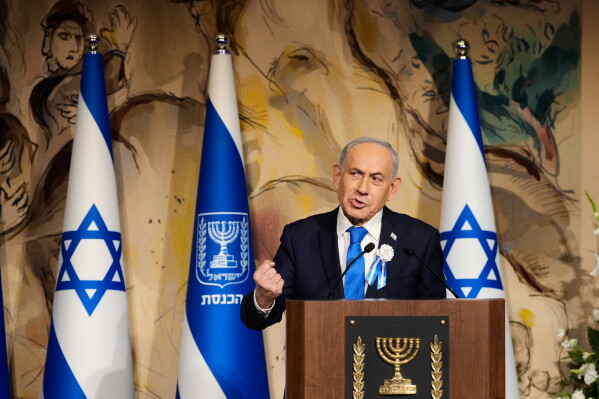
For the first time in years, Benjamin Netanyahu no longer controls the floor of Israel's parliament. Late on Tuesday, November 17, after a six-hour filibuster by lawmakers from the caretaker prime minister's bloc, the Knesset voted 66 to 52 to elect Matan Kahana of Gadi Eisenkot's Yashar party as speaker, defeating Likud's Ofir Katz. The victory, secured with the votes of the two Arab-led parties, is the first concrete demonstration that the anti-Netanyahu camp can command a working majority in the 120-seat chamber, even though it has not yet agreed on a government.
The vote came as a deepening scandal over the October 27 election engulfs the Prime Minister's Office. An investigation by Channel 12's Uvda program alleges that Netanyahu's chief of staff steered police toward an "intelligence source" that led to warrantless dawn raids on Arab party activists on election morning, and that the head of the Shin Bet sought permission to wiretap five Arab lawmakers. Eisenkot, who holds President Isaac Herzog's mandate to form a government, has called Netanyahu and his inner circle a "tangible, direct and immediate threat to Israeli democracy." Netanyahu's office denies wrongdoing.
Background: A Hung Parliament
Israel's October 27 election left neither camp with a majority. According to results cited by The National and the Times of Israel, Netanyahu's bloc won 53 seats, the four Jewish-led parties aligned with Eisenkot won 48, and the two Arab-led parties, Ra'am (the United Arab List) and the Joint List, won a record 19. On November 8, Herzog tasked Eisenkot, a former military chief of staff, with forming a government. He has 28 days, with a possible 14-day extension, according to Anadolu Agency.
Arithmetic alone suggests a path for Eisenkot: his 48 seats plus the 19 Arab-party seats would exceed 61. But reliance on Arab parties is politically fraught. Avigdor Lieberman, whose Yisrael Beytenu is a key part of Eisenkot's camp, has ruled out backing a government that depends on them. Netanyahu, meanwhile, has called for a national unity government, citing security challenges including the unresolved war with Iran, and representatives of Likud and Eisenkot's camp met on November 15 in what both described as a "businesslike atmosphere." A rotation arrangement recalling the 2021 Bennett-Lapid deal has been discussed. Eisenkot has insisted that Netanyahu must step down but has suggested Likud could join a government under his leadership.
Key Development One: The Speaker Vote
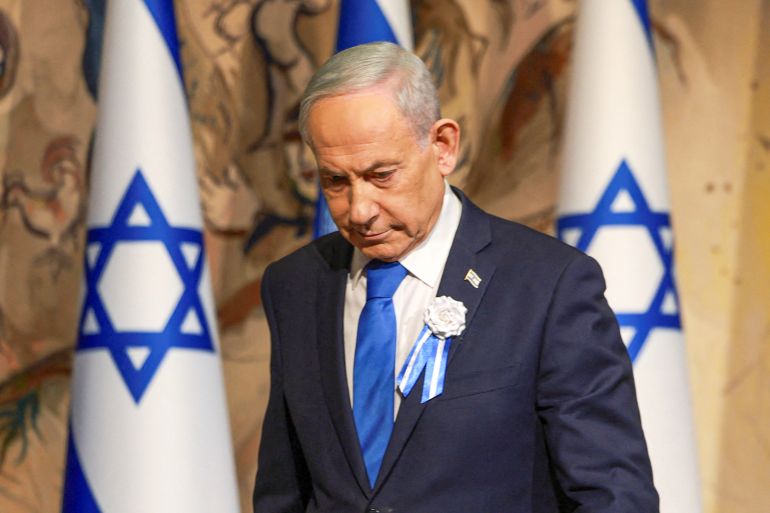
The Times of Israel reported that six parties holding 67 seats backed Kahana: Yashar, Yisrael Beytenu, B'Yachad, the Democrats, Ra'am and the Joint List, with Ra'am MK Yasser Hujirat absent. Katz received 52 of the Netanyahu bloc's 53 votes, with Likud's Nir Barkat absent. The ultra-Orthodox United Torah Judaism party, whose chairman Yaakov Asher had said earlier in the day that "we will not support the election of Matan Kahana as Knesset Speaker," voted for Katz after speculation that it might abstain. Only a simple majority of votes cast was required.
Before the vote, Finance Minister Bezalel Smotrich offered to support Kahana on condition that no Arab lawmakers be named deputy speakers. Kahana rejected the condition as "anti-statesmanlike." The Knesset went on to elect nine deputy speakers, including representatives of Ra'am and the Joint List alongside Likud, Shas, Otzma Yehudit and UTJ, by a vote of 38 to 15.
Outgoing speaker Amir Ohana of Likud handed over the gavel in what the Times of Israel described as a smiling transition, even as Otzma Yehudit MK Tally Gotliv and Likud MK Almog Cohen were repeatedly called to order for accusing the new majority of relying on "terror supporters." In his first speech, Kahana pledged to be the speaker for all citizens, saying "the Knesset is the home of all citizens of the State of Israel, regardless of religion, race, or gender." He also said the Knesset "will unquestioningly obey the court's rulings" until any future checks-and-balances reforms are made by broad consensus, a pointed message after years of conflict over the judicial overhaul.
The practical consequences are significant. The speaker controls the Knesset's agenda, and the Eisenkot-led bloc had hoped to begin repealing key elements of the previous government's judicial overhaul as early as Wednesday. Ynet reported that the bloc agreed to delay those repeals until Monday in exchange for the Netanyahu camp ending its filibuster.
Key Development Two: The Election-Day Arrests
The scandal that frames the new Knesset centers on events of October 26 and 27. According to Uvda, as summarized by The National, Anadolu and Ynet, Netanyahu's chief of staff, Ido Norden, contacted the office of Police Commissioner Daniel Levy on the eve of the vote to complain that Ra'am activists in southern Israel planned to pay voters. He allegedly pointed police to a source claiming to hold evidence. Ynet and Haaretz identified that source as a former employee of the Prime Minister's Office with close ties to former director-general Yossi Shelley, and Ynet reported that the information was entered into police intelligence systems.
Three activists were arrested in dawn raids, including in Rahat, reportedly without search or arrest warrants; The National reported that about 14 officers searched their homes. Police alleged the activists carried large sums of cash and Ra'am vouchers. Netanyahu and the Likud campaign publicized the arrests on election day, and they became central to a narrative, amplified since the polls closed, that "Arabs are stealing the election." The investigation produced no charges. One detainee, Dr. Saef Abu Reash, was held for six days before being released unconditionally. The Attorney General's office and the police internal investigations unit are reportedly examining whether the intelligence was deliberately planted.
The report also alleges that Shin Bet director David Zini sought authorization to wiretap five Arab lawmakers and to arrest Arab politicians on election day over suspected foreign interference, requests that Attorney General Gali Baharav-Miara reportedly rejected. Two days after the vote, according to Ynet, Zini showed Eisenkot a thick binder and told him, "There are intelligence reports here dating back to 2018 showing that Arabs are stealing elections in Israel." The Shin Bet said it had investigated "serious suspicions of subversive activity and foreign interference" under its legal mandate and at the direction of Central Elections Committee chairman Justice Sohlberg, and that reports about its targets and methods "did not come from the Shin Bet."
On Tuesday, a statement from Sohlberg approved by Zini said the Shin Bet's probe had so far found "no evidence" of activity that could have affected the results, according to the Times of Israel. The same outlet reported that a police deputy chief stood by the arrests while acknowledging that the sourcing from the Prime Minister's Office "doesn't sound good."

Reactions
Eisenkot, writing on X, alleged an "attempt to rig the elections through the planting of evidence" and the deployment of police against Arab citizens without warrants. He demanded explanations from police and the Shin Bet, pledged a state commission of inquiry into the conduct of the Prime Minister's Office and security agencies, and said Netanyahu should not remain in power "even one minute longer." After the speaker vote, he said, "A new chapter is opening for Israel's Knesset." Yair Lapid called Kahana's election "an important step toward repairing and healing Israel." Joint List chairman Yousef Jabareen said his party would act as a "safety net" for those seeking to replace Netanyahu, and Ra'am said it would "return statehood to the Knesset," according to Channel 12.
Netanyahu's office said Norden had received information about suspected criminal activity and acted appropriately in passing it to police, and called claims of further involvement false. Netanyahu accused Eisenkot of incitement, saying that "while the Prime Minister is extending a hand towards unity," his rivals issue "daily inflammatory statements." On the speaker vote, a Likud statement, attributed by ANI to Netanyahu, called it an "eternal disgrace" (translated by ANI as "a disgrace for all eternity") and accused Eisenkot, Naftali Bennett and Lieberman of choosing "terror supporters over national unity." Smotrich echoed the "eternal disgrace" phrase, Communications Minister Shlomo Karhi mocked Kahana as the "ra'is of the Knesset," using the Arabic word for leader, and National Security Minister Itamar Ben Gvir posted "Shame."
What's Next
The speaker vote proves that a 66-vote coalition of convenience exists, but not that it can govern. Eisenkot's mandate runs into early December, with a possible extension, and he must still square Lieberman's refusal to depend on Arab parties with the reality that those parties delivered Tuesday's majority. The ultra-Orthodox parties, which have kept close contact with Yashar according to the Times of Israel, remain a possible alternative partner, as does a unity arrangement with Likud that some of Eisenkot's allies reject outright.
The next tests come quickly. Monday is now the earliest date for votes to roll back parts of the judicial overhaul, which would signal whether the new majority can legislate as well as elect officers. The criminal and administrative inquiries into the election-day arrests, and Eisenkot's promised commission, could keep the Prime Minister's Office and Shin Bet leadership under scrutiny for months. And Eisenkot has urged Netanyahu, who remains caretaker prime minister, not to launch new strikes on Iran unless Israel faces an "immediate threat," a reminder that Israel's political transition is unfolding in the middle of a regional war.
Published By | News Editor