Written By | Health News Agencies
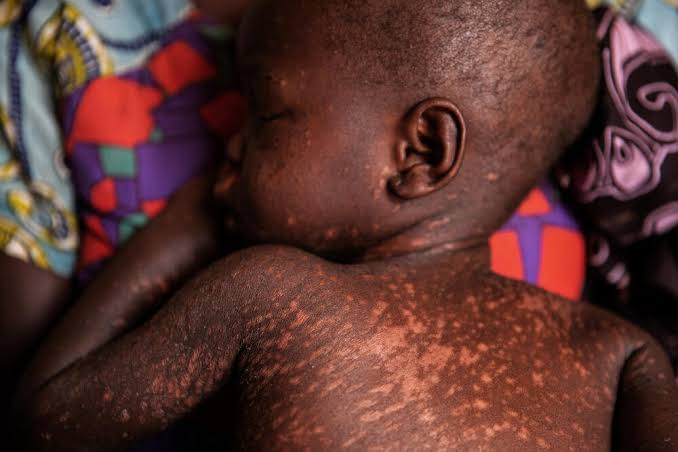
WHO says vaccines have pushed global measles deaths down 91% since 2000.
HEALTH
It is the best news the global fight against measles has had in a generation, and it comes with a warning siren attached.
According to a major new report released by the World Health Organization on Thursday, November 27, measles killed an estimated 72,000 people worldwide in 2025. That is the lowest figure ever recorded and a staggering 91% fall since the year 2000. Over that same period, health officials say, measles vaccination has saved more than 60 million lives.
But read past the headline and the picture turns darker. Nearly 10 million people are estimated to have caught measles in 2025. More than 29 million children were either never vaccinated or did not get the full protection they needed. And 59 countries were hit by large or disruptive outbreaks, including 11 nations that had previously been declared measles-free.
Closer to home, the timing could hardly be more pointed. Just two weeks ago the United States officially lost its measles elimination status, a badge of honor it had held since 2000, after the virus spread non-stop for more than a year.
"Measles deaths have never been lower, thanks to the extraordinary life-saving power of vaccines," said WHO Director-General Dr Tedros Adhanom Ghebreyesus. Then came the catch: "Elimination is not a finish line. It must be defended, with two doses of vaccine for every child, everywhere."
A Triumph Built on Two Little Shots
The numbers in the new WHO analysis, published in the agency's Weekly Epidemiological Record under the title "Progress towards measles elimination – worldwide, 2000–2025," tell the story of one of public health's great success stories.
At the turn of the millennium measles was still one of the leading killers of young children on the planet. A quarter of a century of mass vaccination campaigns, routine childhood immunization and outbreak response has driven deaths down to a fraction of what they were. Last year's version of the same report put the decline in deaths at 88% since 2000. This year that figure has climbed to 91%.
By the end of 2025, 95 countries had been verified as having achieved or maintained measles elimination, meaning the virus no longer circulates continuously within their borders.
The weapon behind all this is remarkably simple: two doses of measles-containing vaccine, usually given as the combined measles, mumps and rubella (MMR) shot in many countries. Two doses are about 97% effective at preventing measles, according to the US Centers for Disease Control and Prevention.
The Cracks in the Wall
Here is the problem. Measles is one of the most contagious diseases known to science. The virus travels through the air and can linger in a room for up to two hours after an infected person has left. Up to nine out of ten unprotected people who are exposed will catch it. That is why experts say around 95% of a community needs to be fully vaccinated to stop the virus finding a foothold.
The world is nowhere near that level. According to the WHO report, global coverage in 2025 stood at 84% for the first dose and just 77% for the second, figures the agency describes as largely unchanged.
The gap between rich and poor nations is stark. In low-income countries only 69% of children received a first dose and 57% a second. In high-income countries the figures were 93% and 91%.
Of the 59 countries that suffered large or disruptive outbreaks in 2025, 18 were low-income, 34 were middle-income and seven were high-income. Nearly half of all global cases were recorded in WHO's South-East Asia Region.
The WHO also flagged that children living in conflict zones and humanitarian crises are far less likely to be vaccinated, leaving them exposed to a disease that can cause blindness, pneumonia and swelling of the brain known as encephalitis.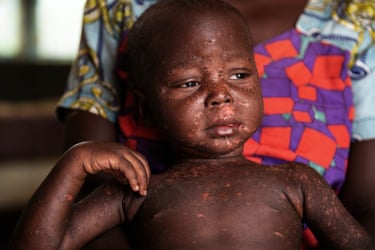
The Americas: From Champion to Hot Zone
Perhaps the most alarming section of the report concerns the Americas, a region that was once held up as the world's model for beating measles.
The WHO says measles cases in the Region of the Americas have risen eight-fold since 2000, with an estimated 73,000 people infected in 2025. Vaccination coverage in the region, which sat above 90% before the COVID-19 pandemic, has slipped, and several countries have lost their elimination status.
The Pan American Health Organization (PAHO), the WHO's regional office, reported 58,213 confirmed measles cases and 82 deaths across the Americas in 2026 as of November 13.
Canada lost its measles elimination status in November 2025. Mexico and Bolivia have also lost theirs. And in mid-November 2026, the United States joined the list.
How America Lost Its Badge
A PAHO expert panel ruled that the US no longer qualified as measles-free after concluding the virus had been circulating continuously for more than 12 months. Health officials had warned for most of the year that the decision was coming. The figures behind the ruling are grim. As of November 12, the CDC had counted 5,412 confirmed measles cases in the US in 2026. That is more than double the 2,289 cases recorded in the whole of 2025, and the highest total since 1991, when the country logged 9,643 cases.
There have been 43 new outbreaks this year, and about 96% of cases are linked to outbreaks that began in 2025 or 2026. Since early 2025, large outbreaks have flared in West Texas, along the Utah–Arizona border and in South Carolina.
This year's epicenter has been Pennsylvania, where an outbreak has topped 1,500 cases. The CDC has confirmed six measles deaths nationally in 2026, while state health departments have reported ten, seven of them in Pennsylvania, two in Wisconsin and one in New York, according to Reuters.
Measles is no mere rash. About one in five unvaccinated people who catch it in the US end up in hospital, according to the CDC.
The slide in protection is visible in America's classrooms. Kindergarten MMR vaccination coverage has fallen from 95.2% in the 2019–2020 school year to 92.4% in 2025–2026, leaving roughly 280,000 kindergarteners at risk. The CDC has poured around $100 million in extra funding into the response since August, delivered in two tranches of $50.2 million and $49.8 million. Pennsylvania and New York have both requested federal teams of disease detectives.
"Vaccination Does"
CDC Director Dr. Erica Schwartz was blunt about what the lost status really means. "The measles elimination designation is not what protects Americans. Vaccination does," she said. Yale epidemiologist Katelyn Jetelina has described the status changes as "largely symbolic." The label itself does not change how the virus behaves. What it reflects, though, is a reality on the ground: measles is spreading in American communities for longer and longer stretches of time.
Others have pointed to the political climate. Richard Besser, president and CEO of the Robert Wood Johnson Foundation and a former acting CDC director, has linked the resurgence to the current administration, where Health Secretary Robert F. Kennedy Jr. has been widely criticized by public health experts for fuelling distrust of vaccines.
The road back is now clear, if not easy. The US must submit a corrective action plan to PAHO. Dr. Daniel Salas, executive manager of PAHO's Special Program for Comprehensive Immunization, has said that plan is expected "in the coming weeks."
Expert Perspective: Why Record-Low Deaths and Rising Cases Can Both Be True
At first glance it seems like a contradiction: how can deaths be at an all-time low when outbreaks are erupting across the globe? The answer lies in where and how the virus strikes. Measles deaths are driven overwhelmingly by malnutrition, lack of medical care and the youngest, most vulnerable children in the world's poorest settings. Decades of investment in vaccination, vitamin A treatment and better health systems have cut deaths in exactly those places.
But cases are a different measure. They track how freely the virus is moving, and that depends on the size of the pool of unprotected people. Every child who misses a dose adds to that pool. Over years the gaps pile up until the virus finds a cluster of susceptible people and explodes.
That is exactly what the WHO is warning about. Its Director-General's message is that the progress of the past 25 years can be undone, and that a disease that was nearly beaten in many countries can return with force if communities let their guard down.
The agency's prescription has four parts: stronger political commitment, investment in disease surveillance and routine immunization, faster outbreak response, including through the Measles & Rubella Partnership's Outbreak Response Fund, and building community trust in vaccines. That partnership brings together the American Red Cross, the Gates Foundation, Gavi, the UN Foundation, the US CDC, UNICEF and WHO.
What This Means For You
For families, the message from health authorities is unchanged and urgent. Check your records. The CDC recommends two doses of MMR for children, the first at 12 to 15 months and the second at 4 to 6 years. Adults who are unsure whether they were vaccinated, or who were born after 1957 and have no evidence of immunity, should talk to their doctor about whether they need a dose.
Plan before you travel. With outbreaks in dozens of countries, and now spreading inside the US, international travelers are at real risk. US health authorities advise that infants aged 6 to 11 months traveling abroad get an early dose, and that older children and adults make sure they are fully protected before departure.
Know the signs. Measles usually starts with high fever, cough, runny nose and red, watery eyes, followed a few days later by a rash that spreads from the face downward. If you suspect measles, call your doctor or clinic before turning up. That simple step stops you spreading it to others in a waiting room. Protect the vulnerable. Babies too young to be vaccinated, pregnant women and people with weakened immune systems depend on everyone around them being protected. High community vaccination is their shield.
The Bottom Line
The WHO's new report is, in one sense, a cause for celebration. Never in recorded history have so few people died of measles. Sixty million lives saved is an achievement few medical interventions can match.
But the report's real message lies in its warnings. Tens of millions of children remain unprotected. Outbreaks are erupting in rich and poor nations alike. And in the Americas, the region that once led the world, the virus has clawed its way back, costing the United States, Canada, Mexico and Bolivia their hard-won elimination status.
The tools to stop measles are cheap, safe and proven. Whether the record low of 2025 becomes a turning point or a high-water mark will depend on whether the world chooses to use them. As Dr Tedros put it, elimination "must be defended."