Written By | Health News Agencies
Two federal reviews link glyphosate, the active ingredient in Roundup, to blood and lymph cancers, and a third flags harm to sperm and testosterone in animals
HEALTH
It is sprayed on corn, soybeans and wheat across America's heartland. It is in garden sheds, on golf courses and along roadsides. Traces of it turn up in the bodies of most Americans, probably from the food on their plates. And this week, scientists inside the federal government's own health research agency have put it firmly back in the cancer spotlight.
Researchers at the National Institute of Environmental Health Sciences (NIEHS), part of the National Institutes of Health, have posted two sweeping systematic reviews of glyphosate, the world's most widely used weedkiller and the active ingredient in Roundup. Their verdict, first reported by The Washington Post on Sunday, November 22, will alarm farmers, gardeners and parents alike: the evidence points to a link between glyphosate and cancers of the blood and lymphatic system.
The timing is explosive. The reviews landed online days before the Environmental Protection Agency's deadline for the public to submit studies for its new safety review of the chemical. The EPA has long held that glyphosate is "not likely to be carcinogenic to humans." Critics now say that position is hard to defend.
What the scientists found
The NIEHS team split the evidence into two piles: studies in people, and studies in laboratory animals.
The human review weighed a messy body of epidemiology, studies that used different methods and sometimes reached conflicting conclusions. Even so, its authors leaned toward finding "some evidence" of an association between glyphosate and cancer, particularly non-Hodgkin lymphoma, a cancer of the white blood cells. They also pointed to associations with blood cancers in both adults and children, including some evidence linking exposure in the womb with childhood leukemia.
The animal review was blunter. Across multiple studies in two rodent species, glyphosate or glyphosate-based herbicides produced tumors. Mice developed malignant lymphoma. Rats developed leukemia unusually early. The authors concluded that the chemical appears to target the body's blood-forming and lymphatic systems, and that glyphosate "may be a human carcinogen."
The scientists were careful to add caveats. They wrote that the observed responses "were generally of small magnitude and not uniformly replicated across studies," and that "chance cannot be reasonably ruled out." But they also noted that associations with blood and lymphatic cancers appeared throughout the body of studies they examined. Both reviews were released as preprints ahead of formal peer review, and they carry the standard disclaimer that their views "do not necessarily reflect the views of the NIH or the U.S. Department of Health and Human Services."
A third warning: sperm and testosterone
As if the cancer findings were not enough, a separate NIEHS review has turned up another worry. Scientists examined 55 animal studies and found evidence that glyphosate may harm the health and number of sperm, and may lower testosterone. That paper is scheduled to appear in the December issue of the journal Environment International.
Here, too, there is an important caveat. Animal findings do not automatically translate to people, and the review does not show that glyphosate affects human fertility. But for a chemical that is practically everywhere in the American food supply, it adds another question mark that regulators will have to answer.
Who is most at risk?
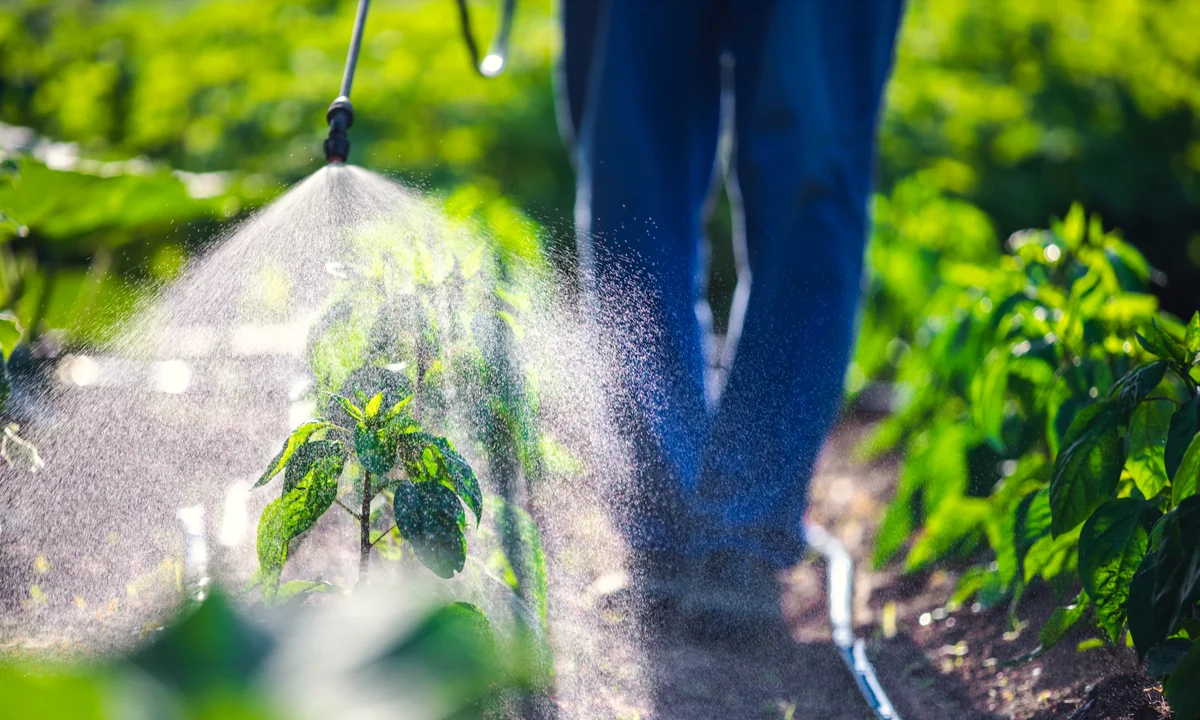
Not everyone faces the same level of exposure. According to Jennifer Sass of the Natural Resources Defense Council, the people most exposed are the workers who manufacture glyphosate, followed by agricultural workers who mix and spray it. For the general public, the main route is believed to be food residue, small amounts left on crops after spraying.
That is why the findings matter far beyond the farm gate. Glyphosate exposure is described as ubiquitous across the U.S. population. Even small risks, spread across hundreds of millions of people, can add up.
"Incompatible" with the EPA's verdict
Outside scientists who have followed the glyphosate fight for years did not hold back.
"It's pretty impactful for the National Institute of Environmental Health Sciences to have these articles come out," said Cynthia Curl, a professor at Boise State University who studies pesticide exposure.
Kurt Straif, who previously led the World Health Organization cancer agency's program that evaluated glyphosate, said the new analyses are "altogether clearly incompatible with the U.S. EPA evaluation."
Paul Whaley of the Institute for Evidence-Based Toxicology praised the reviews' methods as "so comprehensive and transparent" that readers can have confidence in how the evidence was assessed. Nathan Donley of the Center for Biological Diversity said the findings point to one conclusion: "That glyphosate can cause cancer." And David Andrews, chief science officer at the Environmental Working Group, said the studies highlight an "urgent need to reevaluate exposure limits."
The industry fires back
The company that now sells the product is pushing back. Ruveon, described as part of the Bayer Group and responsible for its U.S. glyphosate business, said it is reviewing the findings and that the herbicide has "been used safely for 50 years."
Spokeswoman Meghan McCormick stressed that preprints have not been peer reviewed and said the findings "should be considered preliminary." Bayer also argued that the studies look at potential hazards rather than real-world risk, and pointed to the EPA's earlier multigeneration animal studies, which it said found "no evidence of reproductive toxicity in adult animals." Monsanto, the original maker of Roundup, which Bayer bought in 2018, has long denied any link between the weedkiller and cancer.
A decade of dueling verdicts
The new reviews drop into one of the longest-running health fights of the century.
In 2015, the International Agency for Research on Cancer (IARC), the WHO's cancer arm, classified glyphosate as "probably" carcinogenic to humans. The EPA disagreed, and so did a committee of the European Chemicals Agency, which concluded the evidence does not meet the criteria to classify glyphosate as a carcinogen.
Then came the courtroom battles. Thousands of people who developed cancer after using Roundup sued, and juries handed down verdicts in plaintiffs' favor. In one landmark 2018 case, a California jury awarded a $289 million judgment against Monsanto, and Robert F. Kennedy Jr., now the U.S. Health Secretary, was part of the legal team that won it.
This past summer, the U.S. Supreme Court restricted lawsuits claiming Monsanto had a duty to warn consumers about cancer. And on Friday, according to The Washington Post, a judge approved a $7.25 billion settlement that could allow Bayer to bring an end to its protracted fight over Roundup cancer claims. The settlement had won preliminary court approval back in March.
Politics in the weeds
The glyphosate question has also become a flashpoint inside the administration. Before he became health secretary, Kennedy called glyphosate "one of the likely culprits in America's chronic disease epidemic." Supporters of his Make America Healthy Again (MAHA) movement have grown frustrated that the White House has not moved to restrict the chemical.
Calley Means, a Kennedy ally and former White House adviser who stepped down last month, said the new research should be "impossible for the EPA to ignore." He claimed the NIH "forged ahead" with Kennedy's backing despite "tremendous pressure" from senators and other agencies not to study glyphosate. "It'll be a political and legal disaster for the EPA if they don't follow this research," Means said.
Officials are striking a more measured tone. EPA spokesman Jacob Murphy said the agency "will evaluate it the same way we evaluate every study." HHS spokeswoman Emily Hilliard said the two departments are working together "under their memorandum of understanding," including through a technical working group that brings together experts from both agencies.
What happens next
The EPA is in the middle of re-evaluating glyphosate's risks to human health and plans to release a new assessment early next year. Its scope is broad: cancer, genetic damage, and reproductive and developmental effects, covering exposure through food, consumer products and the workplace, with special attention to infants and children.
The NIEHS reviews will now go through peer review. If they hold up, they will be among the most authoritative U.S. government analyses ever to point toward a cancer link, and the EPA will have to explain clearly why it agrees or disagrees.
Expert perspective: how worried should you be?
It is important to read the findings for what they are. The reviews describe hazard, meaning the chemical's potential to cause harm, rather than putting a precise number on the risk any individual faces. The authors themselves describe the effects in animals as generally small and not consistently repeated, and the human evidence as "some evidence" rather than proof. Industry is right that preprints are preliminary.
But independent scientists note that this is not an activist group or a plaintiffs' lawyer talking. It is the government's own environmental health institute, using methods outside experts describe as rigorous and transparent, and its conclusions line up more closely with the WHO's cancer agency than with the EPA. That is why so many experts are calling the reviews a turning point.
What this means for you
If you use glyphosate products at home, follow the label to the letter: wear gloves and long sleeves, avoid spraying on windy days, keep children and pets away from treated areas until dry, and wash your hands and clothes afterward. Consider whether you need a chemical at all; hand-weeding, mulching and boiling water work for many small jobs.
If you work in agriculture, landscaping or pesticide manufacturing, your exposure is likely far higher than average. Use the protective equipment your employer provides, and talk to your doctor about your work history, especially if you notice persistent swollen lymph nodes, unexplained fevers, night sweats or weight loss, which can be warning signs of lymphoma.
For everyone else, washing fruit and vegetables thoroughly is sensible, and some families choose organic produce to cut pesticide residues. Pregnant women may want to be especially careful to avoid direct contact with sprays, given the reported evidence on childhood leukemia.
The bottom line
For more than a decade, Americans have been told two different stories about glyphosate: that it is "probably" carcinogenic, and that it is "not likely" to cause cancer. This week, scientists inside the U.S. government's own health research system came down closer to the first story.
The reviews are not the final word. Peer review lies ahead, and the EPA's decision early next year will determine whether anything changes on farms, in stores or on food labels. But one thing is clear: the debate over the world's favorite weedkiller is far from settled, and for the first time in years, the loudest warning is coming from inside the federal government.