Written By | Bosco Bakwatanisa
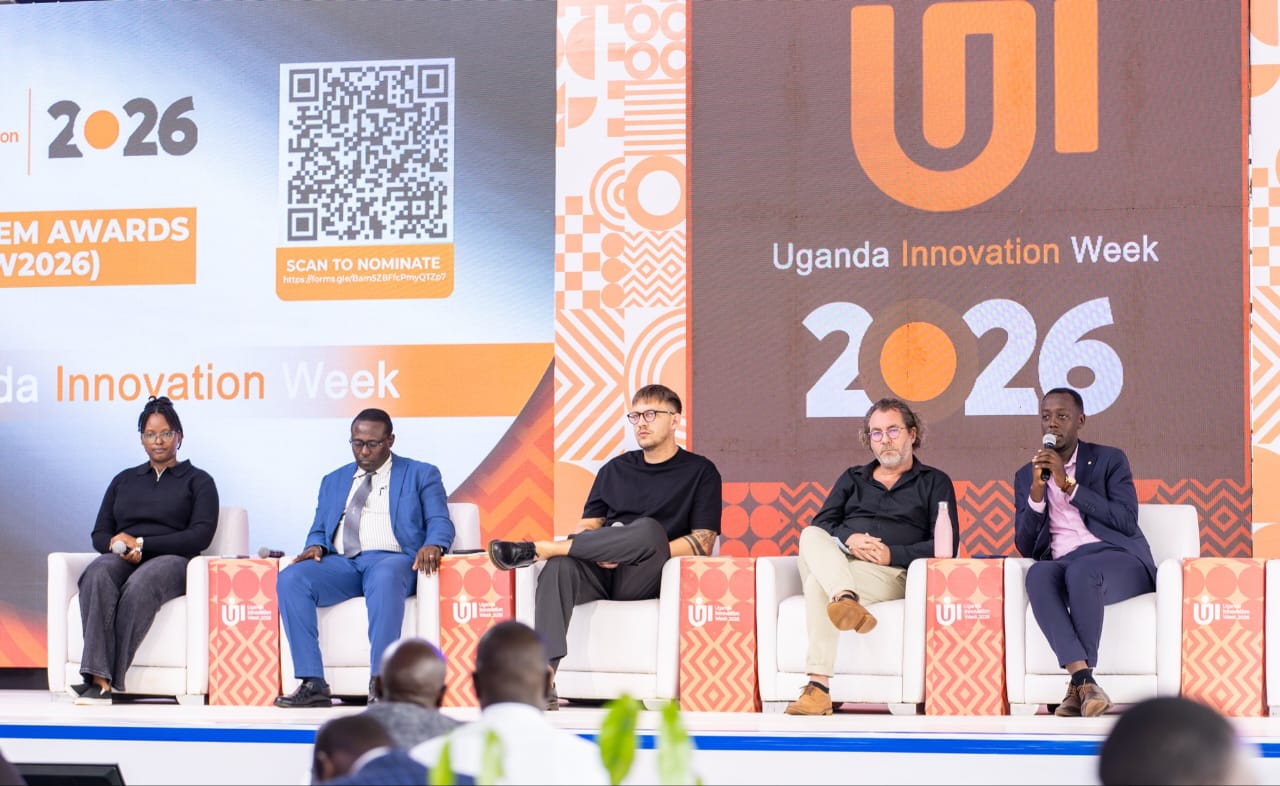
Draft eligibility rules for a long-awaited Startup Act were unveiled at Uganda Innovation Week, while Ugandan-made electronics went on show at China's biggest tech fair this week.
SCIENCE AND TECHNOLOGY
Uganda's long-promised startup law is beginning to take concrete form. At a policy dialogue during Uganda Innovation Week 2026 in Kampala, a senior trade ministry official set out proposed criteria for which businesses would qualify as "startups" under a planned Startup Act — while entrepreneurs, investors and regulators urged government to cut red tape, invest in skills and keep regulation light.
The week, organised by Startup Uganda under the theme "Uganda Innovates: Building the Innovation Ecosystem for the Next Decade," ran in mid-November. Its momentum carried into this week, when Ugandan innovators exhibited at the 28th China Hi-Tech Fair in Shenzhen, which opened on Thursday, November 26.
Who would count as a startup
Dr Joshua Mutambi, Commissioner and Head of the Department of Processing and Marketing at the Ministry of Trade, Industry and Cooperatives, outlined the draft eligibility criteria, according to Nile Post. Under the proposal, a qualifying startup would need to:
Applicants would self-certify against the criteria and then be assessed before being formally recognised. Recognition matters because startup laws elsewhere in Africa typically tie such status to incentives such as tax relief, easier registration and access to dedicated funding.
A law years in the making
The push for a startup law is not new. In 2023, MP Boniface Okot — who now chairs Parliament's Committee on Trade and Tourism — announced plans for a private member's bill on startups, and the trade ministry's technical working group proposed a policy roadmap and legislative process at a workshop facilitated by the International Trade Centre (ITC). That process drew on lessons from South Korea's startup ecosystem. "Time is of the essence," Mr Okot said at the time. Three years later, the publication of draft eligibility rules suggests the policy is moving closer to a formal bill.
"Regulate as less as possible"
Speakers at the dialogue, held under the Africa–Europe Digital Innovation Bridge (AEDIB 2.0) programme and drawing on experience from Estonia and the Baltic region, focused on how not to smother young firms. Joshua Akandwanaho, Supervisor of BPO and IT-Enabled Services at the National Information Technology Authority-Uganda (NITA-U), urged policymakers to "regulate as less as possible but as much as necessary" and to "regulate processes and not the actors." He named trust as critical to a functioning ecosystem and said government should "invest into people" to build a successful economy.
Bart Cornille, a digital innovation expert at Enabel Uganda, the Belgian development agency, called for stronger links between government, entrepreneurs and the private sector. Participants examined business registration, taxation, access to finance, digital infrastructure, research and development, technology commercialisation and market access, and stressed reliable connectivity as a precondition for startups to take part in the digital economy.
Earlier in the week, Joyce Nabbosa Ssebugwawo, Minister of State for ICT and National Guidance, pledged continued government support for entrepreneurs and for Startup Uganda. She argued that support should extend to the entrepreneurship support organisations (ESOs) that guide founders, which need financing, infrastructure and partnerships. She pointed to growth at the National ICT Innovation Hub in Nakawa, which hosted 26 innovators in 2023/24, up from seven in 2021/22, and to the government's Digital Transformation Roadmap 2023/24–2027/28, which names innovation and entrepreneurship as key pillars.
Ugandan hardware in Shenzhen
The ambition to move from ideas to products was on display at the China Hi-Tech Fair, held at the Shenzhen World Exhibition and Convention Centre from November 26 to 28 with a focus on artificial intelligence, robotics and new energy. Uganda's participation is led by its Consulate General in Guangzhou.
Among the exhibitors is Lwera Electronics and Semiconductors Ltd, supported under the government's Science, Technology and Innovation (STI) fund and represented by chief executive Ivan Karugaba Junior. Its Namanve facility has developed six flagship products, including calculators, hair dryers, flash drives and computer mice, and the company is seeking design collaboration, component sourcing and manufacturing partners. Also exhibiting is design engineer Peter Walusimbi, who is showcasing smart transport systems and seeking partners for Uganda's Standard Gauge Railway.
Moses Kalule Kasujja of the Ministry of Foreign Affairs said Uganda would measure the engagement by "technology transferred, skills acquired, and production started in Uganda." Stilson Muhwezi, speaking for Consul General Judyth Nsababera, described Shenzhen as the place "where ideas become products." The fair builds on a relationship that Nile Post reports saw bilateral trade reach US$2.1 billion in 2025 and about 600 Ugandans trained in China in 2024.
Why it matters
Uganda has a young population and a fast-growing tech community, but founders consistently cite the same obstacles: costly registration and compliance, tax treatment that does not distinguish early-stage firms, thin access to finance and patchy infrastructure. A Startup Act with clear eligibility rules could give policymakers a defined group to target with incentives — and give investors a clearer signal about the policy environment.
The design choices carry trade-offs. An R&D threshold and an intellectual-property requirement would favour technology-intensive firms but could exclude many service-led or business-model innovators. The self-certification approach lowers the barrier to entry but places weight on the assessment step that follows. And the call for light-touch rules sits uneasily with recent friction between regulators and parts of the fintech sector.
What to watch next
The key milestones are whether the draft criteria are carried into a formal bill, whether that bill comes as a government measure or a private member's bill, and what incentives would be attached to startup status. Also worth watching: whether partnerships sought in Shenzhen turn into signed manufacturing or technology-transfer deals, and whether the government's National AI Strategy — which NITA-U officials said in October would be launched before the end of 2026 — arrives on schedule and fits the "regulate processes, not actors" approach championed at Innovation Week.